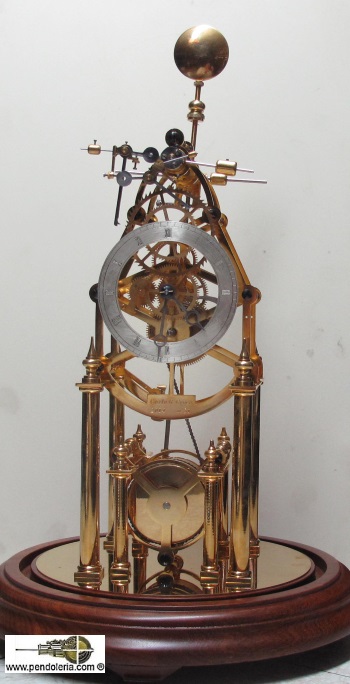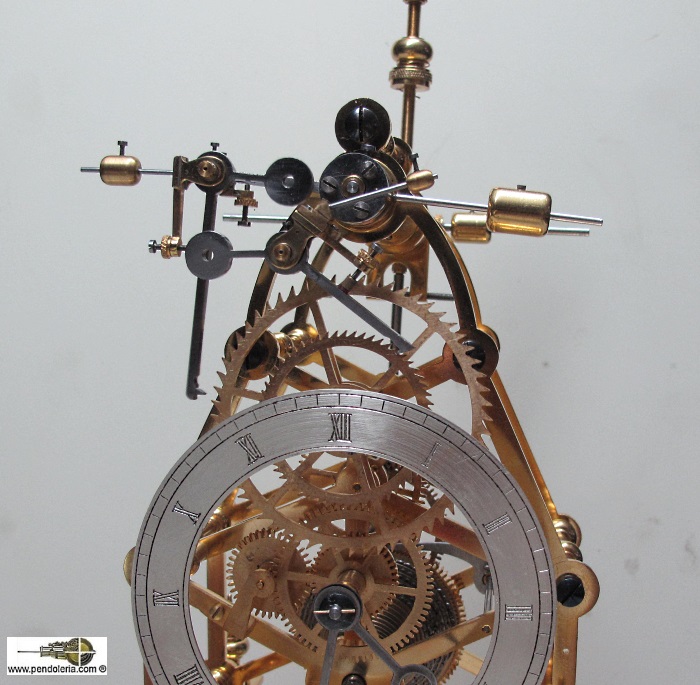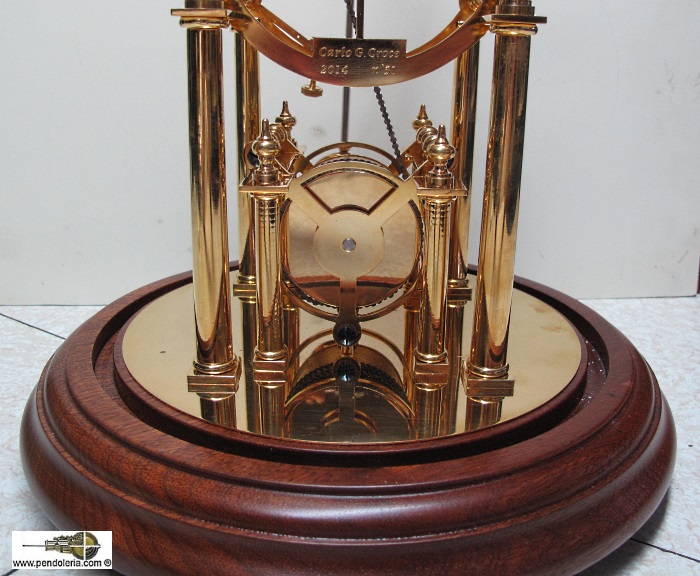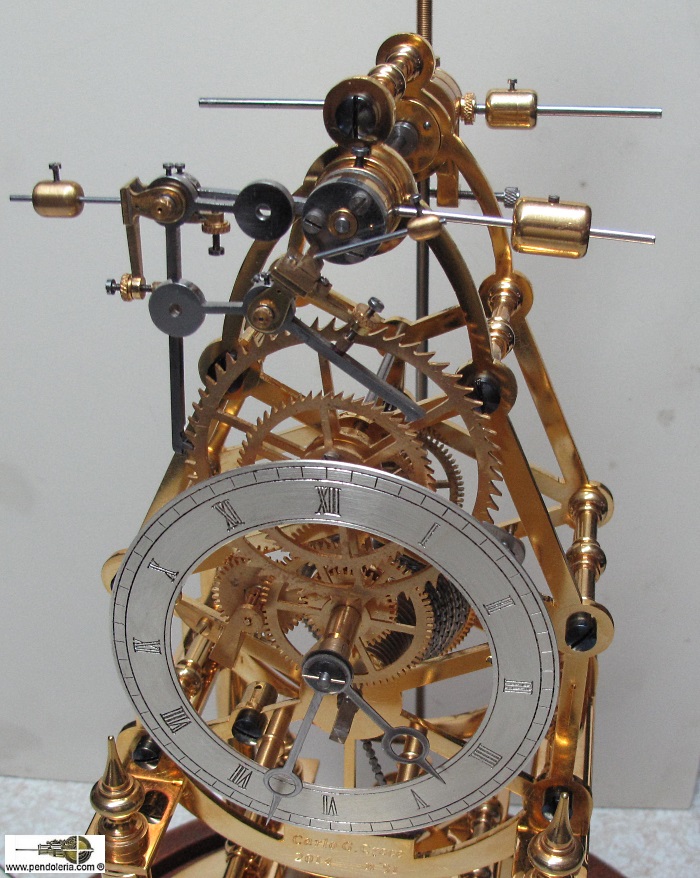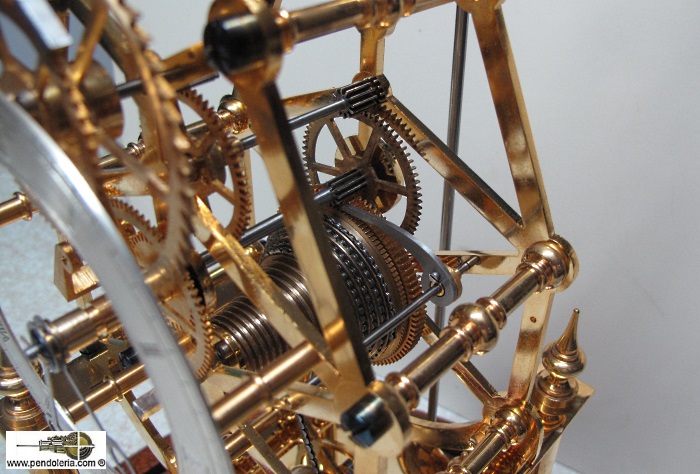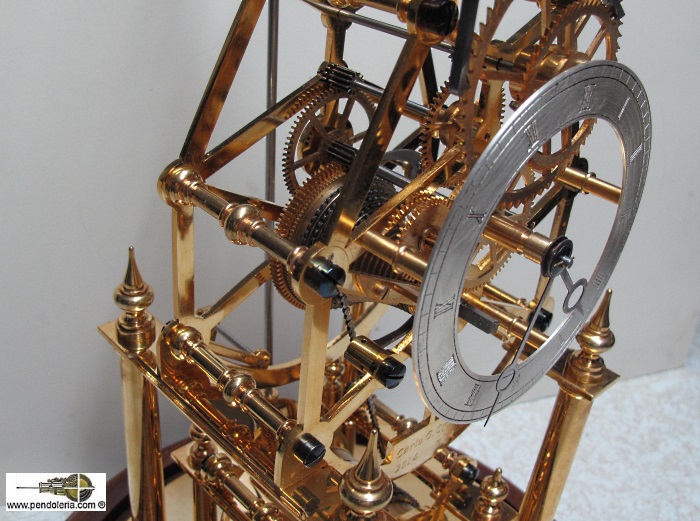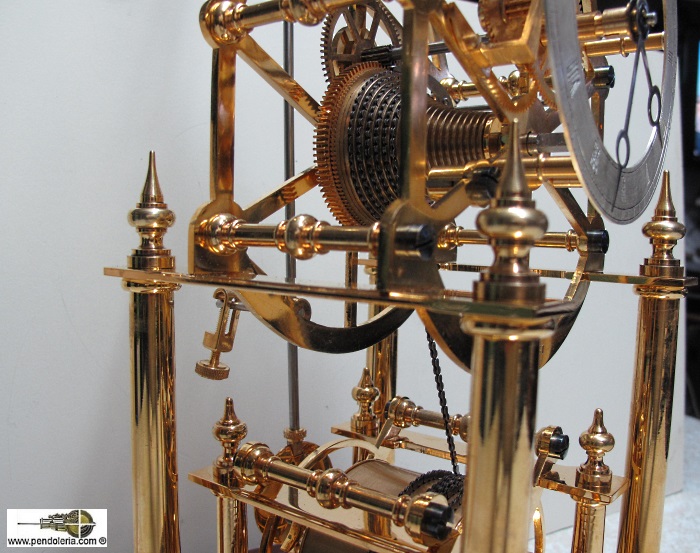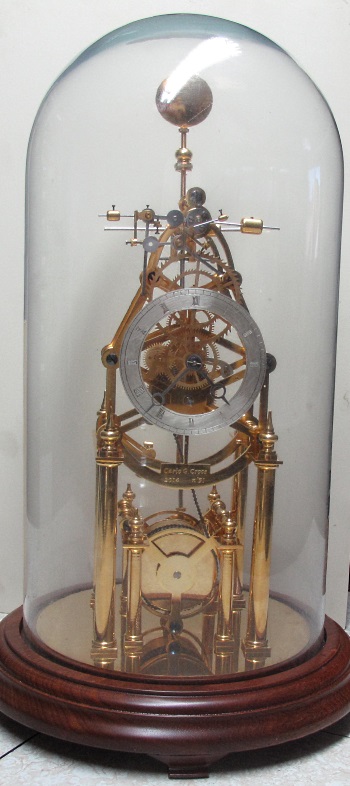
For details and an account of the construction of this clock, I invite you to visit this page of my forum (in Italian).
The grasshopper escapement is one of the most ingenious inventions in the history of clockmaking. It was devised by the legendary John Harrison (1693-1776), the maker of the famous marine chronometers H1, H2, H3 and H4, which solved the problem of determining longitude at sea.
John Harrison's invention
Harrison developed the grasshopper escapement around 1722 for his first precision pendulum clocks. The name comes from the characteristic movement of the escapement's pallets, which recalls the jump of a grasshopper. This escapement represented a revolutionary approach compared with the traditional escapements of the time.
The working principle
Unlike conventional escapements, where the surfaces slide against each other and generate friction, in the grasshopper the pallets perform a lifting and lowering movement almost free of lateral friction. The two metal pallets, connected by pivots and thin springs, take turns in giving impulse to the pendulum with a quick, decisive movement that minimises energy loss.
The result is an extremely efficient escapement that needs very little energy to work and, at the same time, interferes minimally with the natural oscillation of the pendulum. These characteristics make it ideal for high-precision clocks.