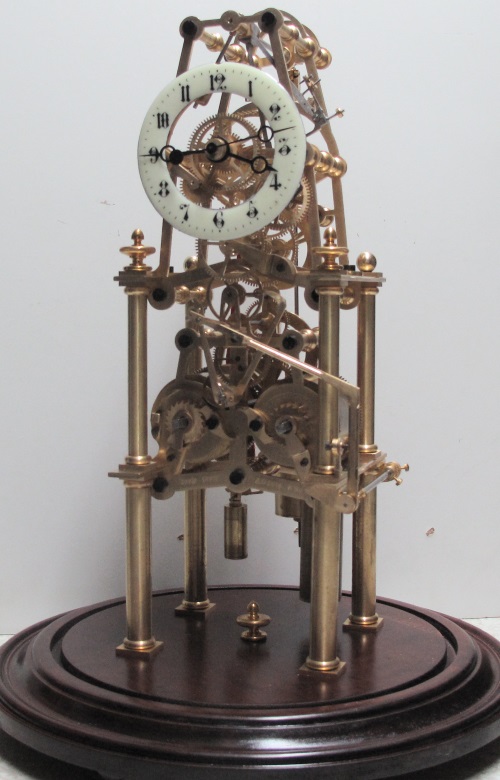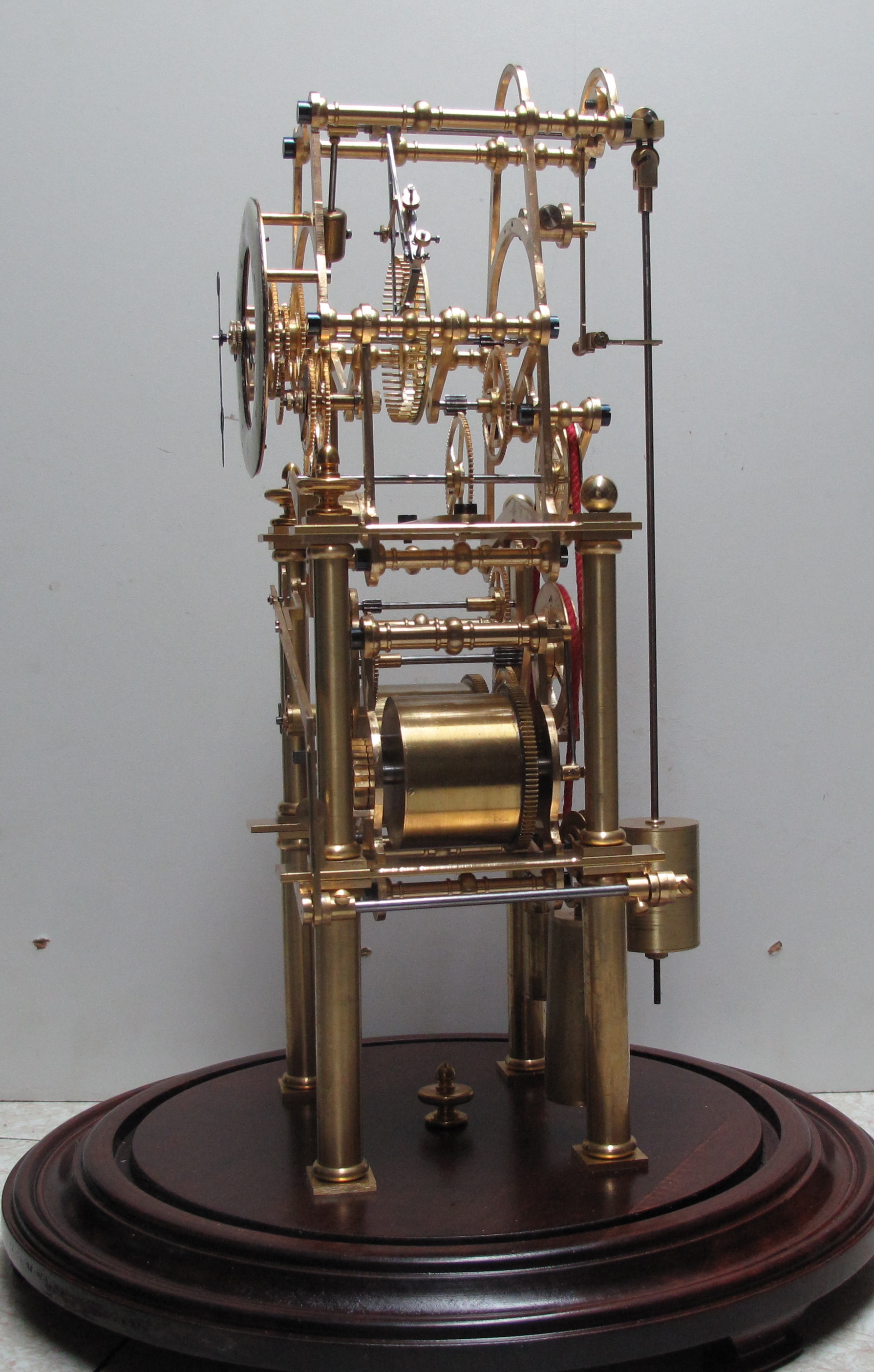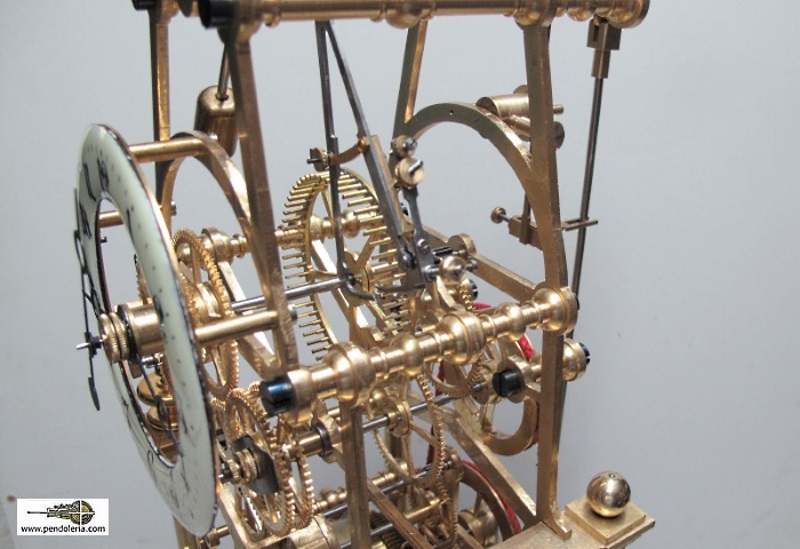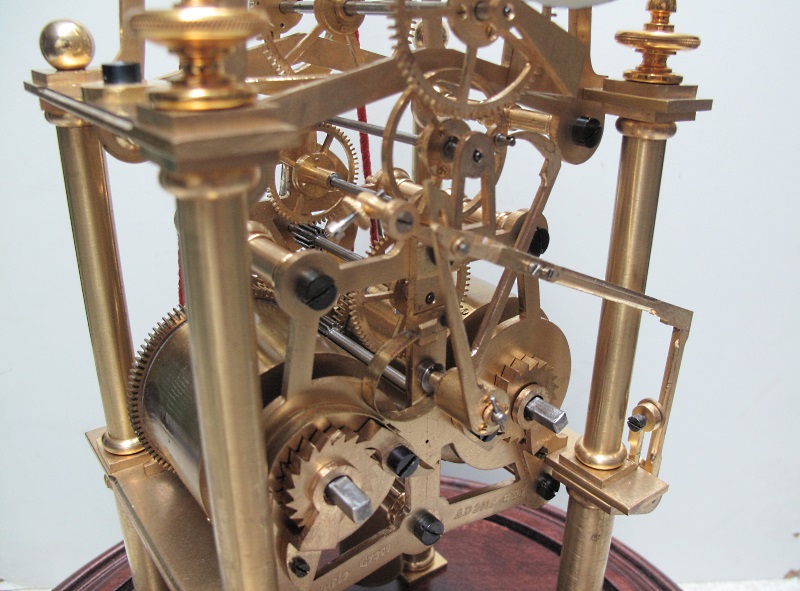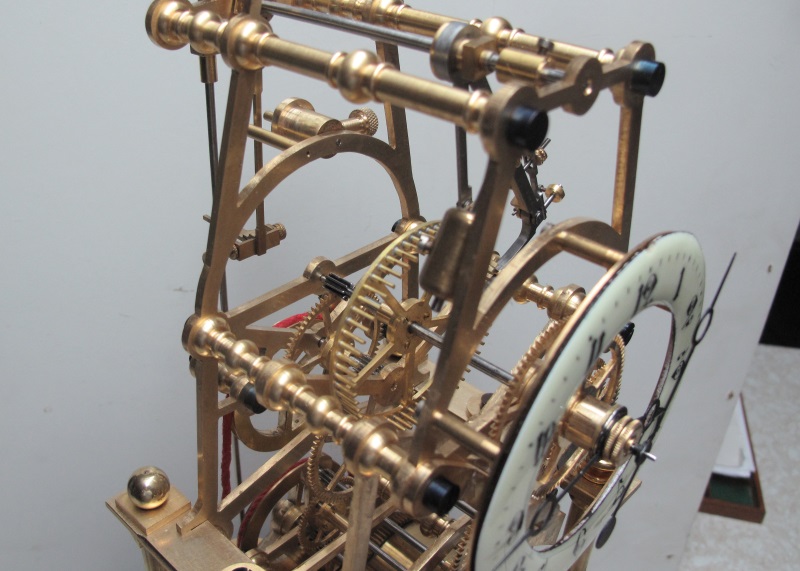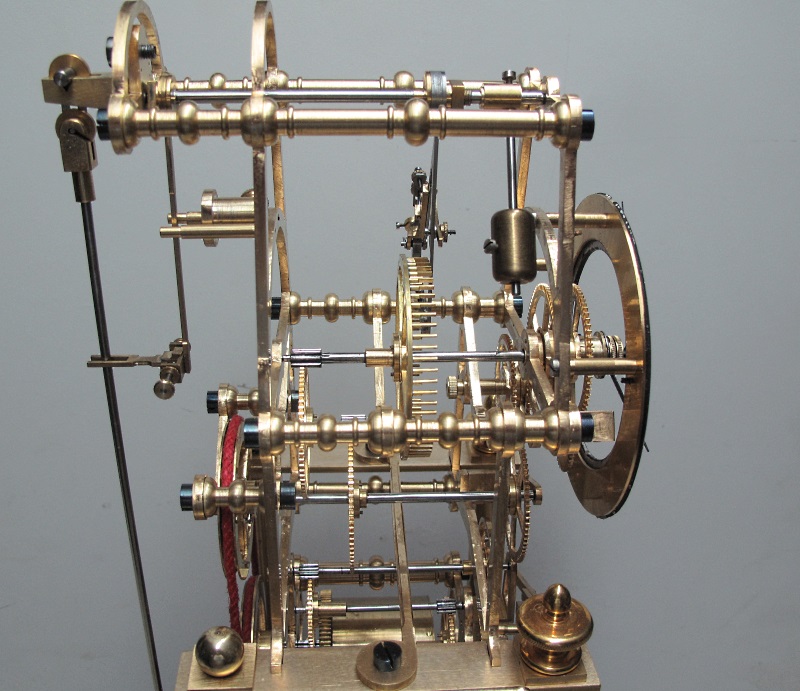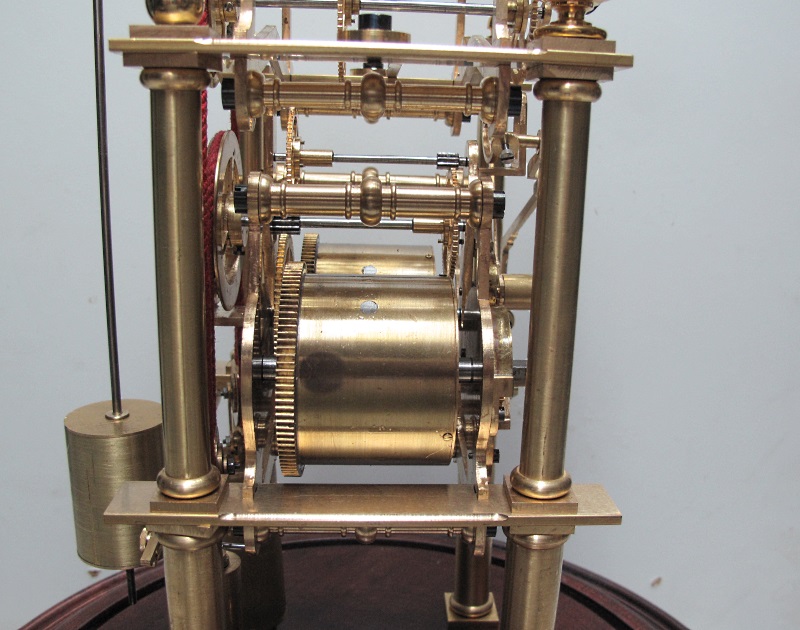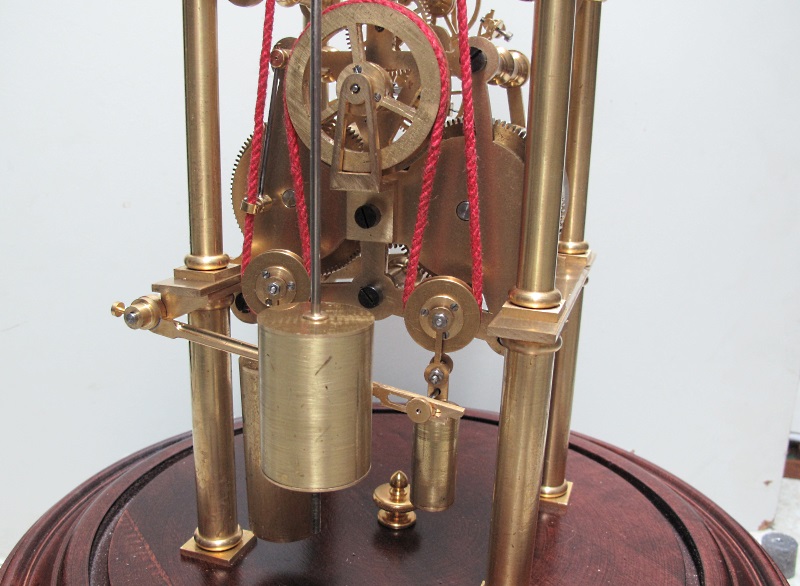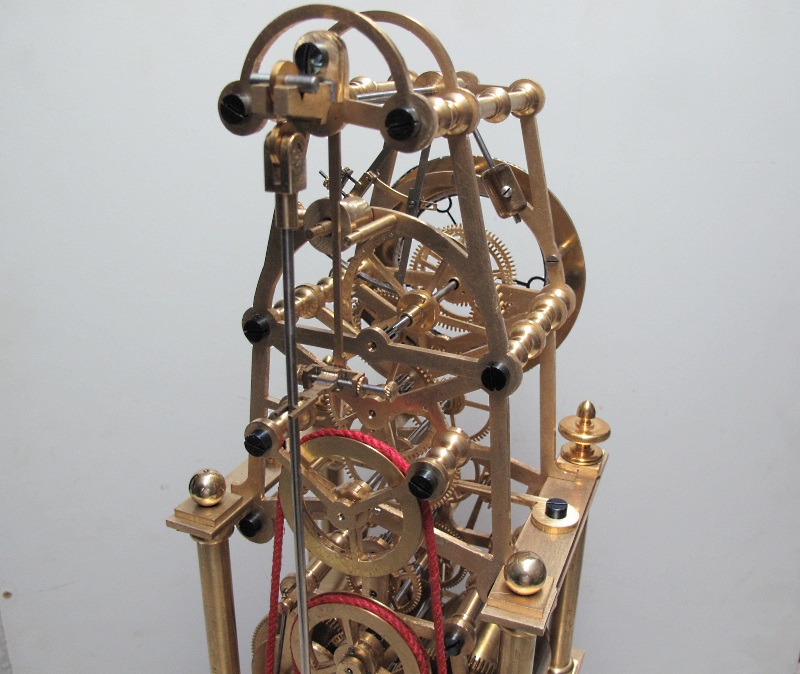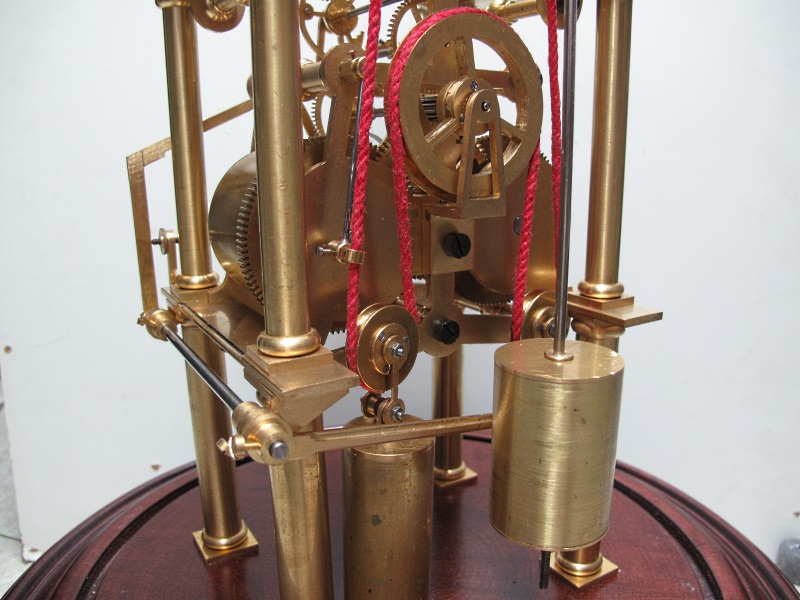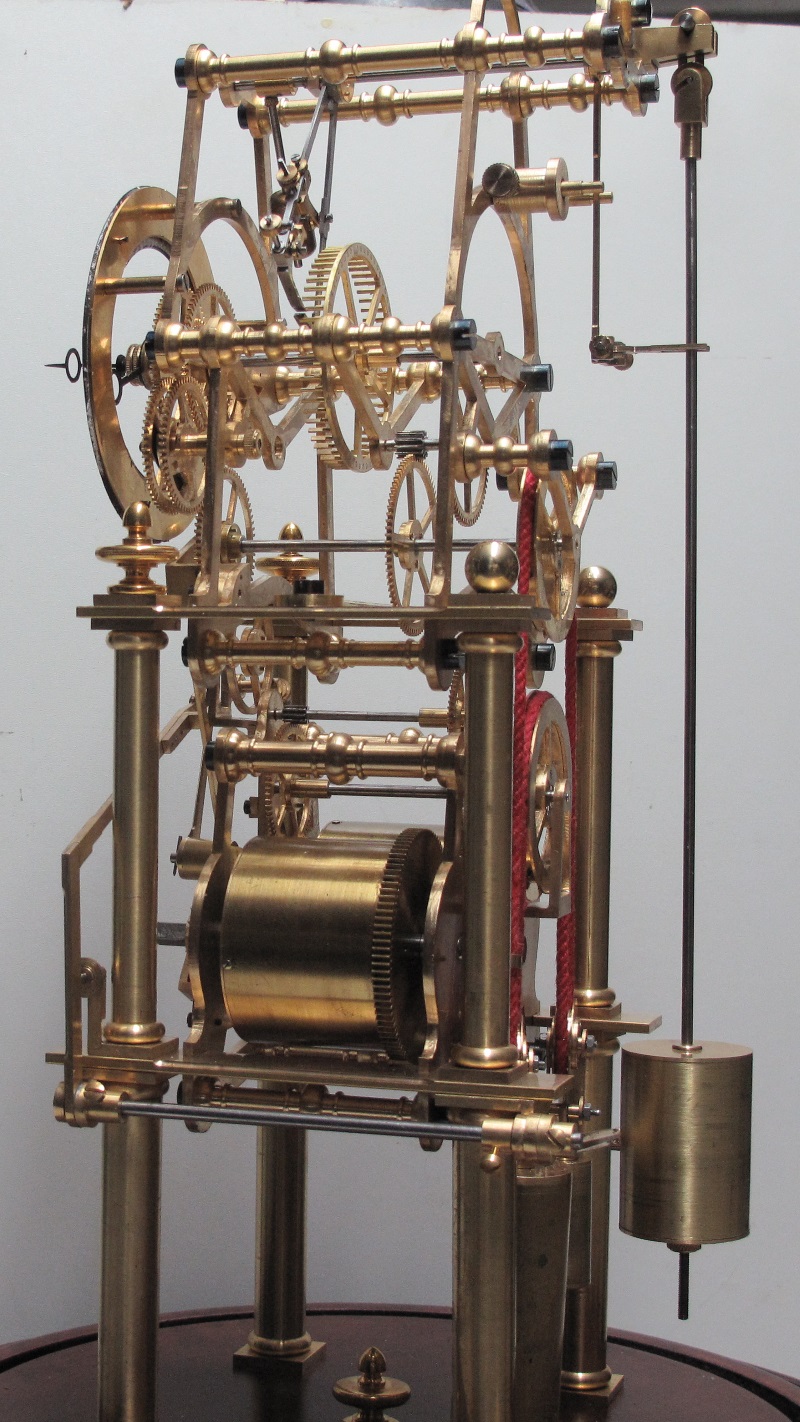
This clock combines two extremely sophisticated and rare mechanisms in precision clockmaking: the coup perdu (lost beat) escapement and the Robin-type remontoir.
The coup perdu (lost beat) escapement
The coup perdu escapement, literally "lost beat" in French, is one of the most unusual and ingenious mechanisms ever devised to improve the accuracy of pendulum clocks. Its working principle is counterintuitive: instead of giving the pendulum an impulse at every swing, the escapement deliberately "skips" a swing, supplying energy only every two beats.
This apparently paradoxical choice has a precise logic: by reducing the frequency of the impulses, the interference of the gear train with the natural movement of the pendulum is minimised. The pendulum thus swings more freely for most of the time, and is less affected by irregularities in the driving force. The result is greater constancy in the period of oscillation and therefore better precision in measuring time.
The Robin-type remontoir
The remontoir (literally "rewinder") is a mechanism placed between the main source of energy (the spring or the weight) and the escapement. Its function is to supply the escapement with a constant force, independent of the state of charge of the mainspring.
The Robin-type remontoir, named after the famous French clockmaker Robert Robin (1742-1799), uses a small auxiliary spring that is rewound at regular intervals by the mainspring. This auxiliary spring, always at the same level of charge, supplies the escapement with perfectly constant energy, eliminating the variations in force that normally occur as the mainspring unwinds.