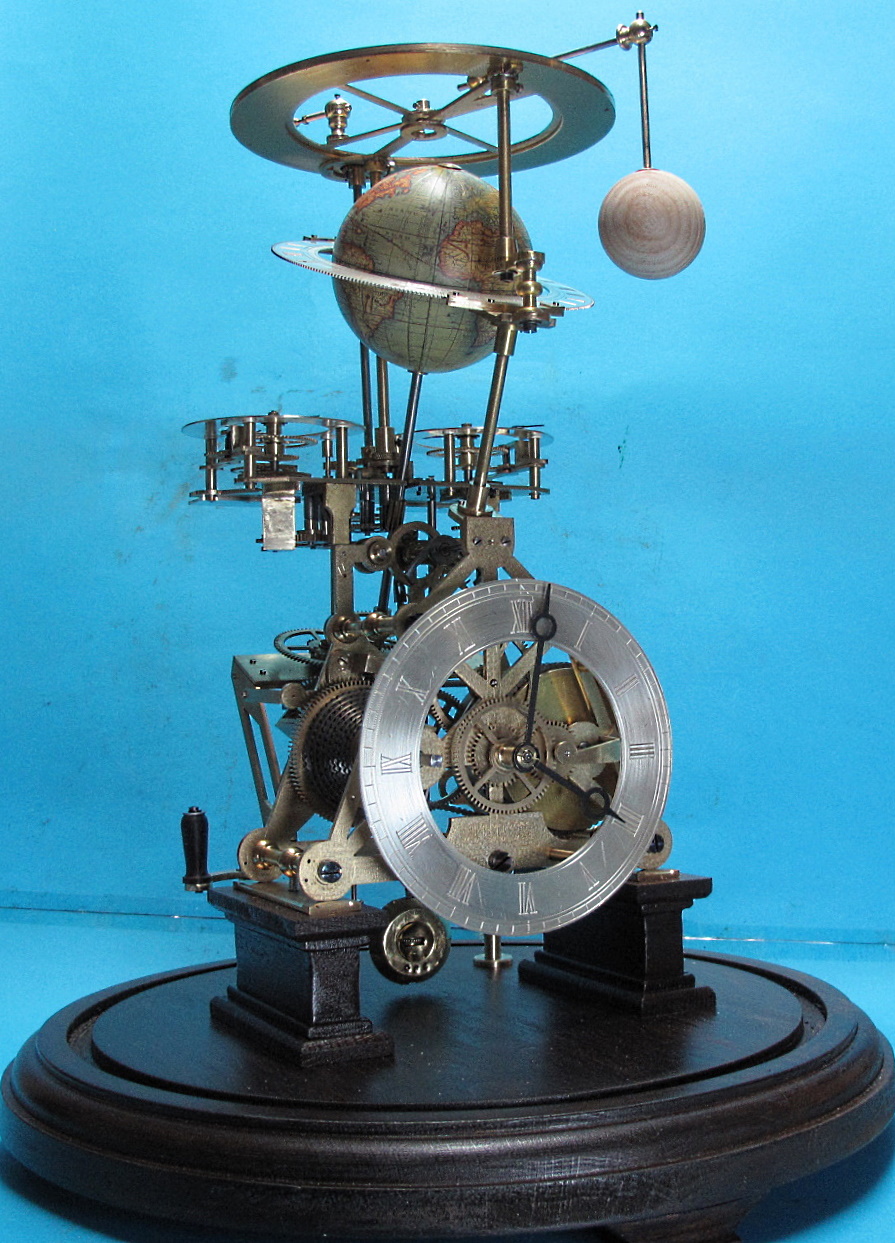
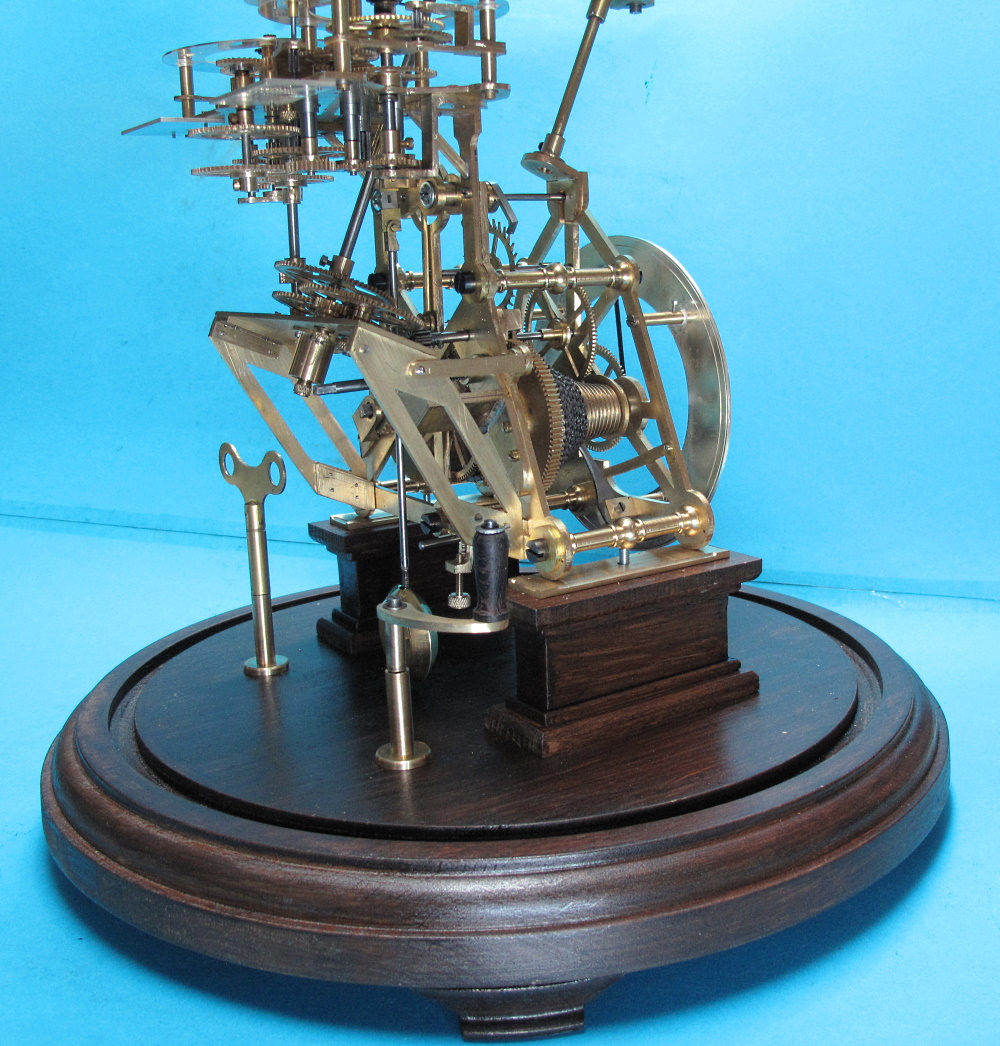
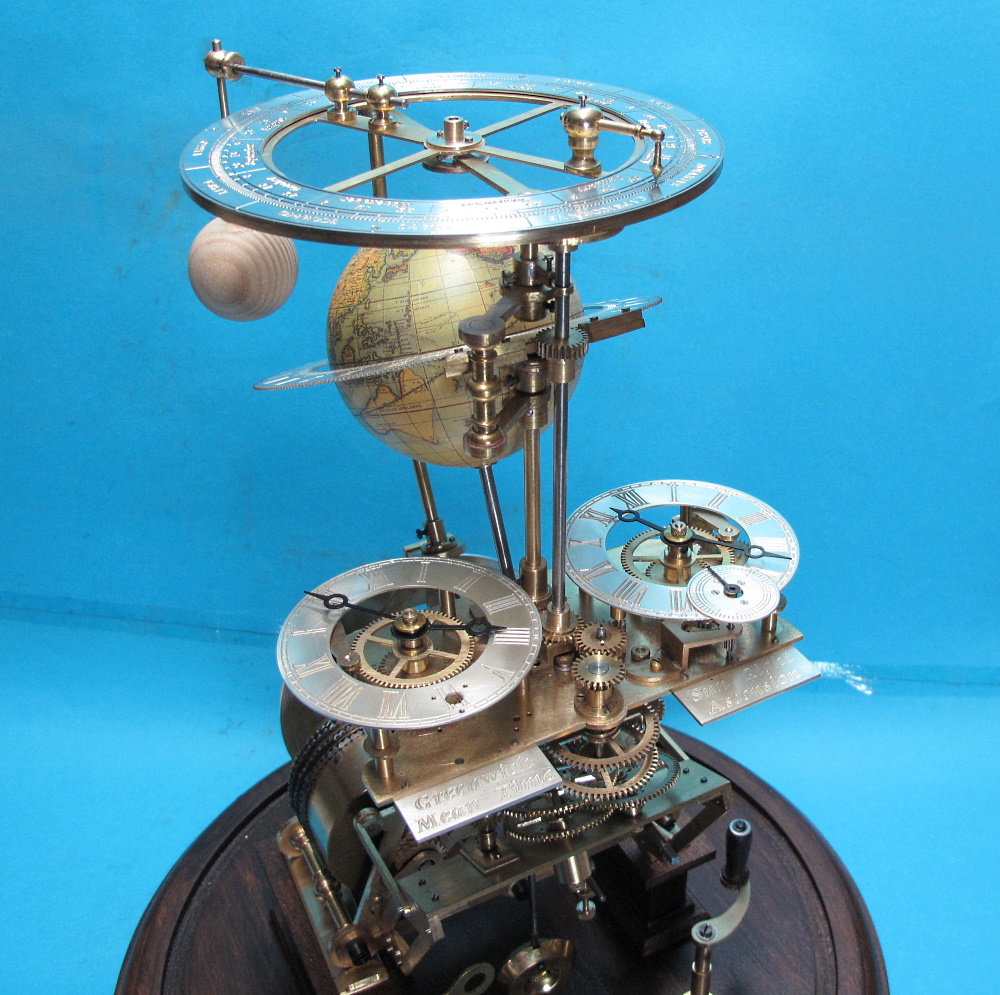
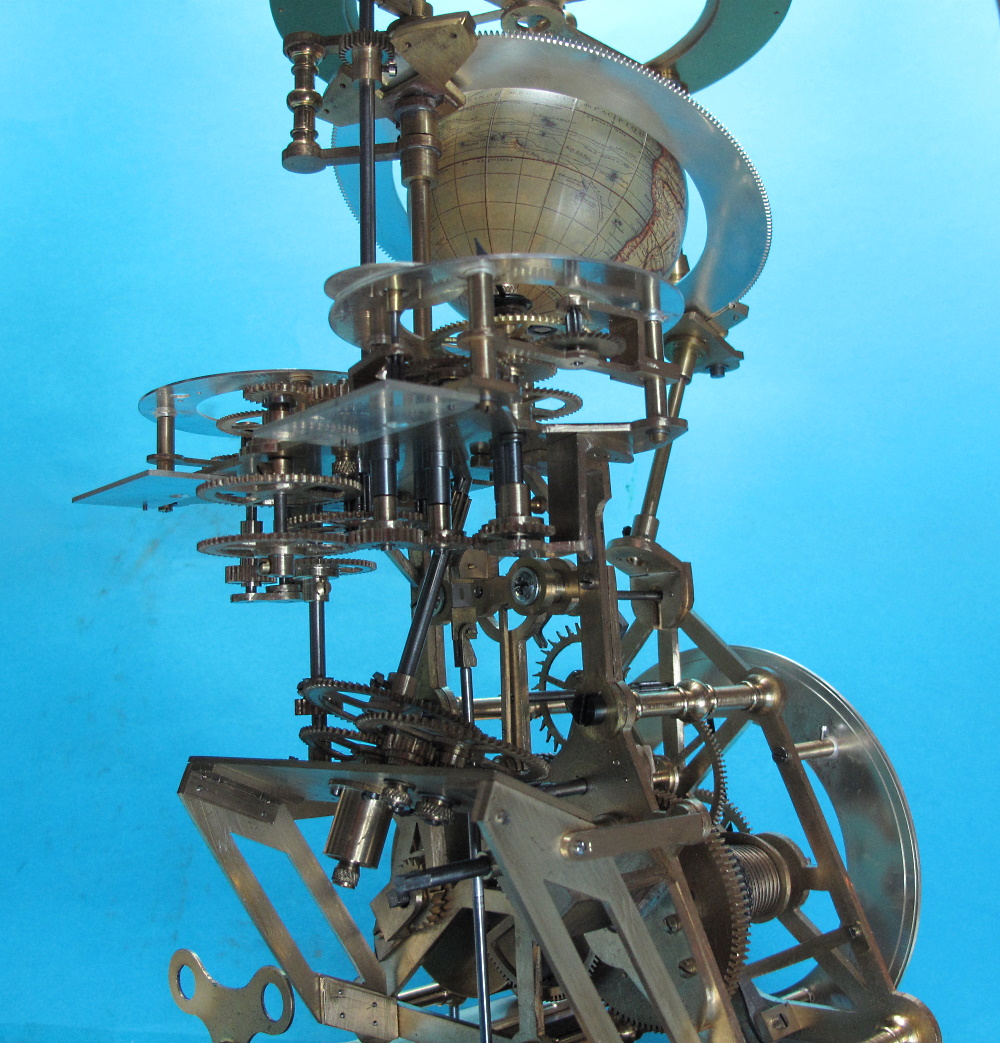
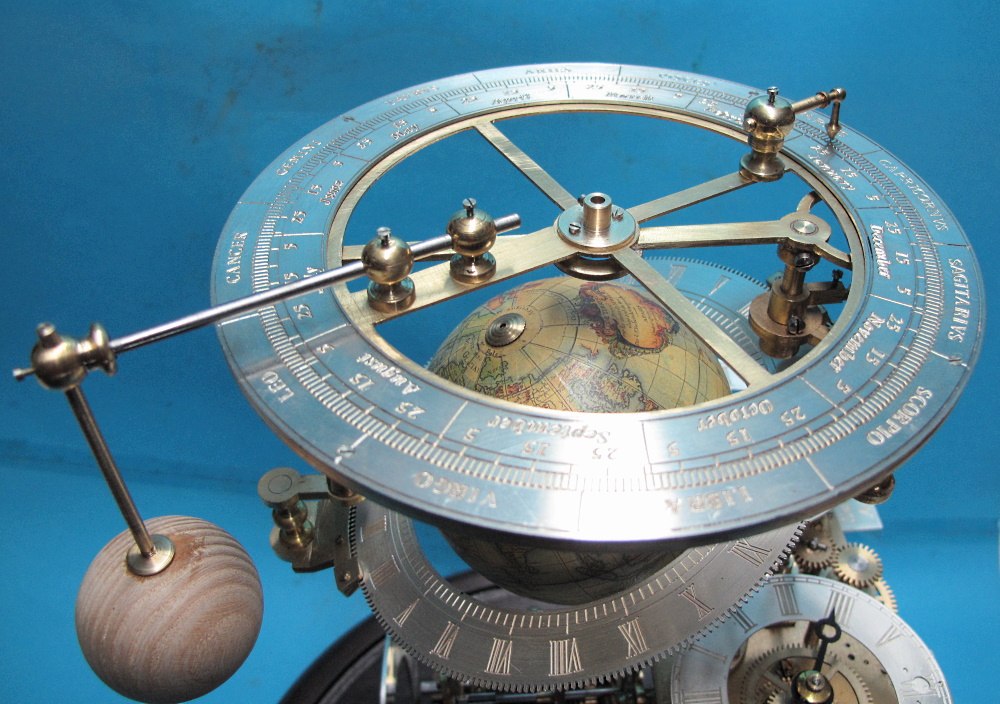
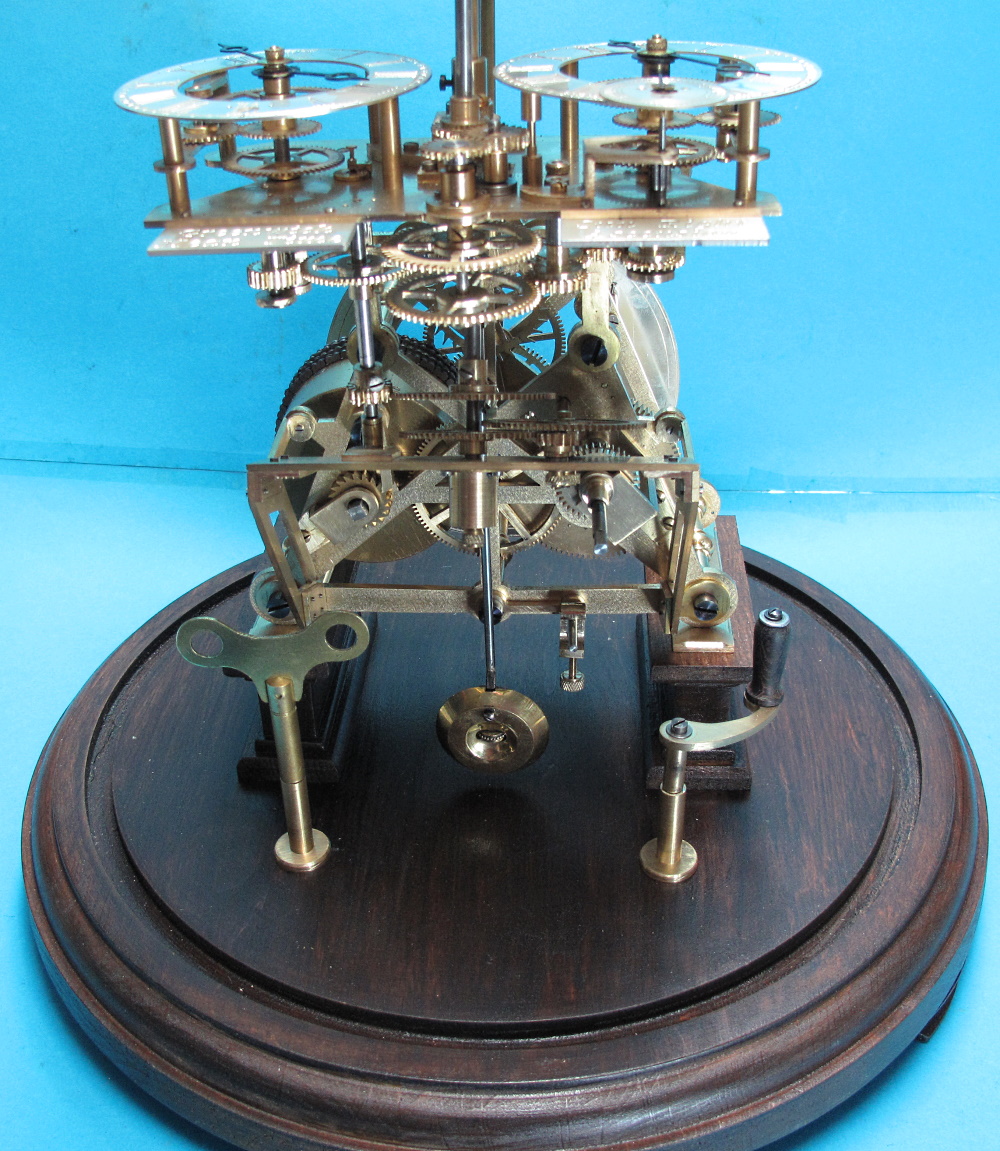
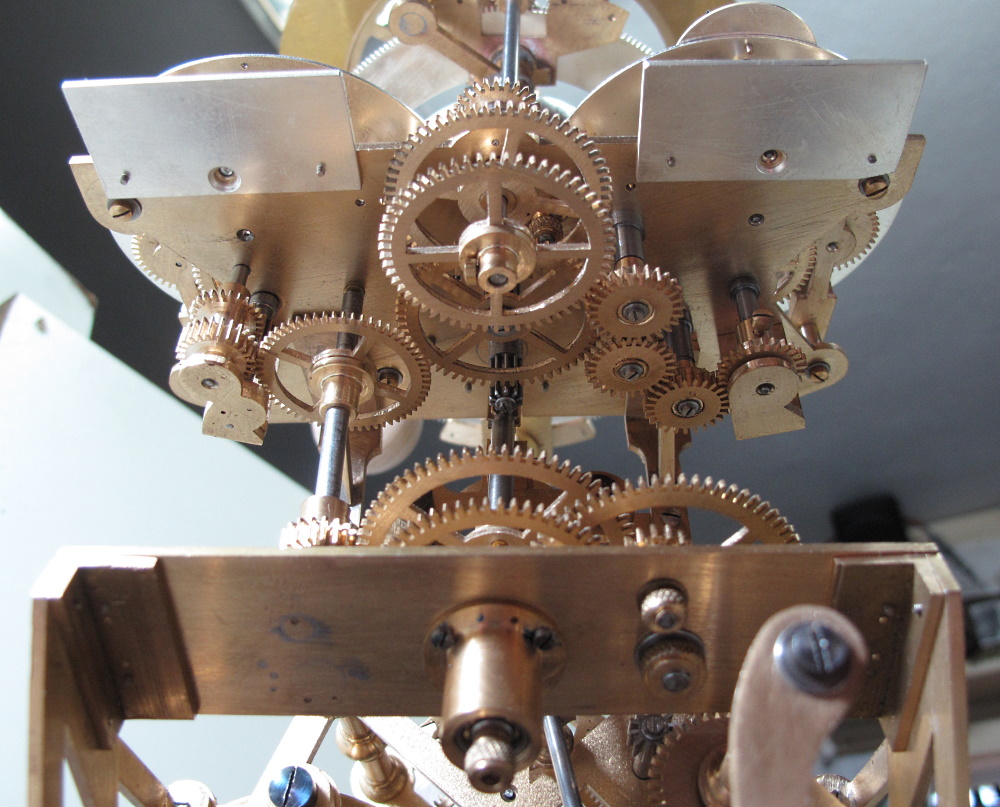
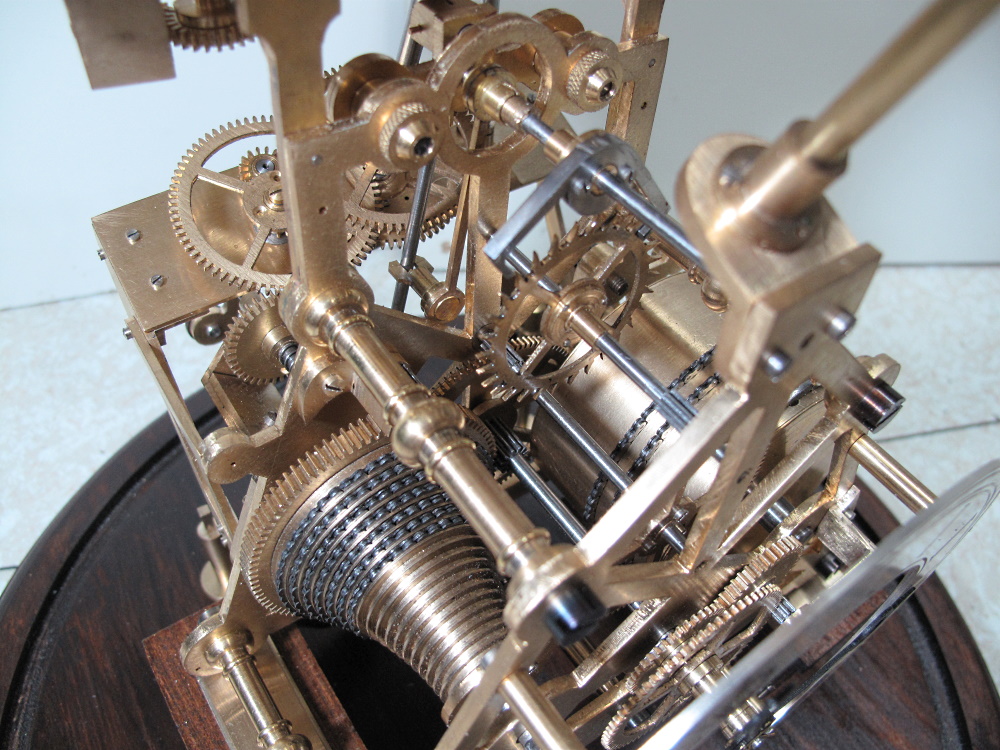
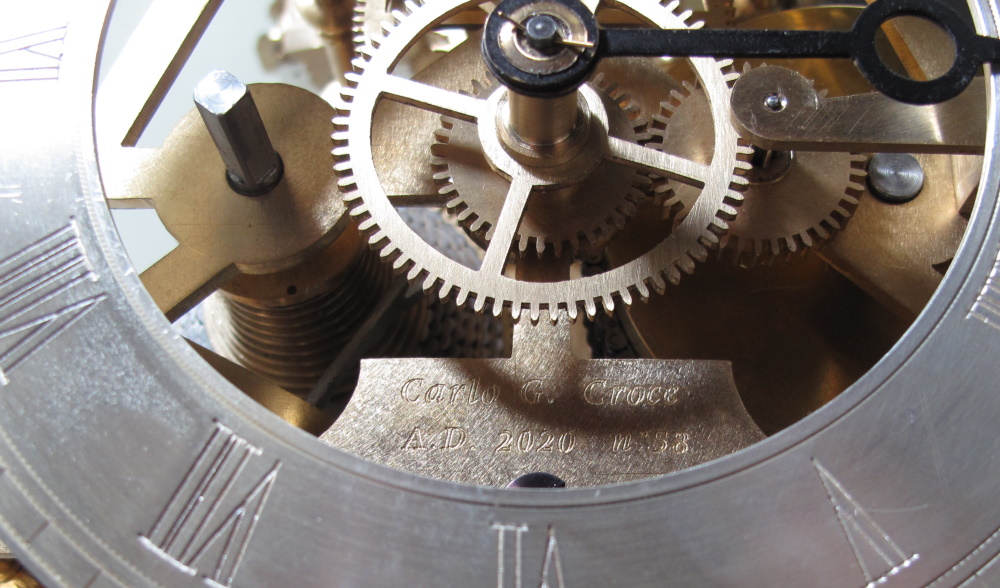
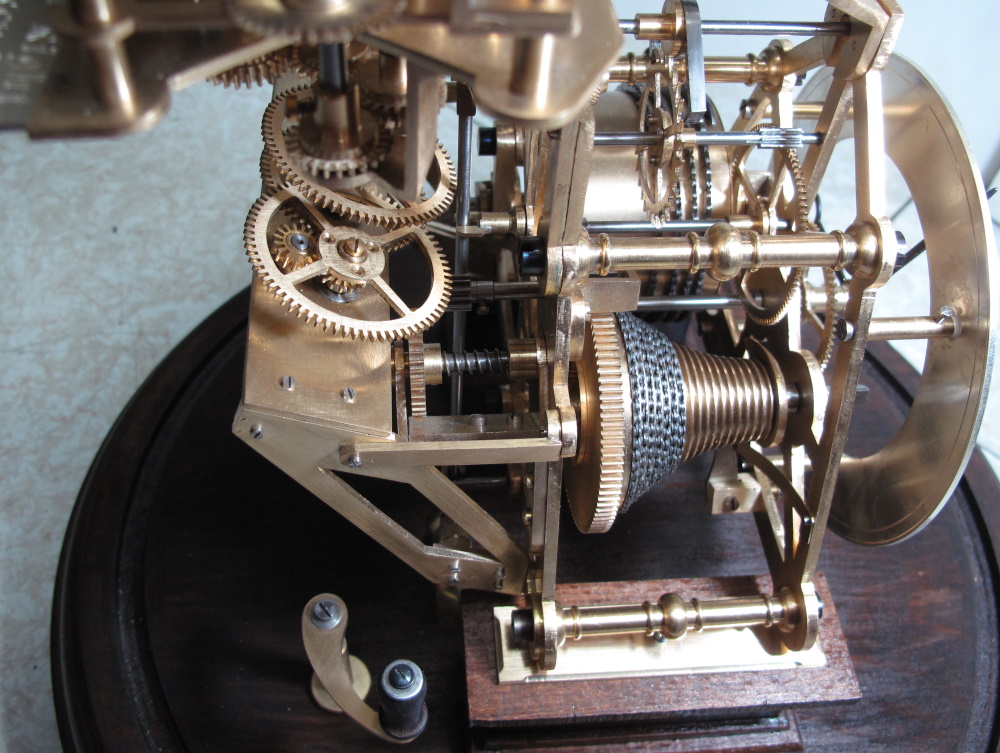
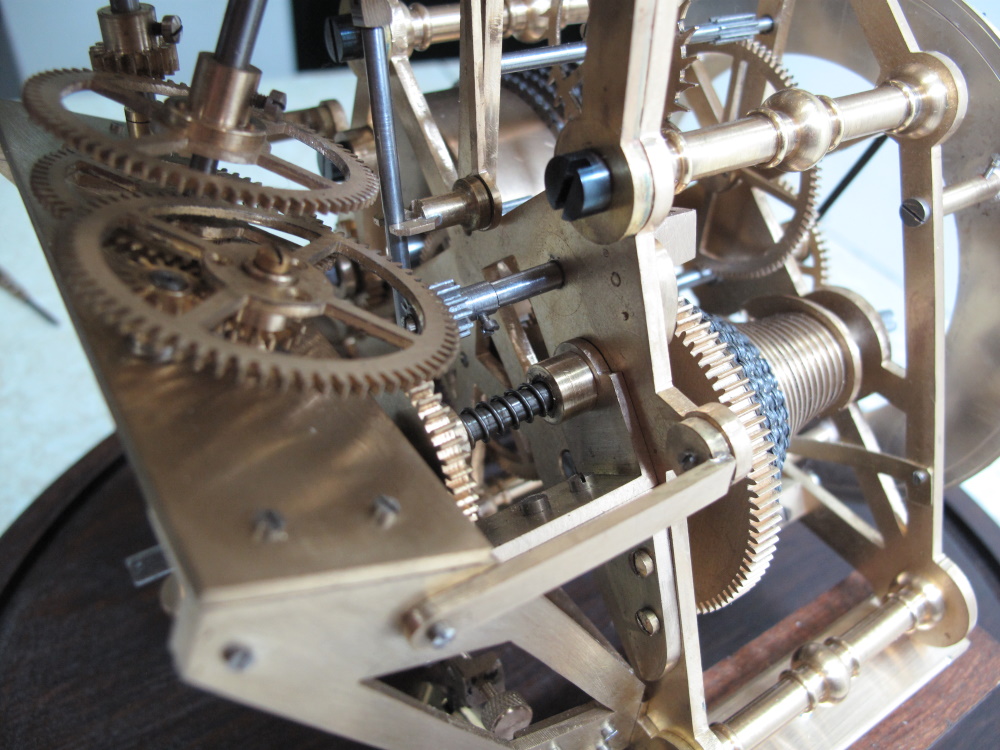
Cosmochronotrope (Replica of J.F. Sarratt's astronomical clock) (58)
For details and an account of the construction of this clock, I invite you to visit this page of my forum (in Italian). Click each image to enlarge it
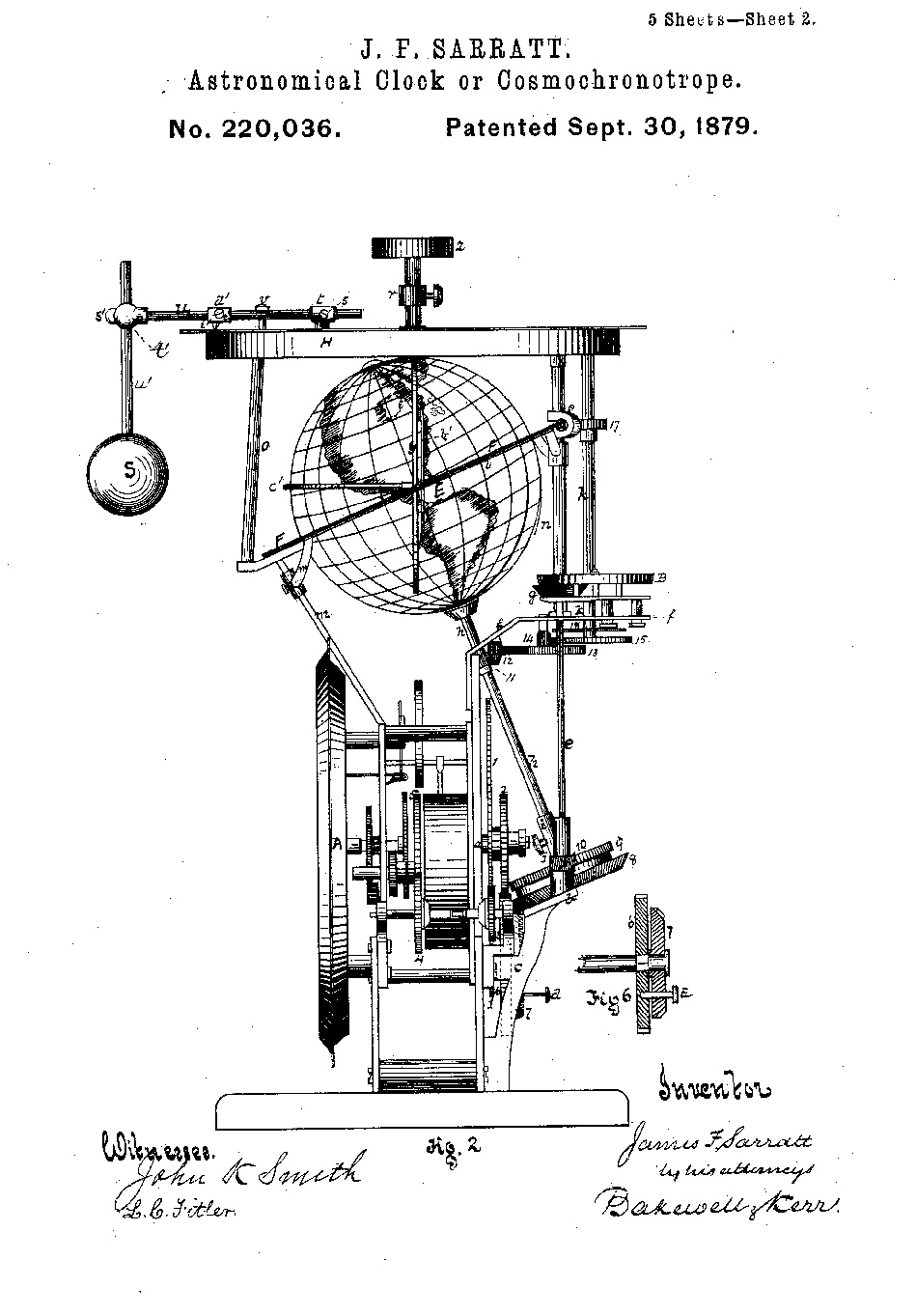
Astronomical clocks have always fired the imagination of men of science and of enthusiasts of precision mechanics. Among the most fascinating and original is the Cosmochronotrope, an instrument devised by the American James F. Sarratt and patented by him at the US patent office with number 220036 on 30 September 1879.
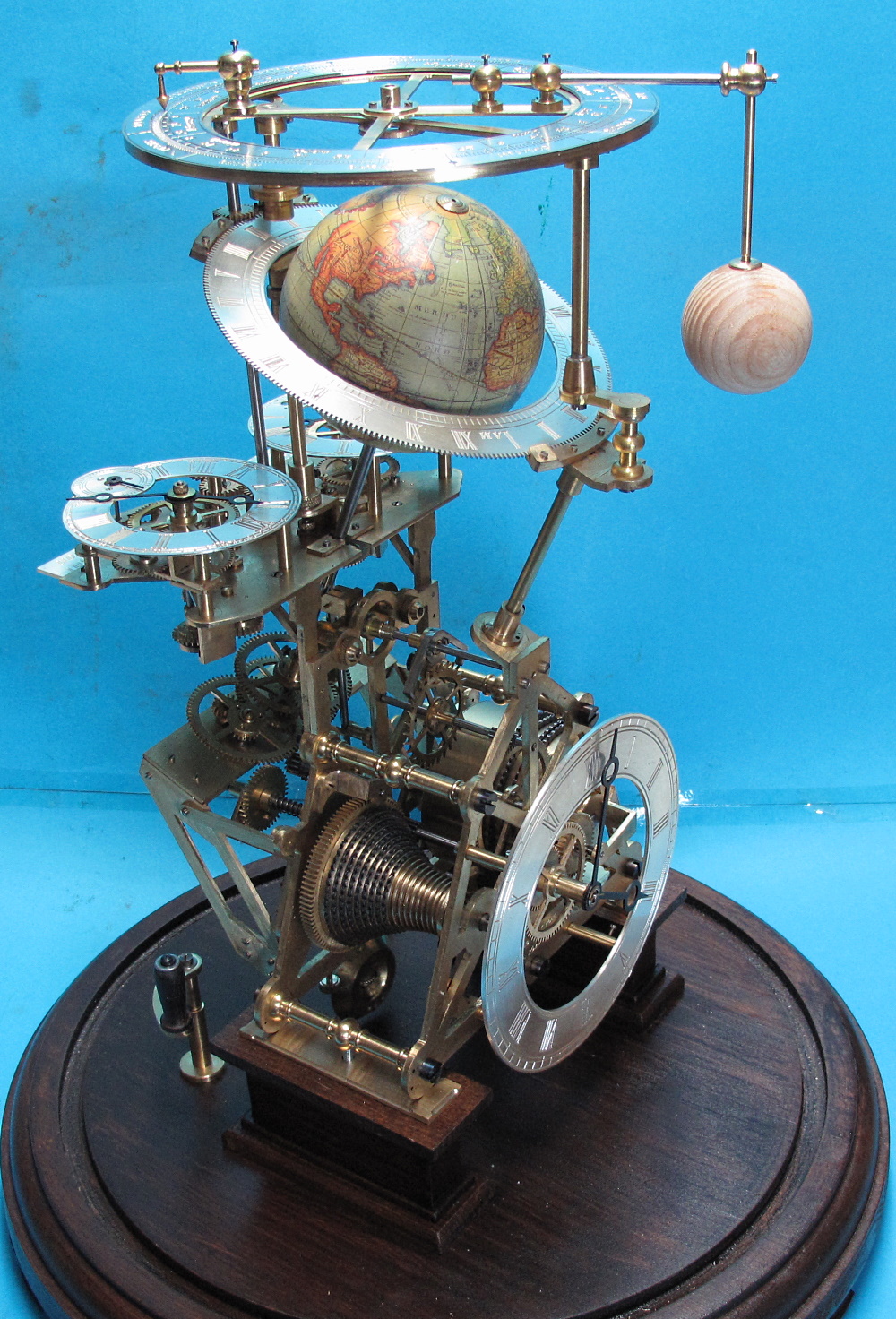
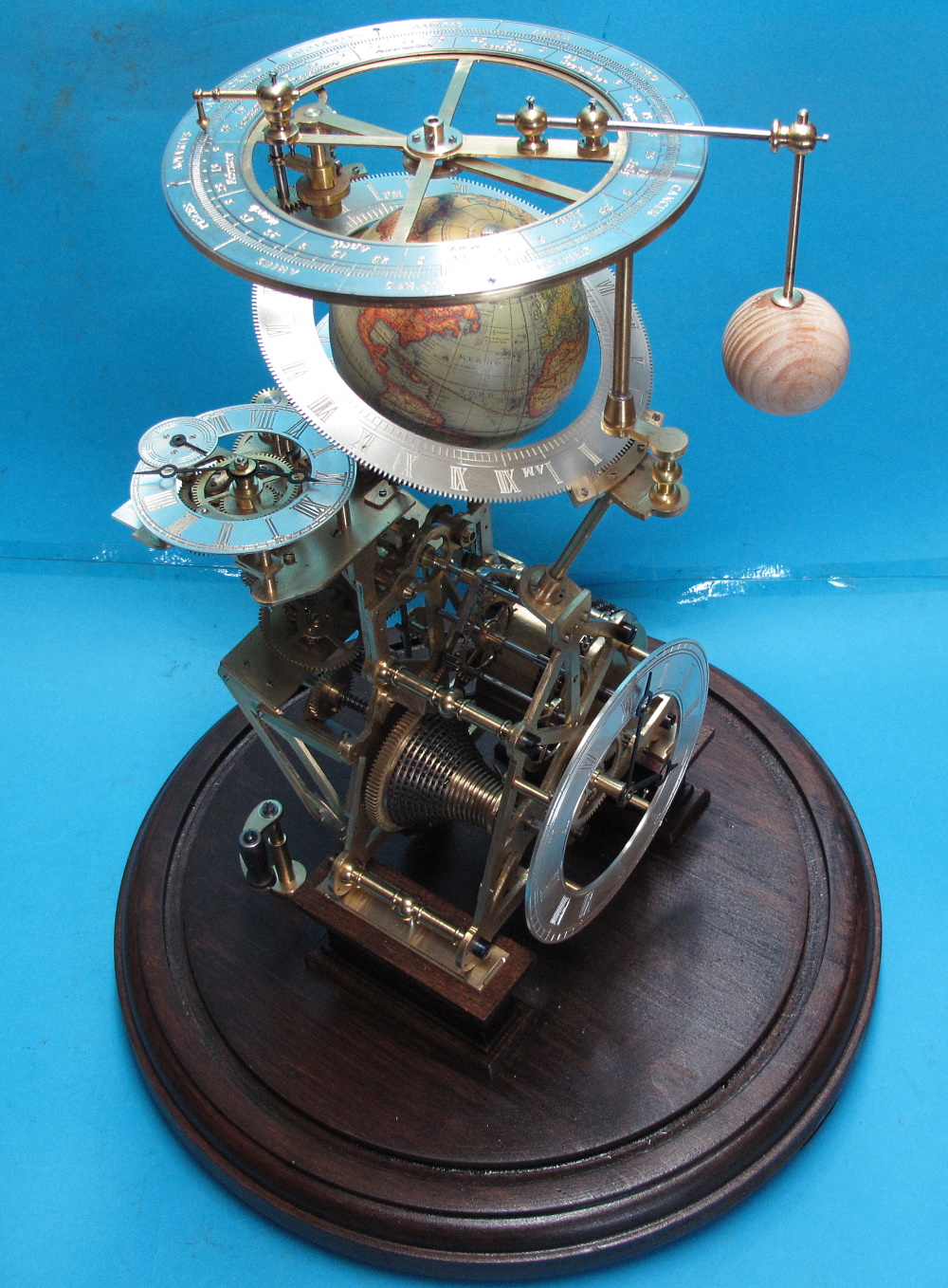
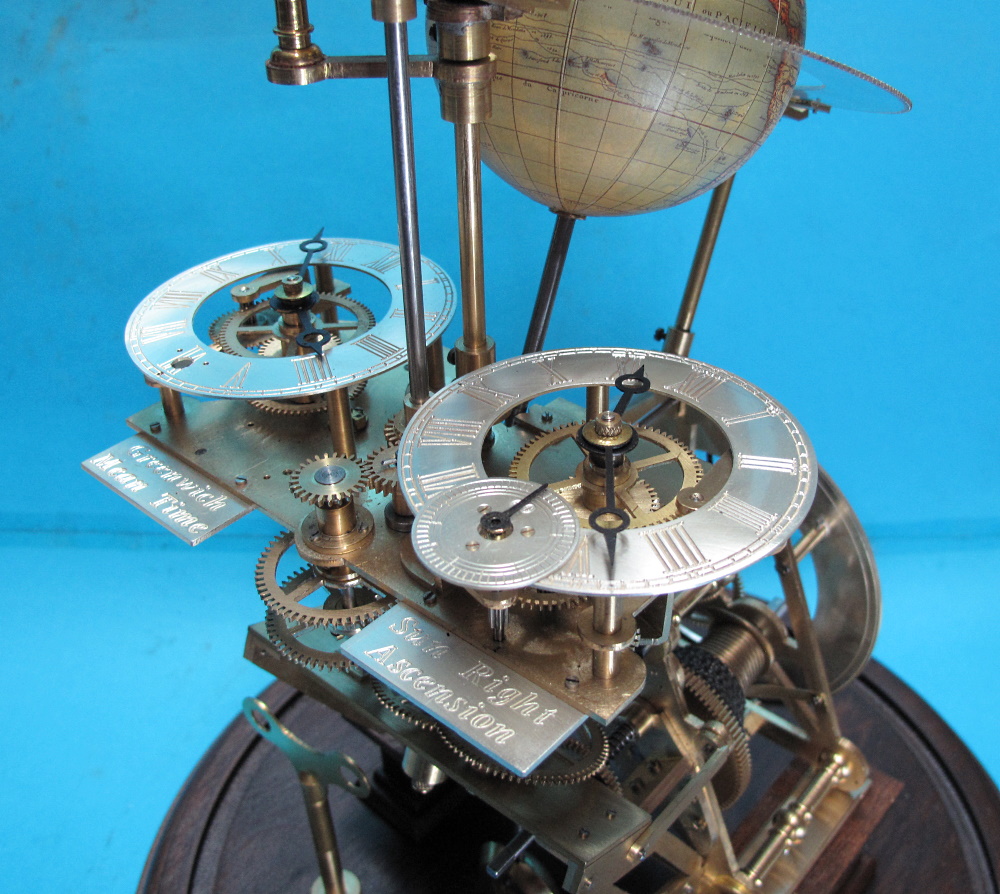
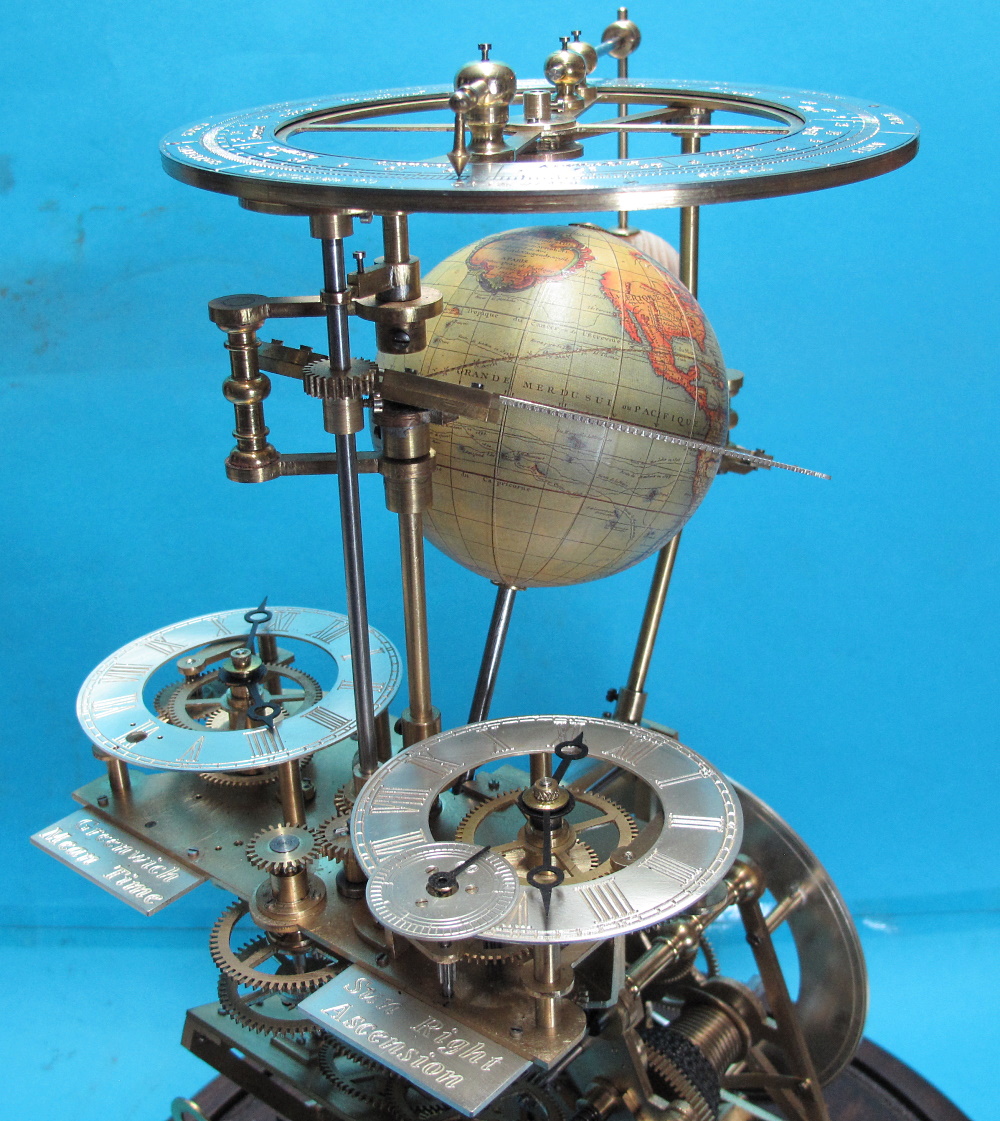
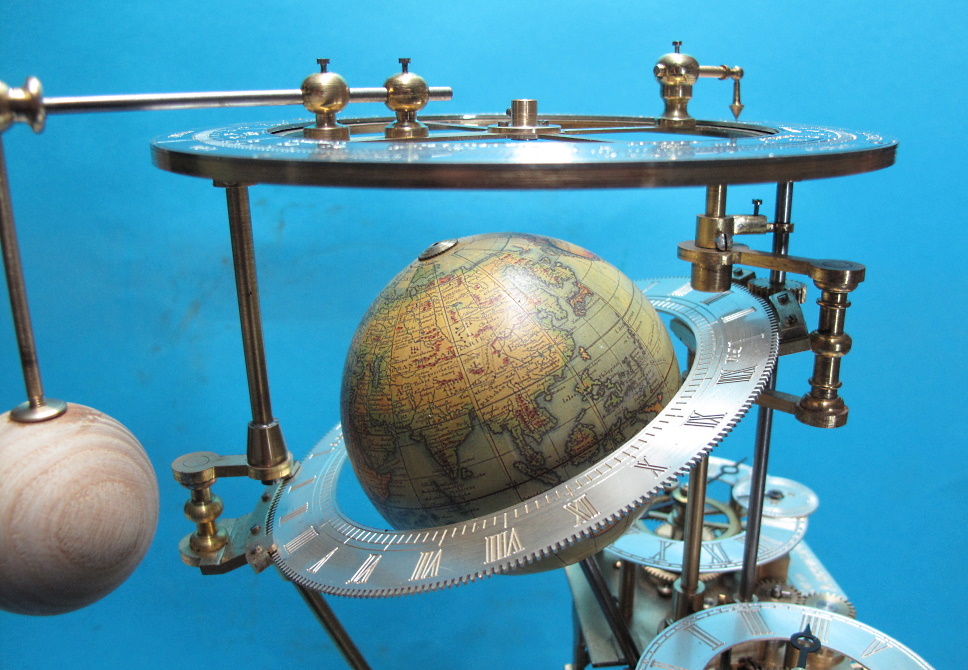
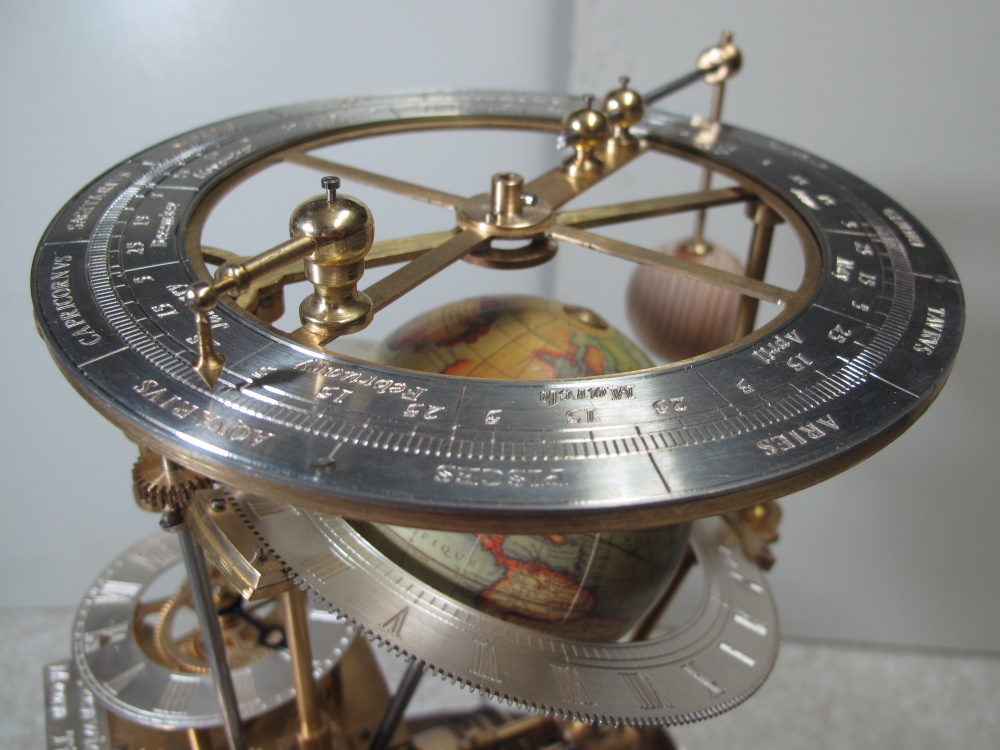
The very name, Cosmochronotrope, evokes its nature: an instrument that combines the measurement of time (chrono) with the representation of the cosmos (cosmo), able to show simultaneously an extraordinary amount of astronomical information. On the dial one can read the local mean time, the Greenwich mean time, the right ascension of the Sun, the position of the Sun relative to the Earth, the position of the Sun in the Zodiac, and the portion of the Earth exposed to the Sun and the portion in shadow.
Sarratt had conceived his Cosmochronotrope with commercial intent, thinking he could sell it to schools as a teaching instrument. Sales, however, did not have the hoped-for success and production remained limited to the original prototype alone, which is preserved today at the National Museum of American History of the Smithsonian Institution in Washington. An interesting article dedicated to this instrument appeared in the NAWCC Bulletin in February 1988.
Click ALL the images below to enlarge them
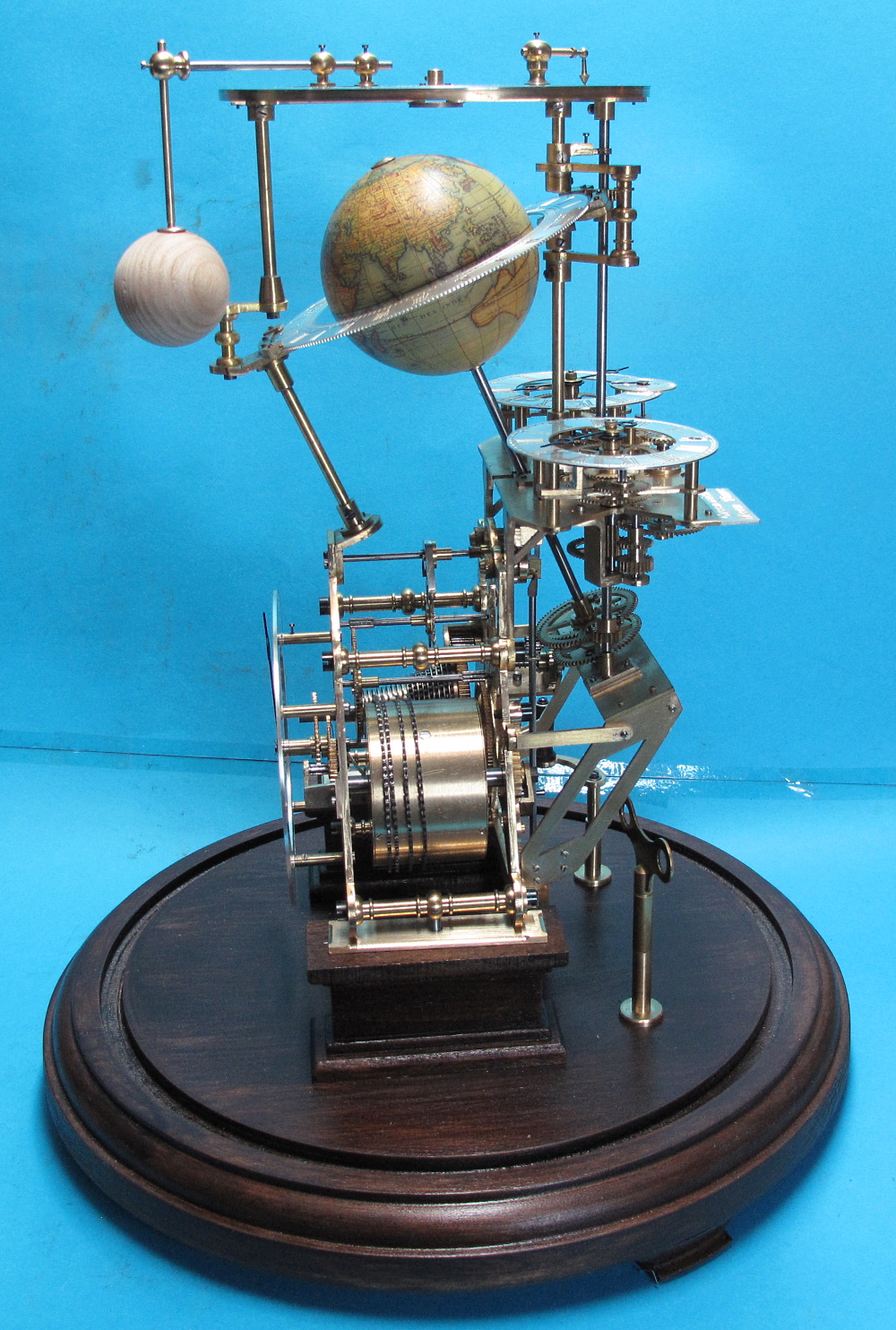
my replica of the Cosmochronotropefirst page of J.F. Sarratt's patent
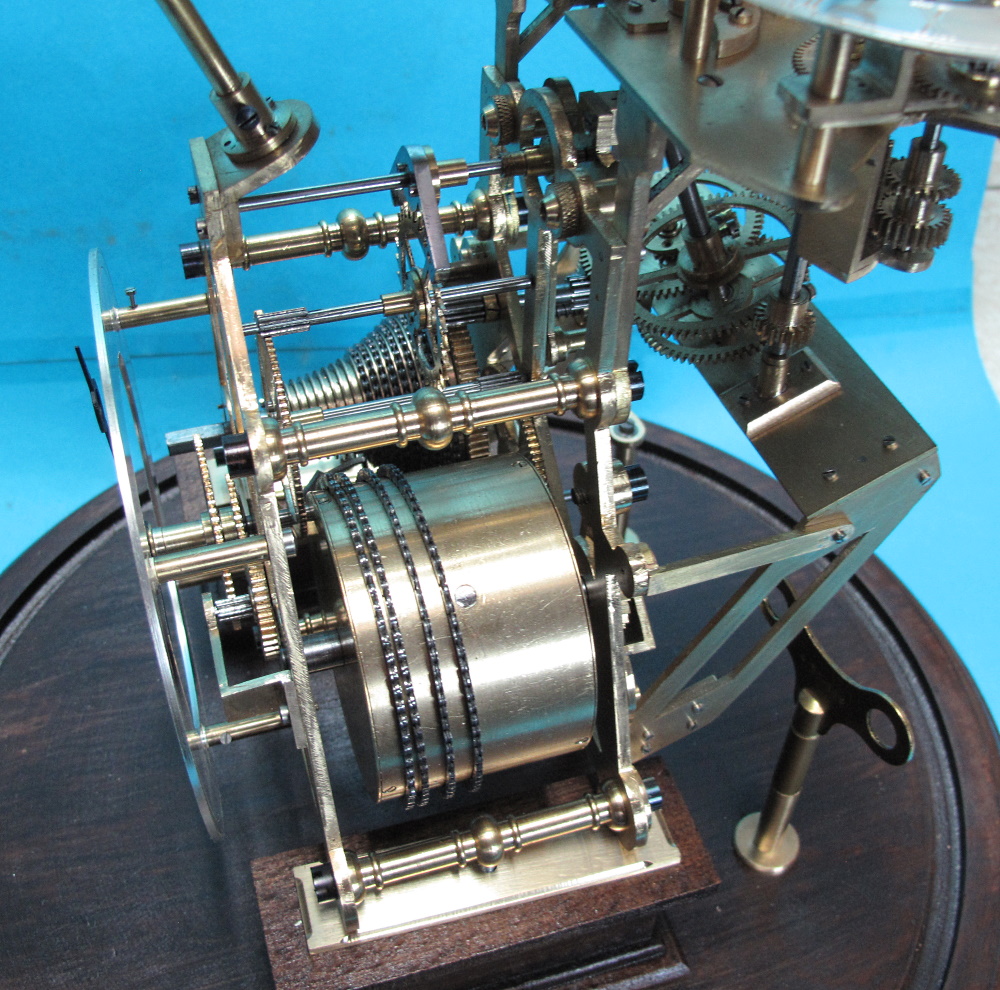
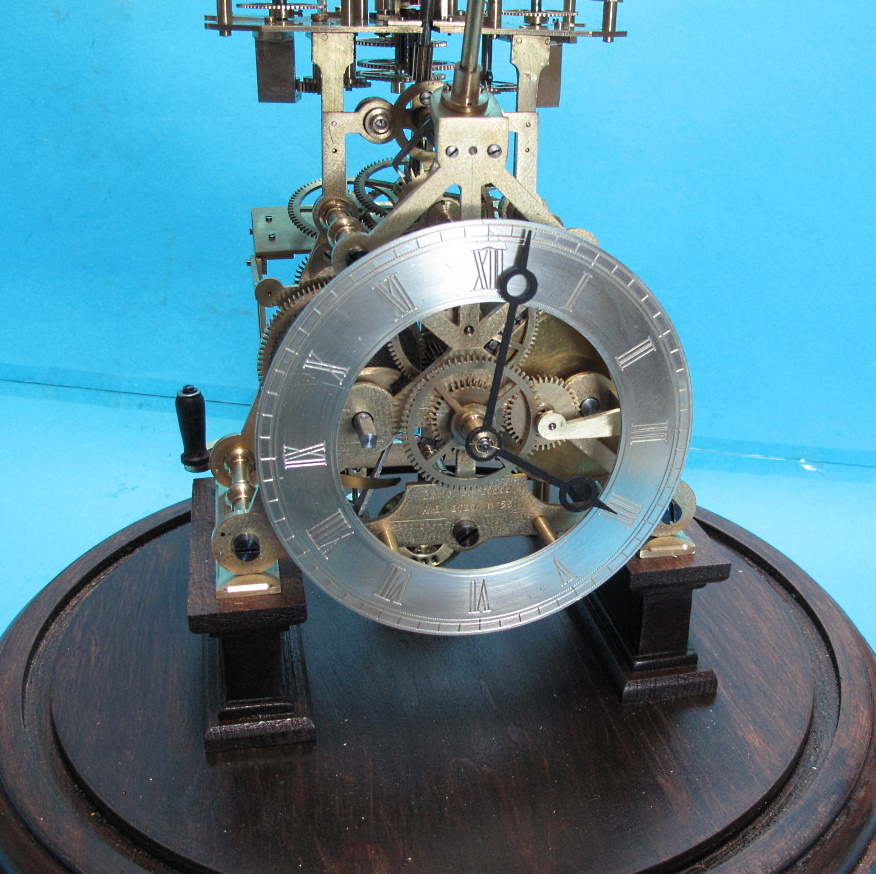
My mechanical replica
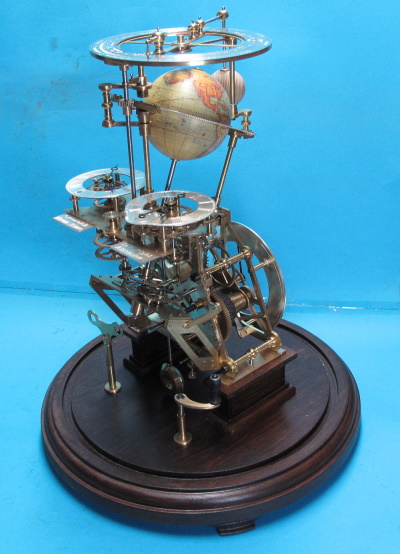
Based on Sarratt's original patent, I built a replica that I believe is the only one in the world, together with the original, to be driven by a mechanical movement.
Many other replicas do exist, but as far as I was able to verify in my research, all of them are driven by an electric motor.
The choice to make a replica with a mechanical movement was not accidental: it gives the instrument the historical coherence and the intrinsic beauty that an electric motor cannot offer.
A clock conceived in 1879 deserves to beat to the rhythm of gears and escapements, not of electric current.
All the details and the complete account of the construction are available in the pages of my forum pendoleria.com (in Italian).
Reproduction of part or all of the contents of any of the pages of this site is prohibited except to the extent permitted below.
These pages may be downloaded onto a hard disk or printed for your personal use without alterations. This copyright notice and the source must appear on each copy. These pages may not be included in any other work or publication, or be distributed or copied for any commercial purpose except with the explicit permission of the author.