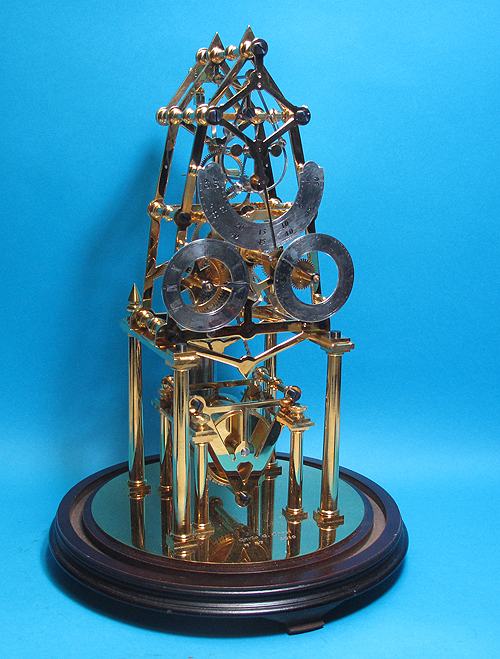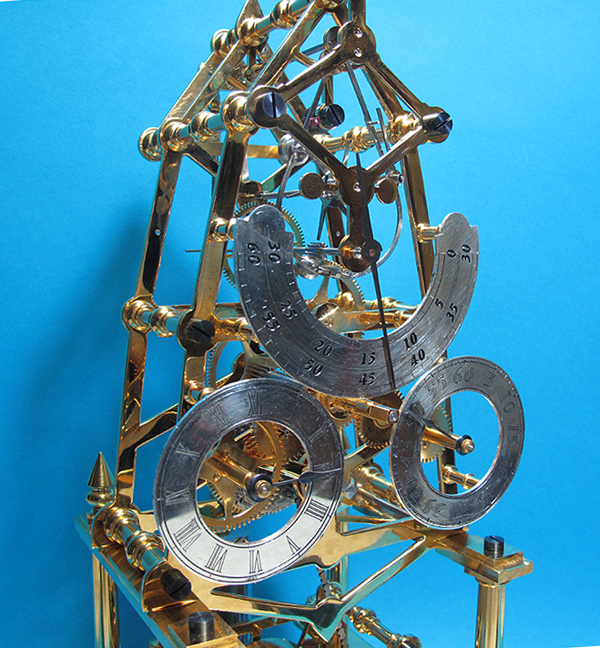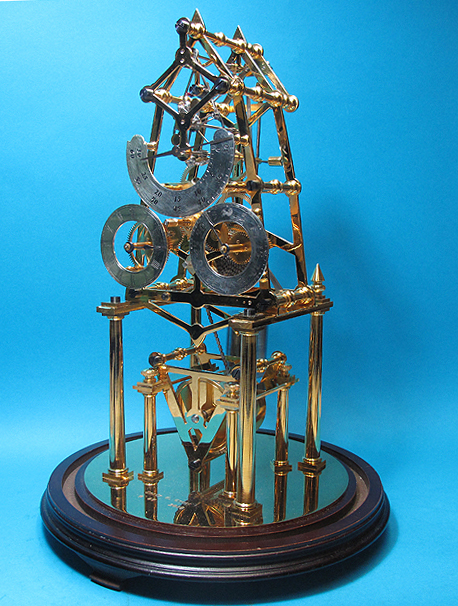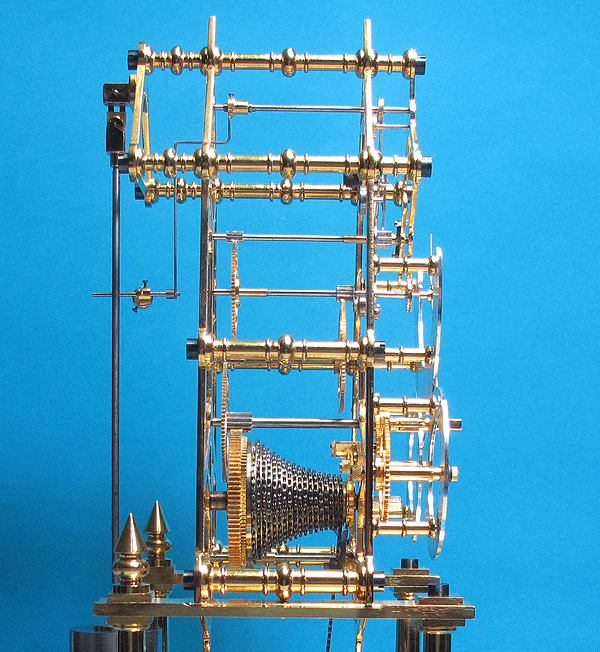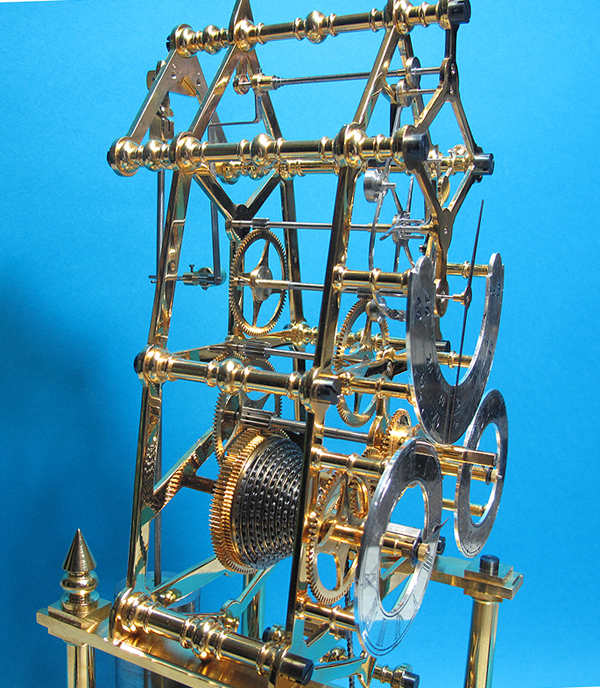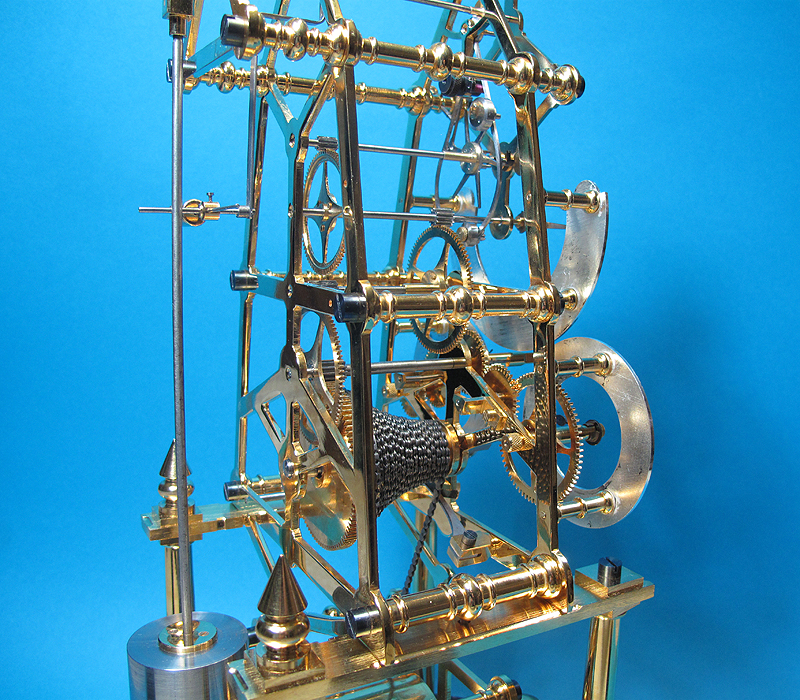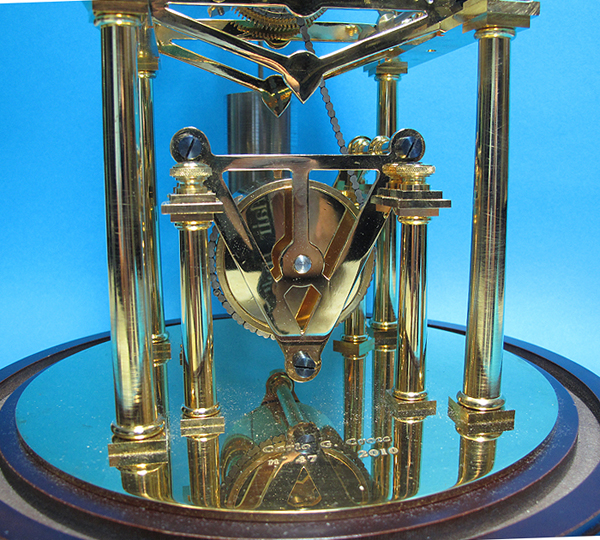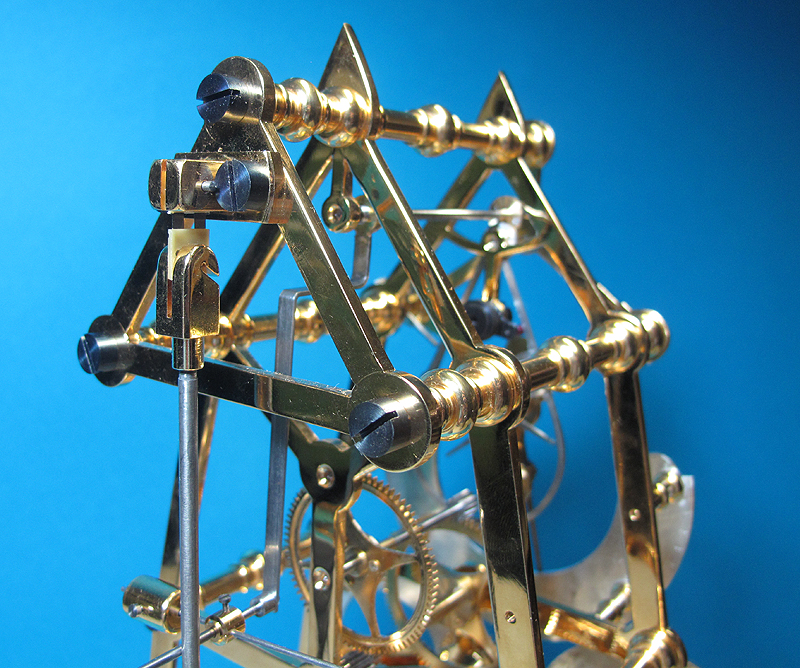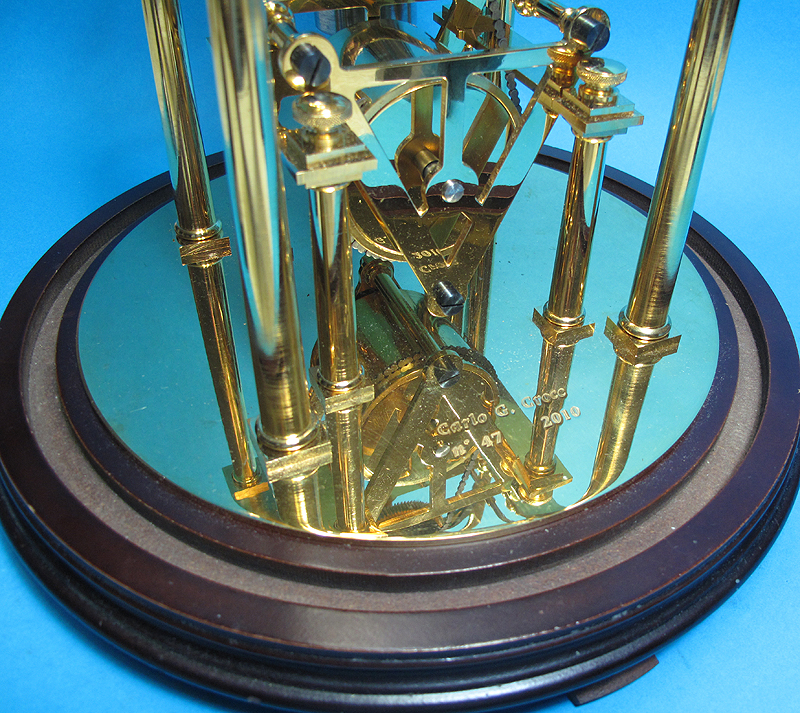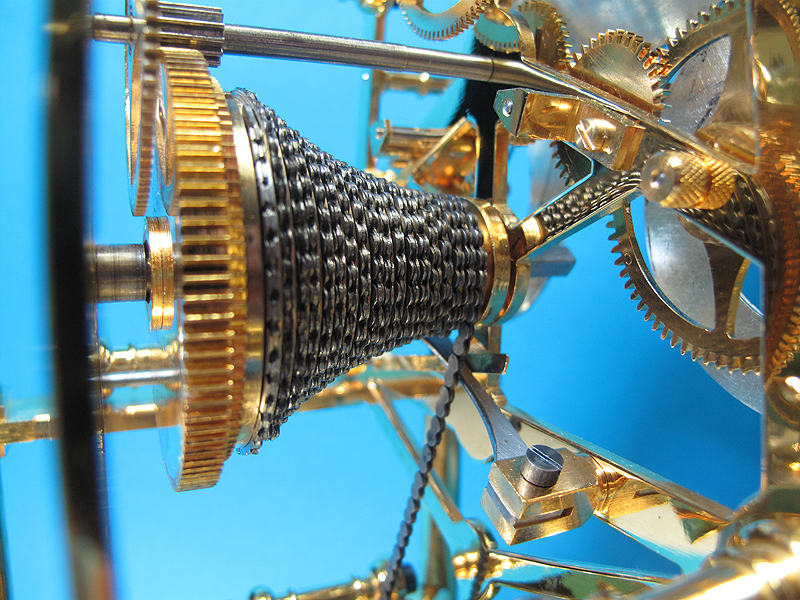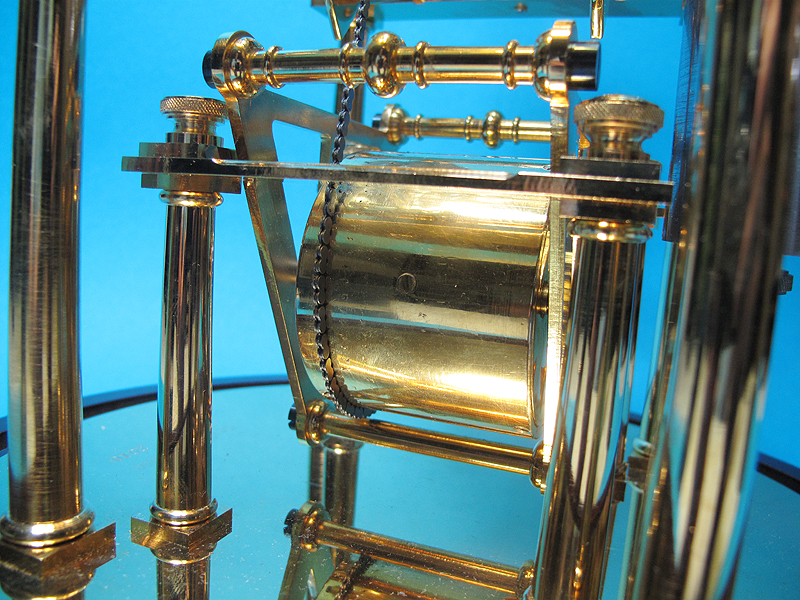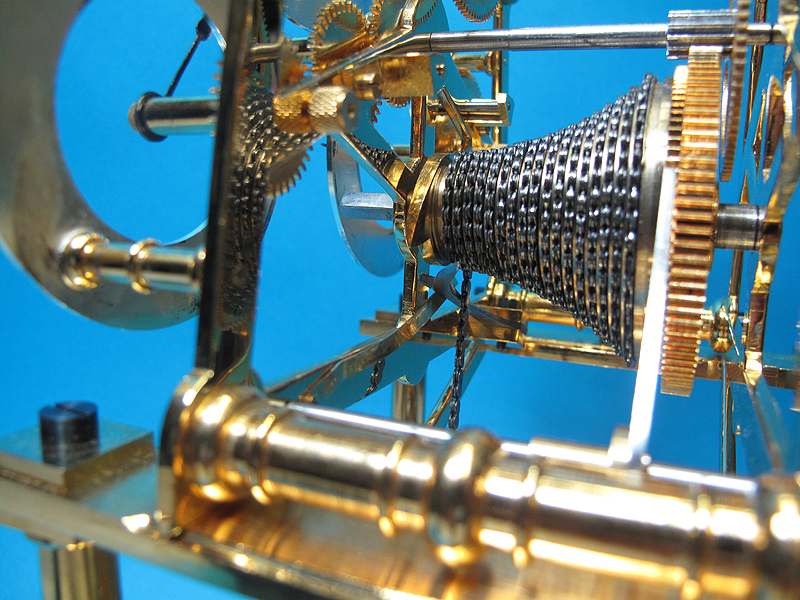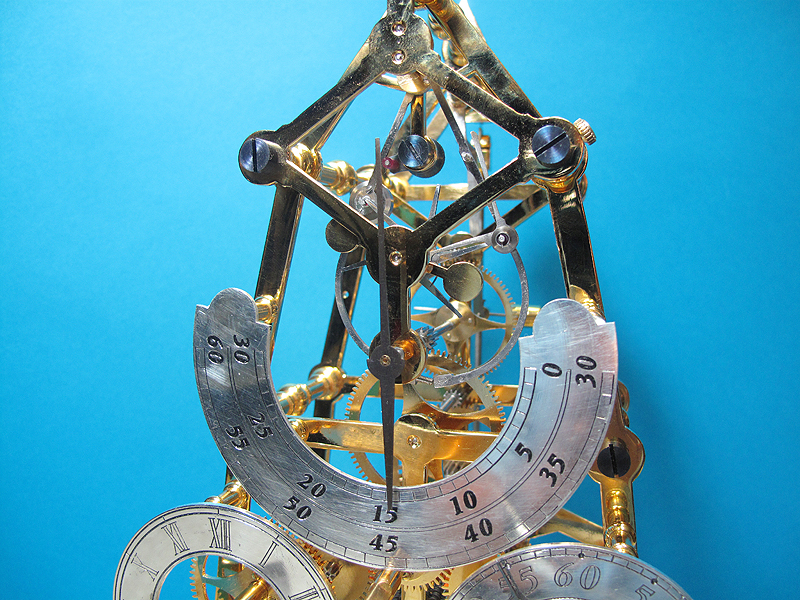
Making a skeleton clock that is also a precision clock is anything but an obvious challenge. Usually these two goals exclude each other: the skeleton clock favours aesthetics, the visibility of the mechanism and plates reduced to the bone; the precision clock favours stability, robustness and isolation from vibrations. With this project I wanted to show that the two goals can coexist.
The Arnfield gravity escapement
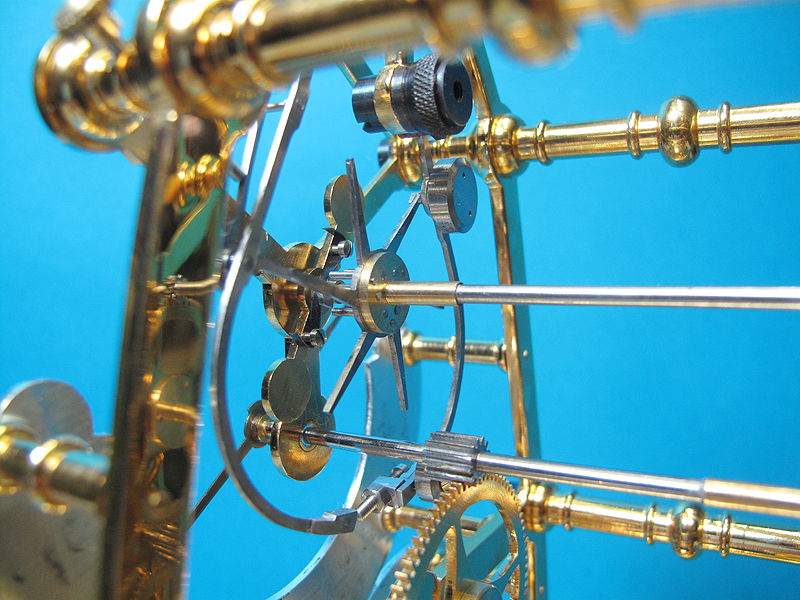
The key to achieving this goal is the Arnfield gravity escapement, an ingenious solution to one of the fundamental problems of precision clockmaking: the influence of the driving force on the regularity of the pendulum.
In traditional escapements the pendulum receives its impulse directly from the gear train. This means that any irregularity in the driving force (due, for example, to variable friction in the mechanism, or to the mainspring as it runs down) is passed straight to the pendulum, altering its period. Gravity escapements solve this problem elegantly: the pendulum does not receive its impulse directly from the train, but from two small gravity "arms" that are raised by the train itself and then fall onto the pendulum with an always constant force, independent of any irregularity in the driving force.
The Arnfield escapement in particular stands out for its effectiveness with short pendulums. In this clock I chose a half-second pendulum (each swing lasts 0.5 seconds), which gives the mechanism a lively tick and a precise rhythm.