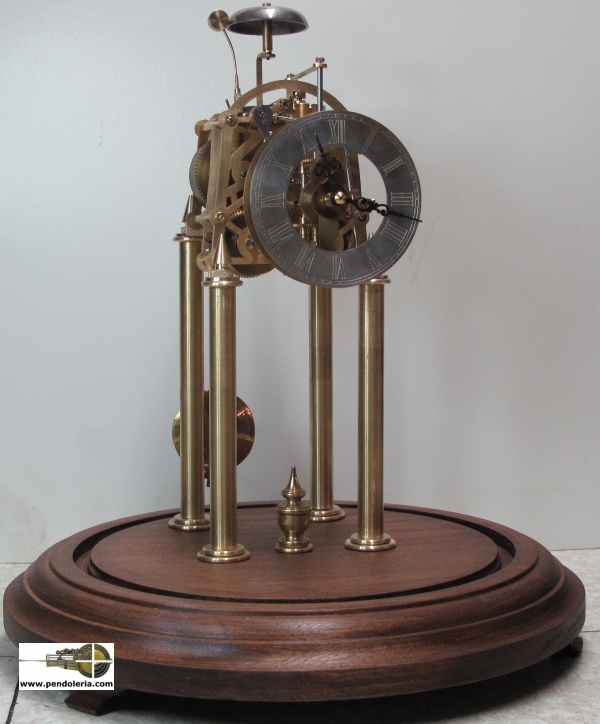
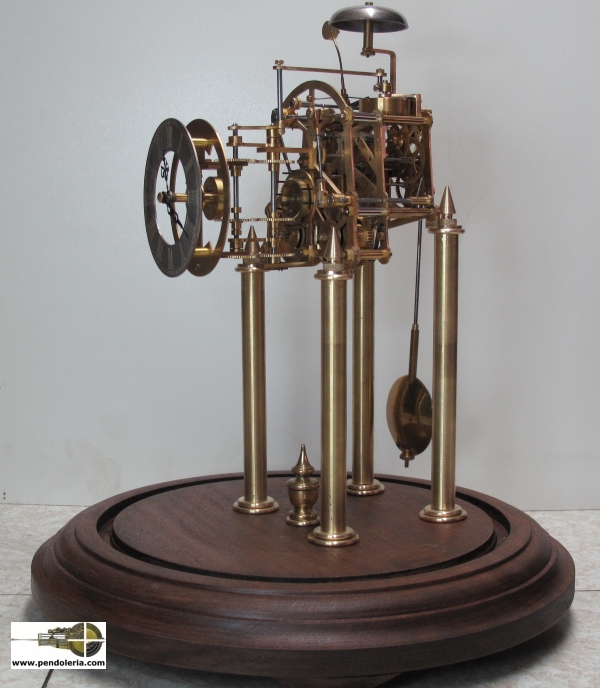
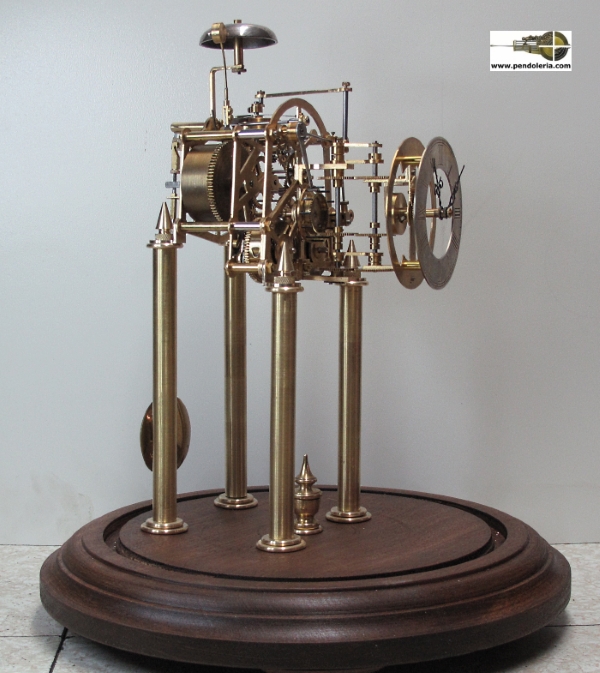
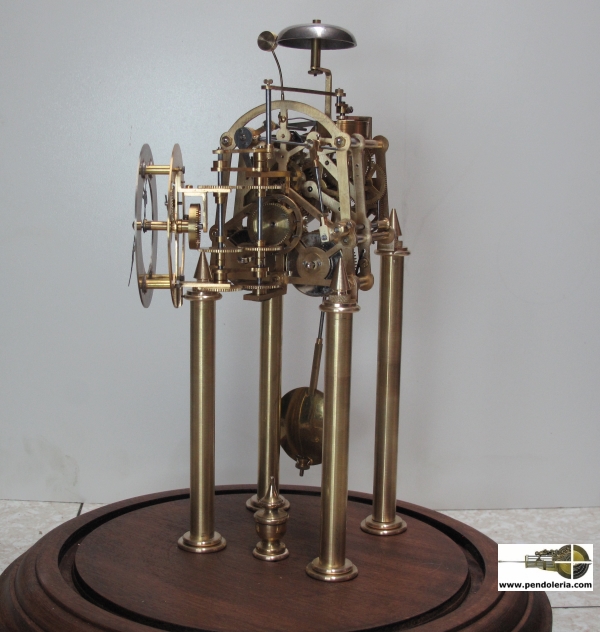
For details and an account of the construction of this clock, I invite you to visit this page of my forum (in Italian).
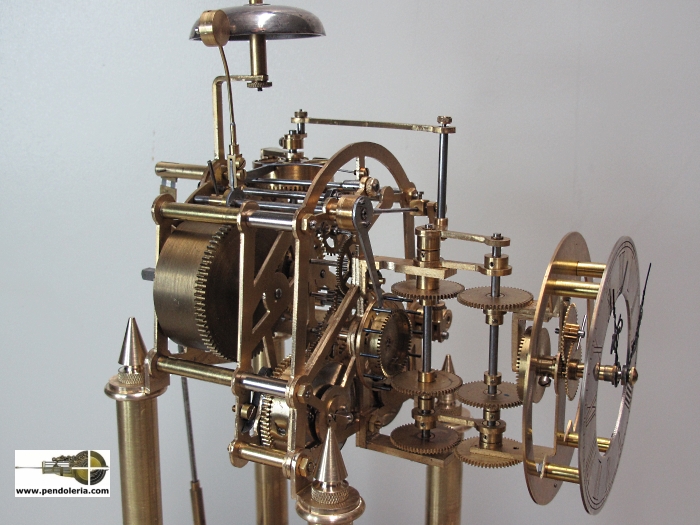
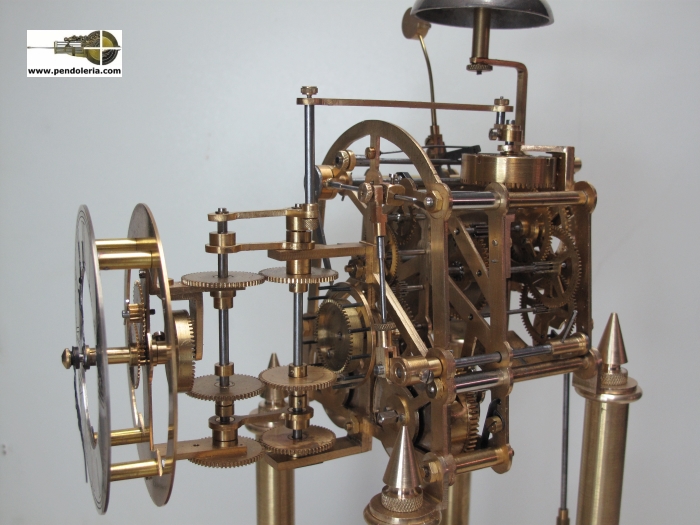
One of the most extraordinary clocks ever made by Hubert Sarton is the Horloge de Compagnie, a clock with a feature never seen in any other mechanism: its dial can rotate at preset intervals so as to become visible, sooner or later, to anyone in any position in the room where the clock is placed.
The technical challenge of the rotating dial
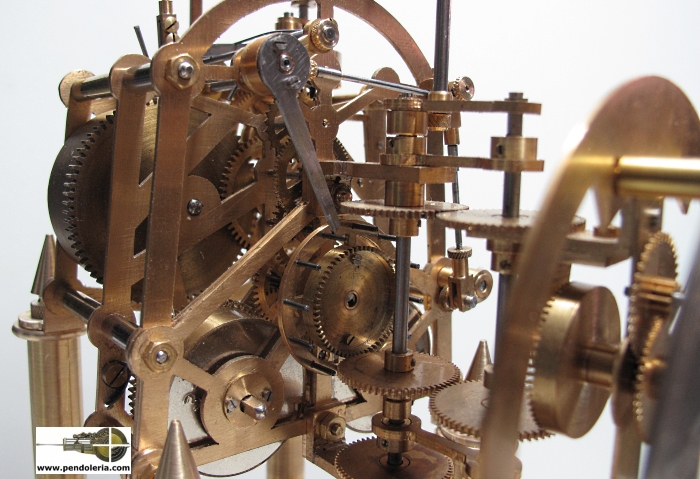
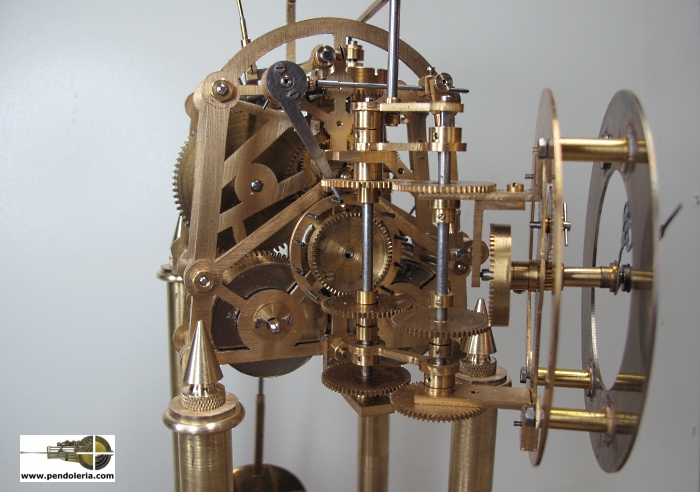
The technical difficulty is obvious: how can motion be transmitted to the hands when they are not in a fixed position relative to their drive but, on the contrary, together with the dial, cyclically change position relative to the mechanism from which they receive their motion?
Apart from a few generic photographs in specialist books and some videos available on the internet, there is no specific technical documentation explaining how, in Sarton's Horloge de Compagnie, this movement of the dial and its hands is obtained.
An original solution
For this latest clock of mine I had to imagine the mechanical solutions myself to achieve the mobility of the dial. I therefore believe I can say that my clock, although inspired by the concept of the one made by Hubert Sarton, is unique of its kind. For this reason I thought of calling it Carlo G. Croce's Pendule de Compagnie.
Click each photo to enlarge it
Mechanical structure
My Pendule de Compagnie consists of two distinct parts:
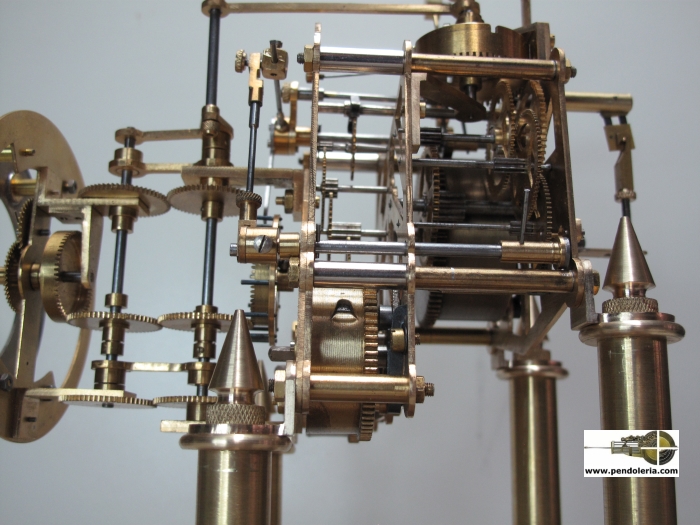
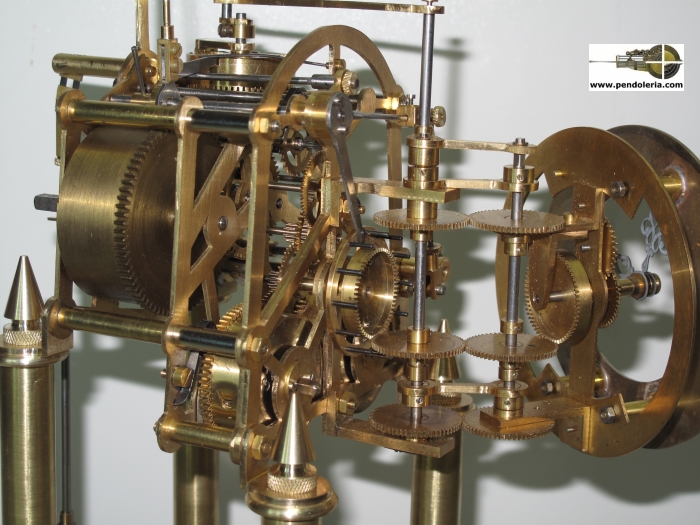
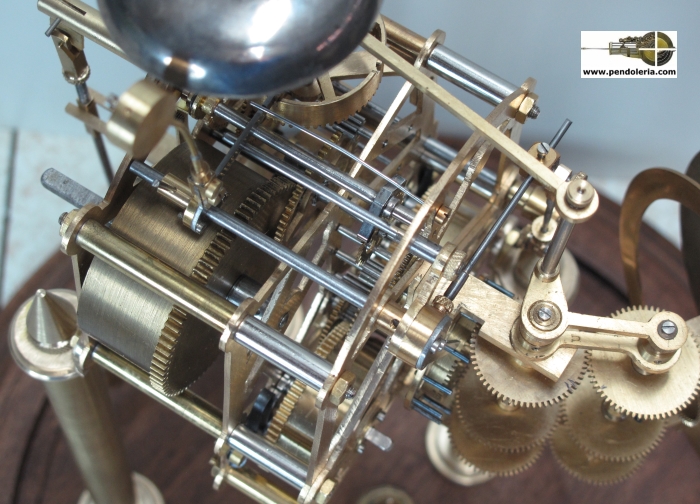
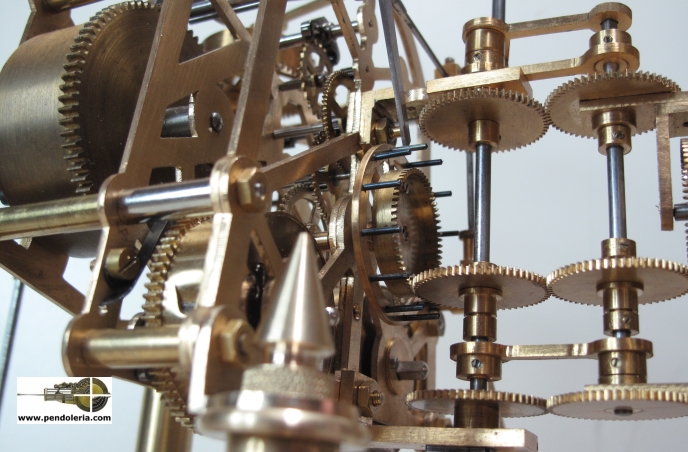
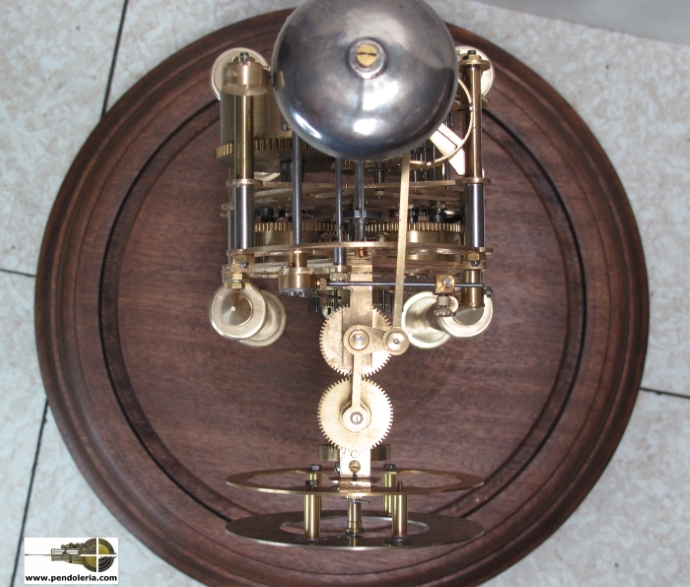
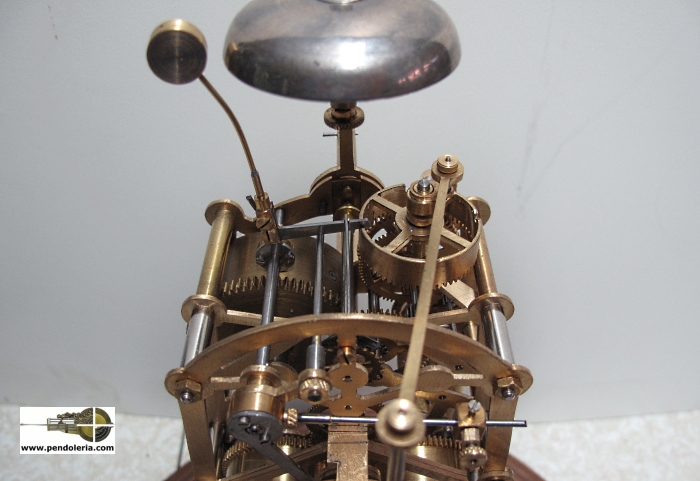
A) The front section contains the gear train that moves the hands. To power this train I used two springs housed in two barrels. This gear train not only moves all the wheels that drive the hands, but also controls the release of the stop of the train that moves the dial.
B) The rear section contains the gear train used to rotate the dial itself.
At the end of each rotation of the dial, which takes place every five minutes, a small hammer strikes a bell to announce that the movement has taken place, adding a sound element to this extraordinary mechanical dance.
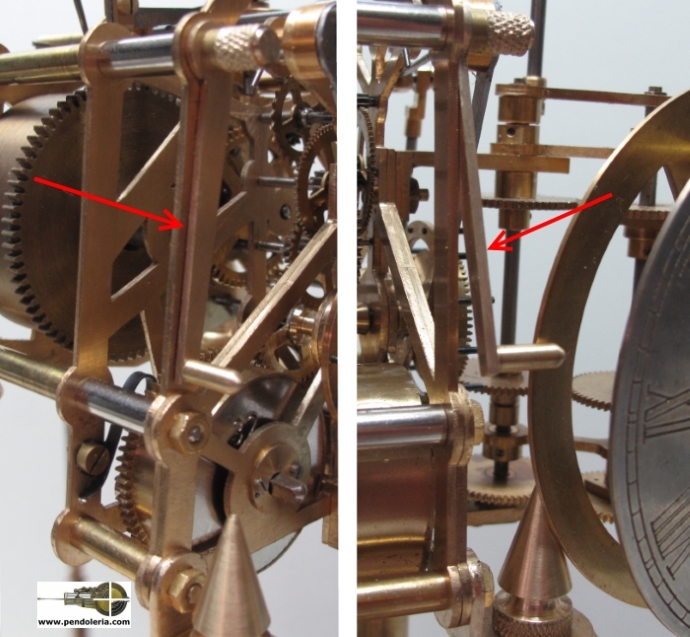
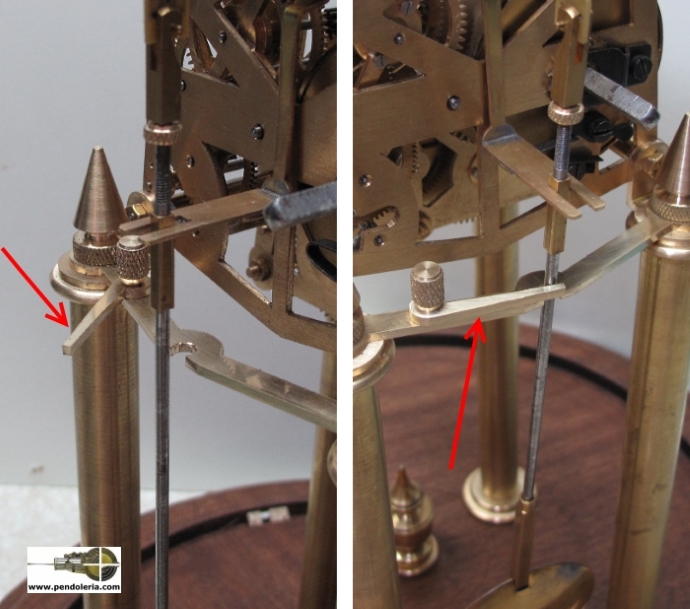
To avoid damage during transport, the clock is fitted with two locking levers: one for the rotating dial and one for the pendulum.
All the construction details and the technical solutions adopted are documented in the pages of my forum (in Italian).
Click the photos to enlarge them
the lever that locks the dial during transport of the clockthe small lever that locks the pendulum during transport of the clock
When the lock on the train that moves the dial is released, the dial starts to turn: at the end of the movement the hammer strikes the bell
Demonstration of the continuous movement of the dial (only when the lock is manually released)
Reproduction of part or all of the contents of any of the pages of this site is prohibited except to the extent permitted below.
These pages may be downloaded onto a hard disk or printed for your personal use without alterations. This copyright notice and the source must appear on each copy. These pages may not be included in any other work or publication, or be distributed or copied for any commercial purpose except with the explicit permission of the author.