David Walter's modern approach
By contrast, one of the most skilled contemporary makers, David Walter, an Australian clockmaker now living in California, has revolutionised this concept.
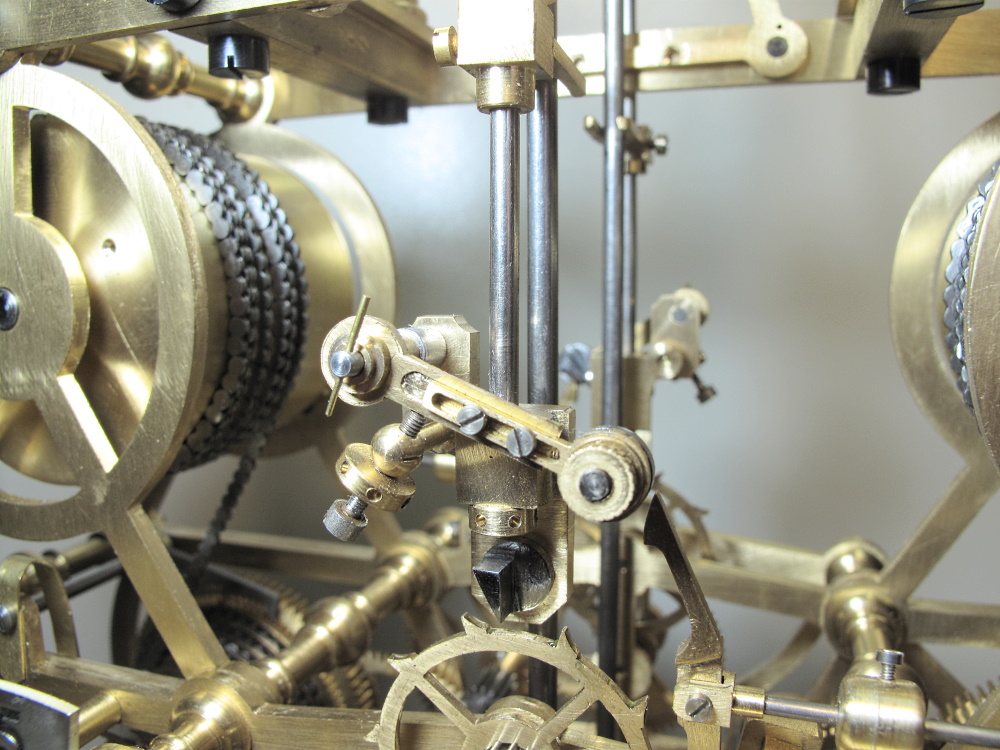
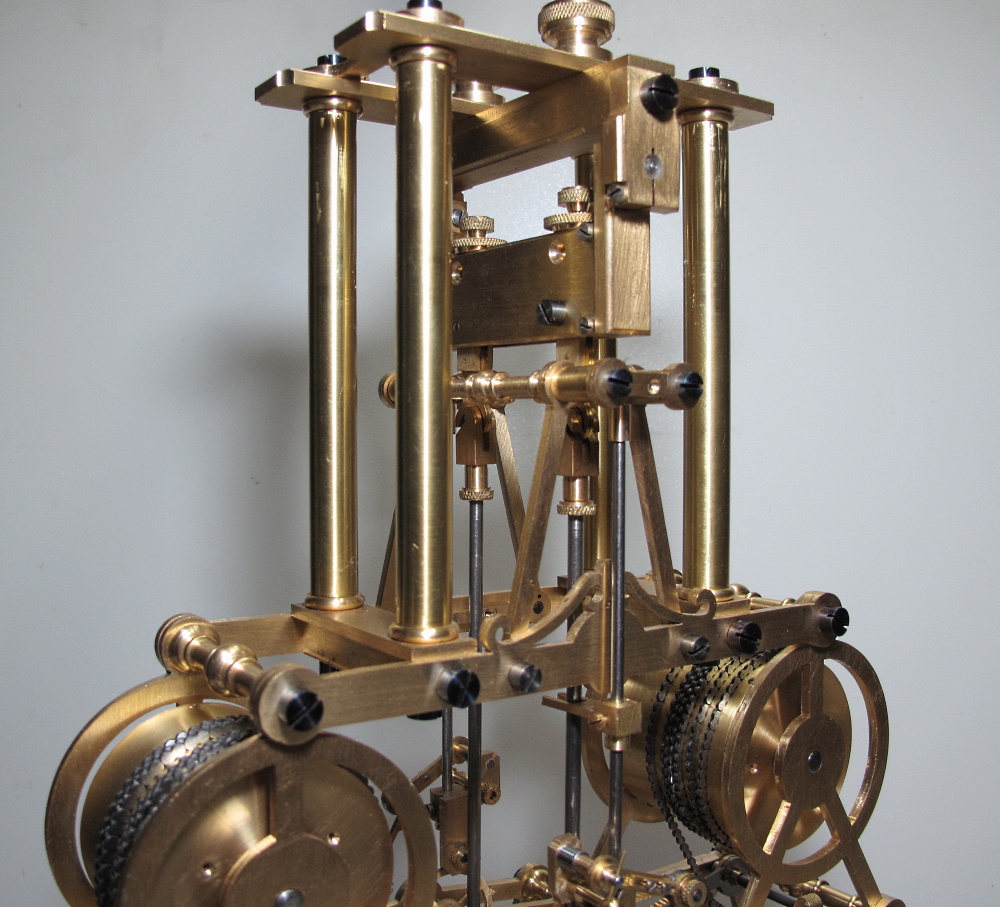
In making his double-pendulum clock, Walter preferred to make the support of the suspensions as unconstrained as possible, allowing it to rotate on ruby bearings.
This approach allows the pendulums to "communicate" better with each other through micro-movements of the support itself, making it easier for resonance to establish itself. David Walter generously shared some construction details of this innovative support, allowing me to make, to the best of my abilities, my own "DOUBLE PENDULUM SKELETON CLOCK".
Technical features of my DPSC
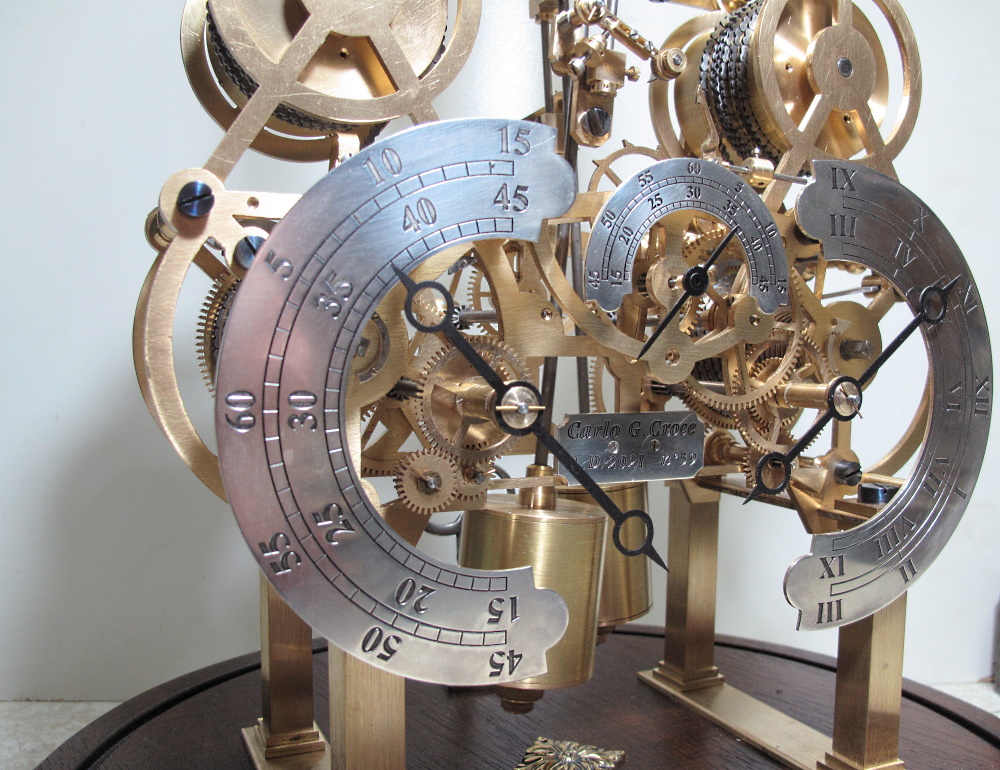
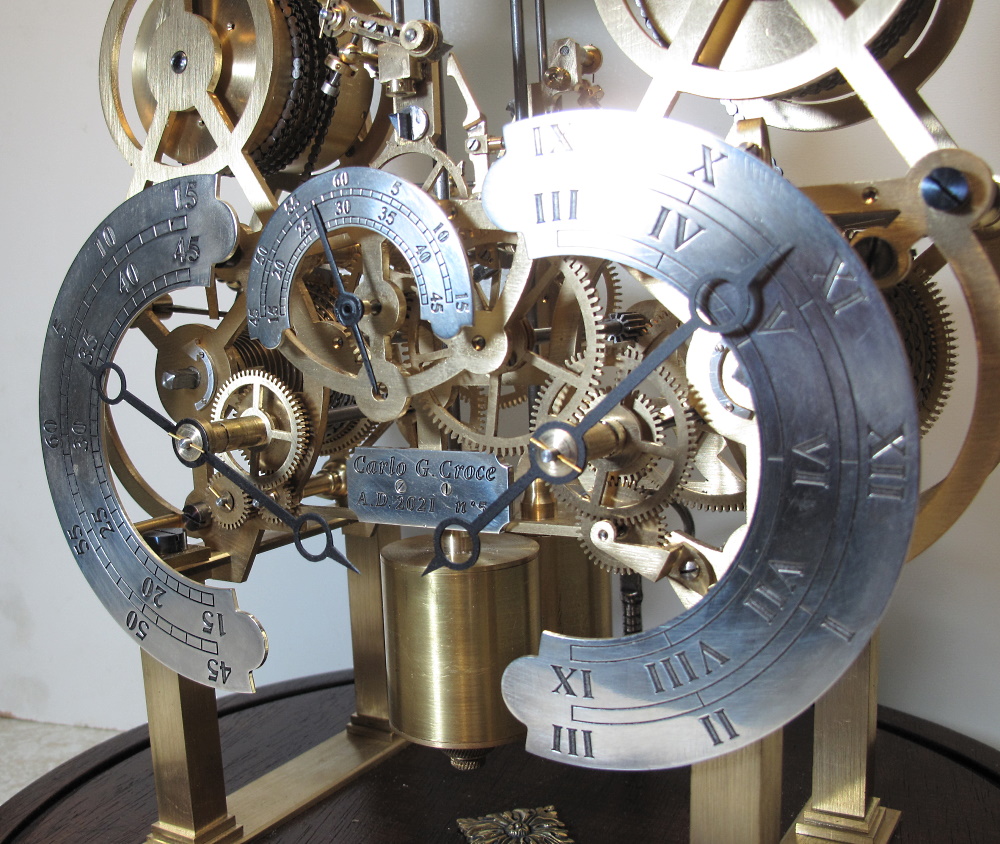
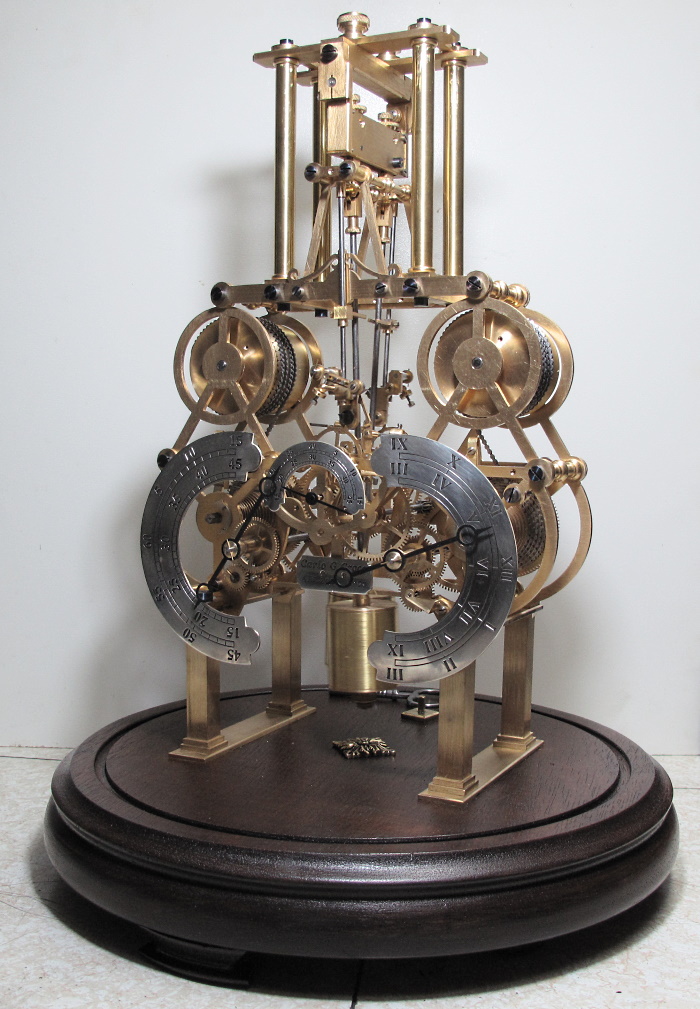
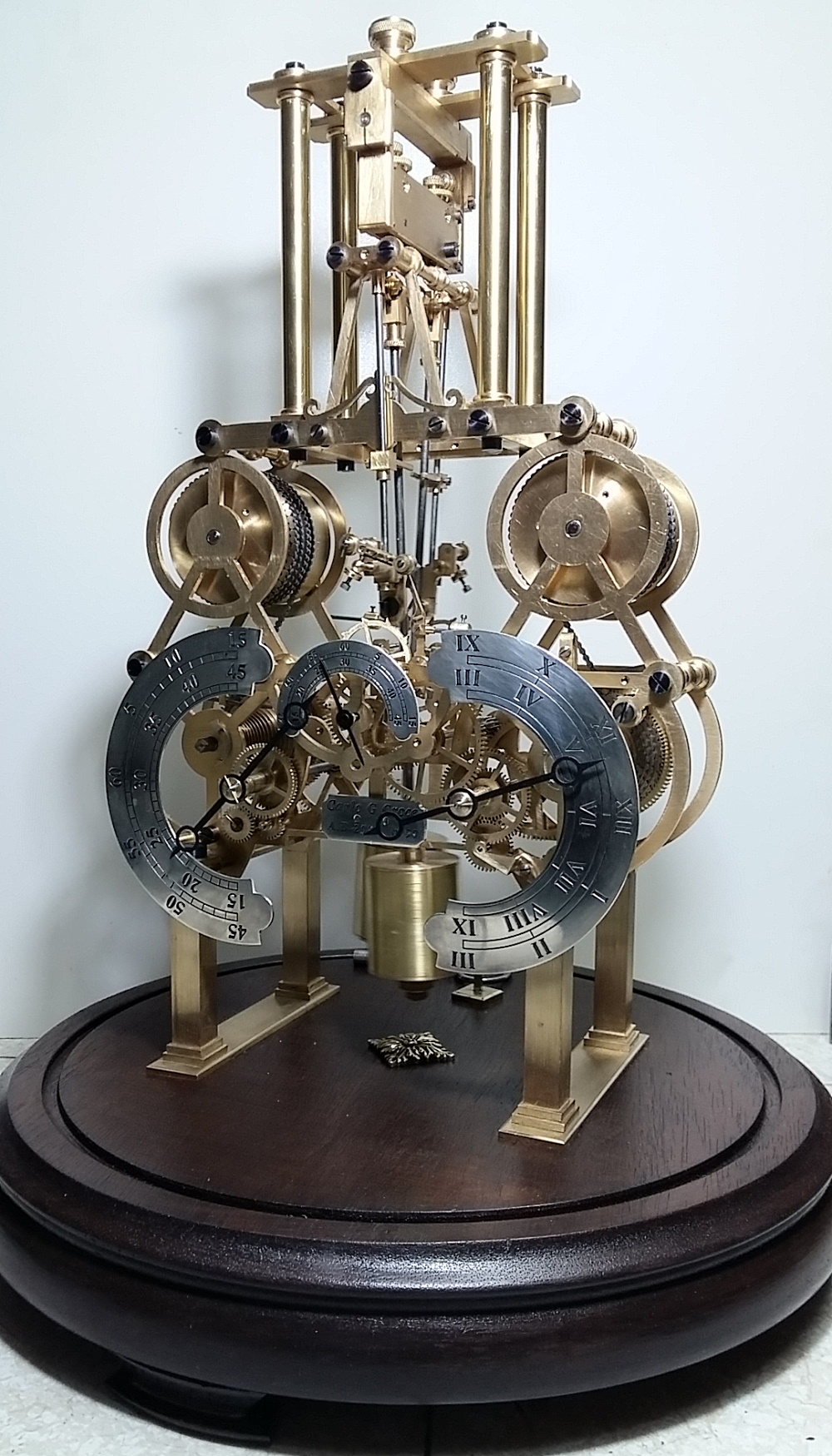
In my clock, the two pendulums receive separate impulses from two completely independent gear trains:
- the left train drives the minute hand and the seconds hand
- the right train moves the hour hand.
After some initial swings, once the pendulums reach perfect asymmetry (they swing in antiphase), they keep, thanks to resonance, exactly the same period. The behaviour of each pendulum becomes both conditioning and conditioned by the other, creating a self-stabilising system that allows an extremely precise measurement of time.
A touch of originality: the shaped dials
The particular shape of the dials arose from a practical necessity: the space available on the movement was limited. I therefore chose this solution which, as far as I know, has never been adopted in any other clock. The result gives the DPSC a pleasing touch of originality, combining functionality and aesthetics in a unique design.
The whole construction process is documented in detail in these pages of my forum (in Italian), where I shared every stage of the making, from the technical difficulties encountered to the solutions adopted.