The Byzantine Sundial is the reconstruction of an extraordinary instrument believed to date from the early 6th century AD, an age in which the Eastern Roman Empire (Byzantium) was at its cultural and scientific peak.


Antique Byzantine sundial
Replica #64
For the construction details of this sundial please visit this page of my forum (in Italian).
(click each image to enlarge it)
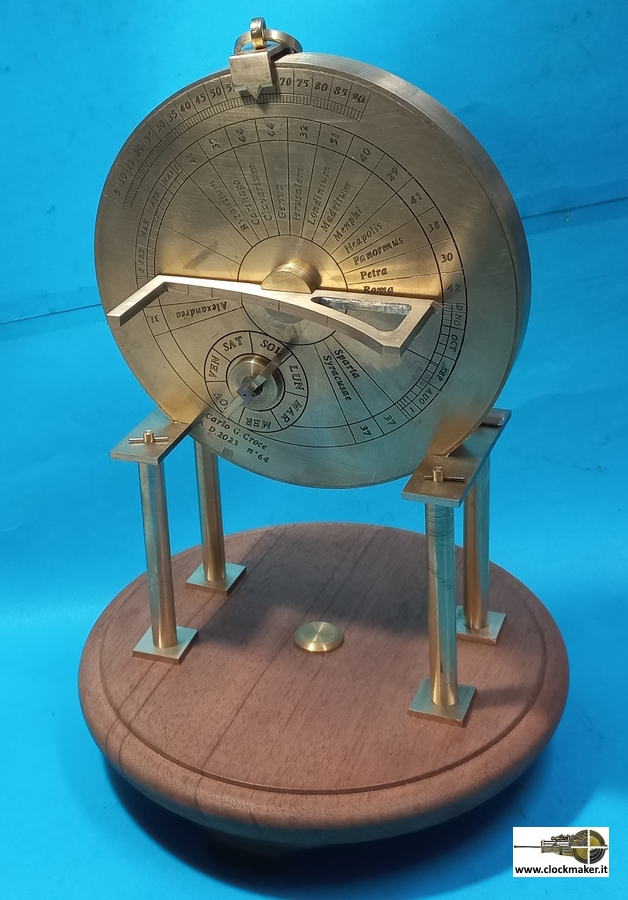
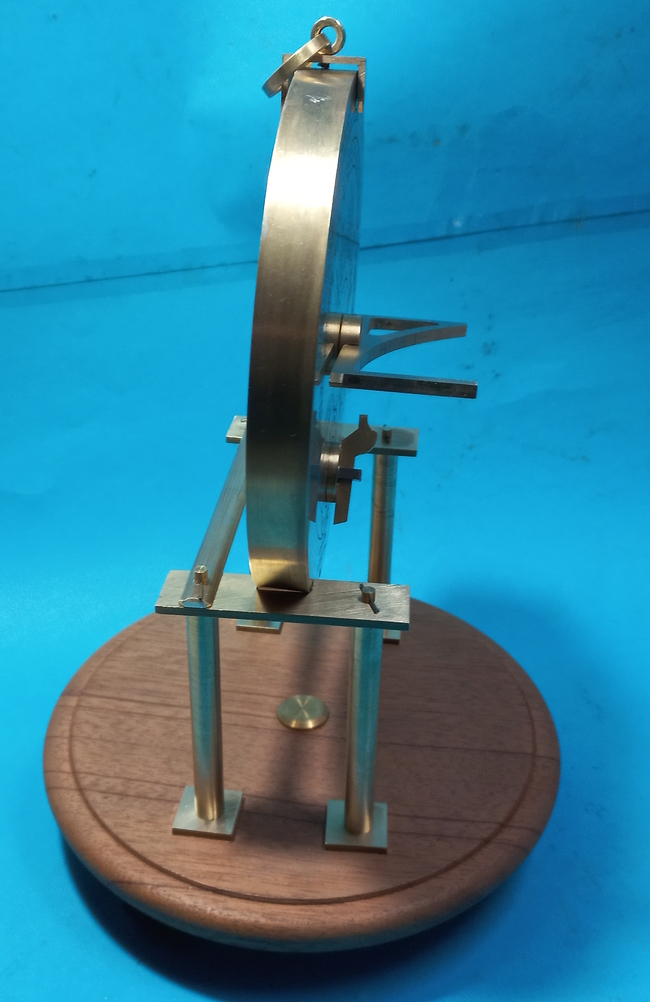
Numerous original examples of this type of sundial exist, evidence of how widespread they were in the ancient world. Some bear inscriptions in Latin, others in Greek, depending on the region of the empire in which they were produced. For my replica I chose to engrave the names in Latin, following the tradition of the western part of the empire.
A 6th-century analogue computer
This instrument is much more than a simple sundial. It is a true portable "analogue computer" that combines:
- a universal sundial that can be used at any latitude
- a mechanical geared calendar that calculates the lunar phases
- a day-of-the-month indicator
- a system for determining the position of the Sun and the Moon in the Zodiac
The mechanical complexity of this instrument, made 1500 years ago, is surprising. The fact that it used gears to calculate lunar cycles shows a sophisticated understanding of both astronomy and precision mechanics.
The instrument consists of two practically independent parts: a sundial that can be used at any latitude and a geared calendar that shows the lunar phases, the day of the month and the places of the Sun and the Moon in the Zodiac.
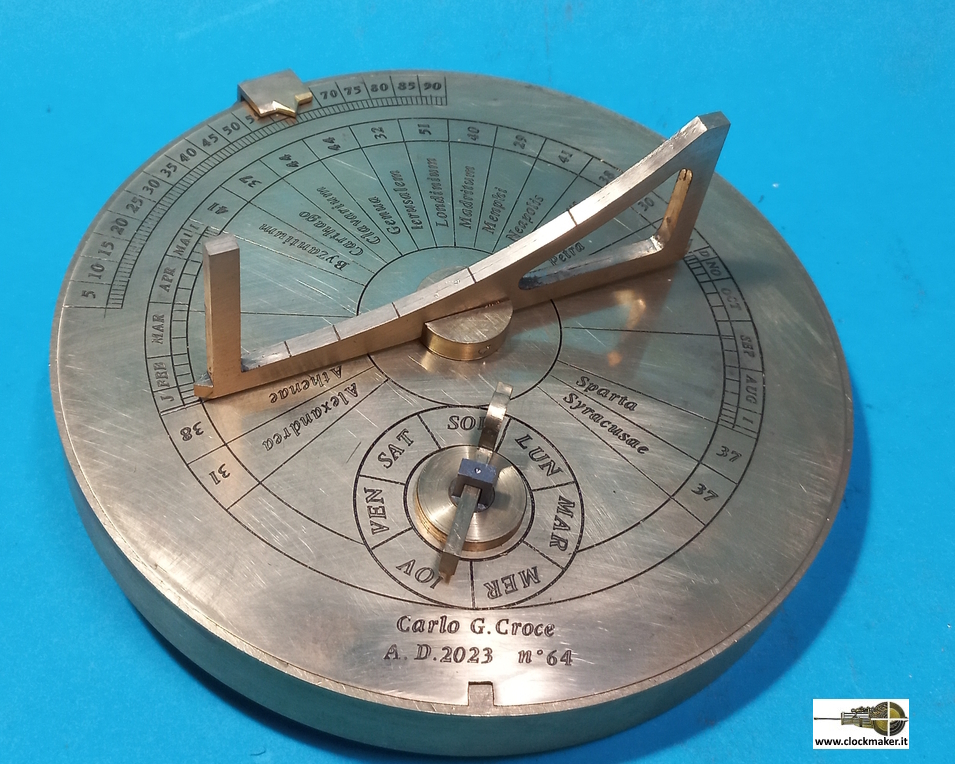
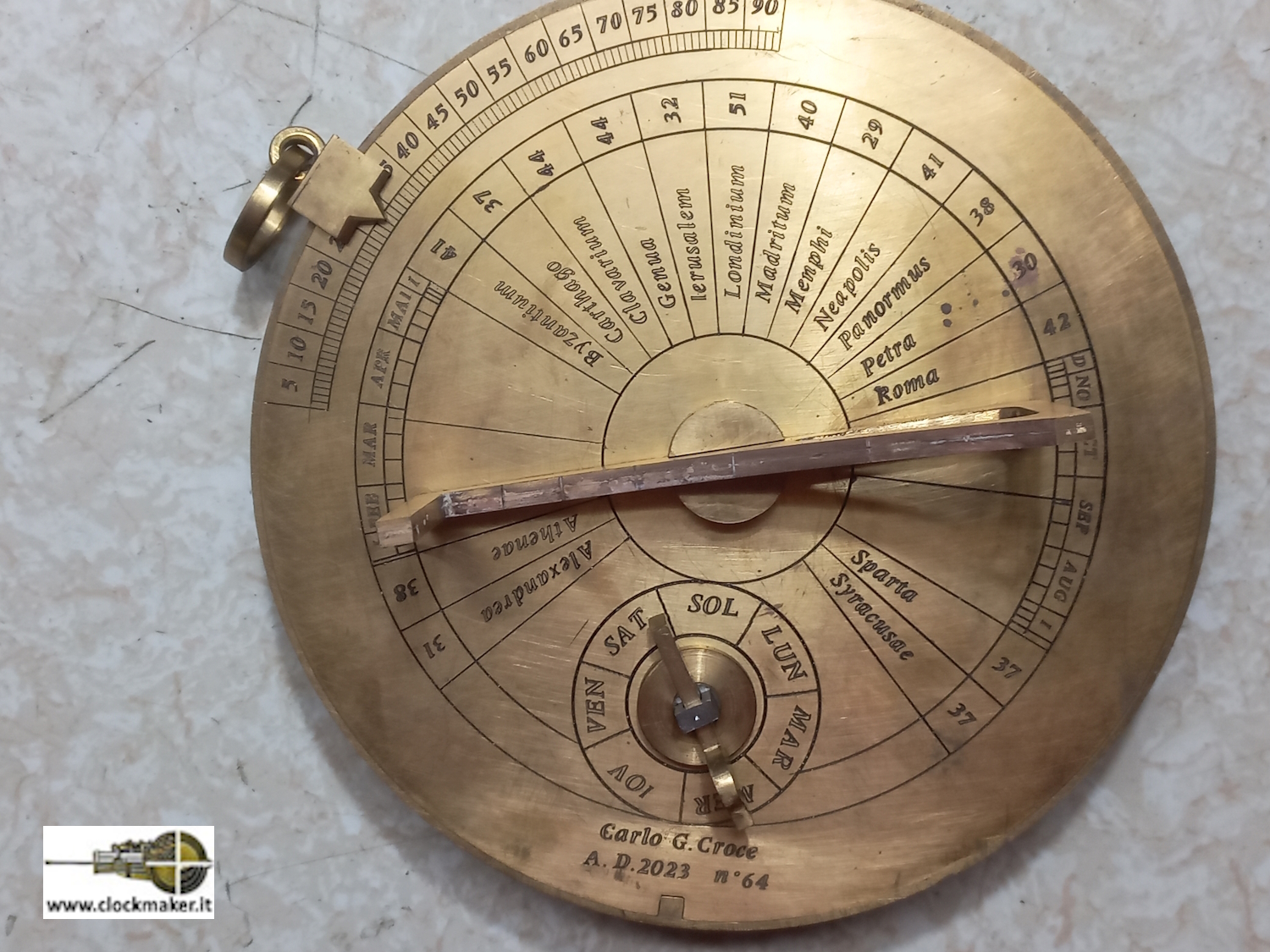
On one face of the sundial (fig. 1), two scales allow one to set the instrument to the latitude of the place where the reading is taken and to the corresponding day of the year. The gnomon is fixed on an index that moves along a double scale of solar declination, marked with abbreviations of the names of the months.
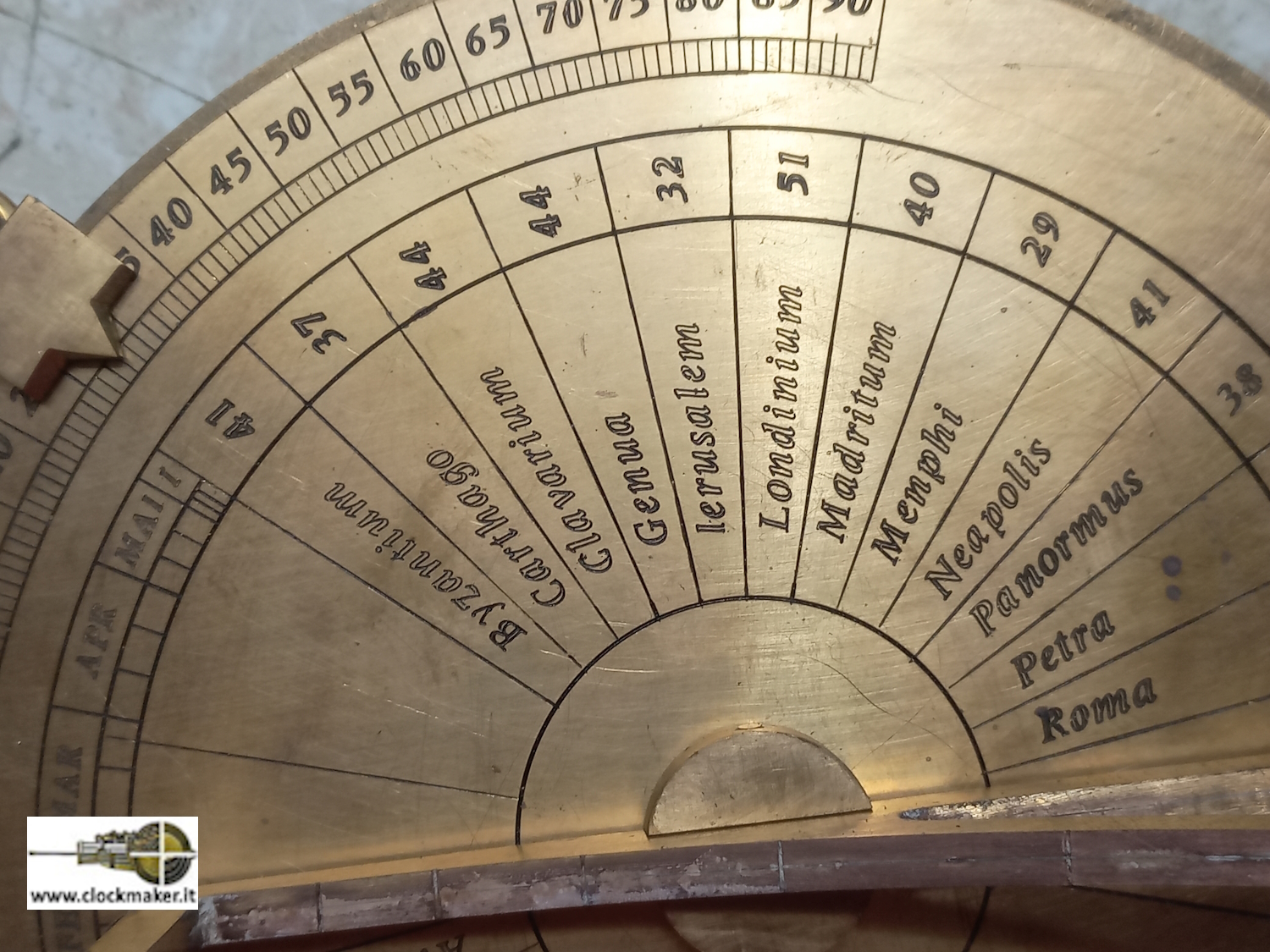
After setting latitude and date, the sundial is lifted, held suspended by the ring and turned until the shadow cast by the gnomon falls along the curved scale, so that the observer can read the hours. Most of the rest of the dial is occupied by a table with the names of many important cities and their latitudes.
The day indicator, when turned, moves all the gears contained in the sundial.
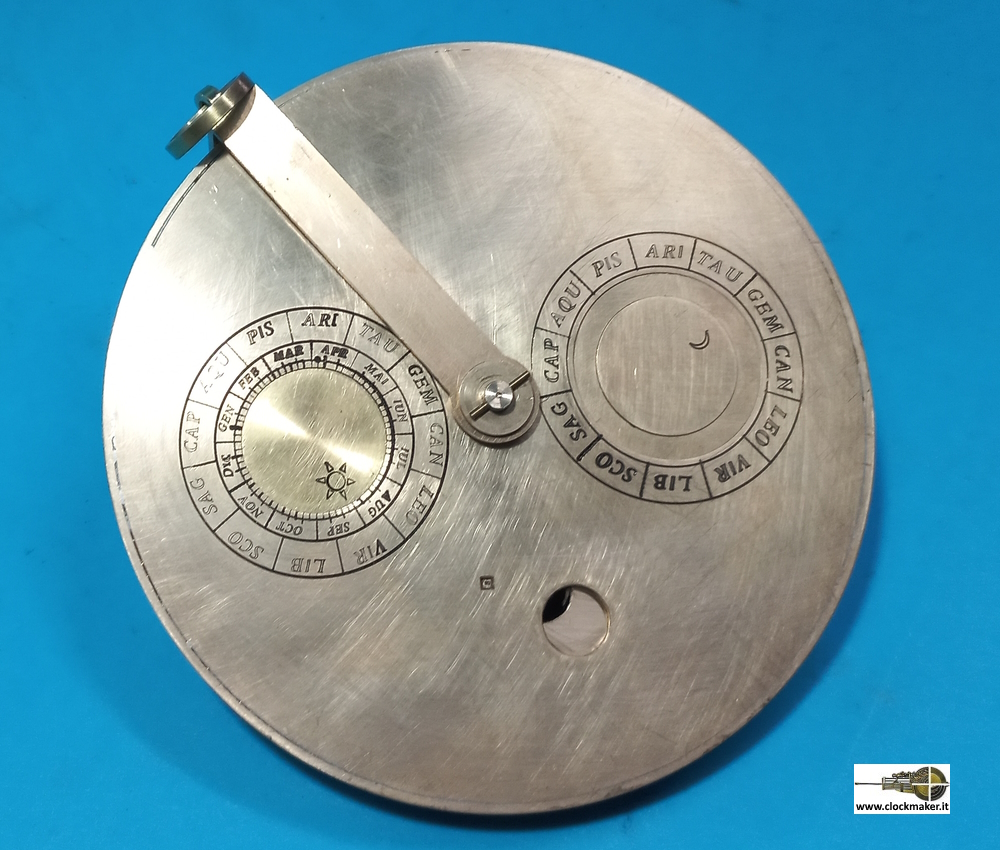
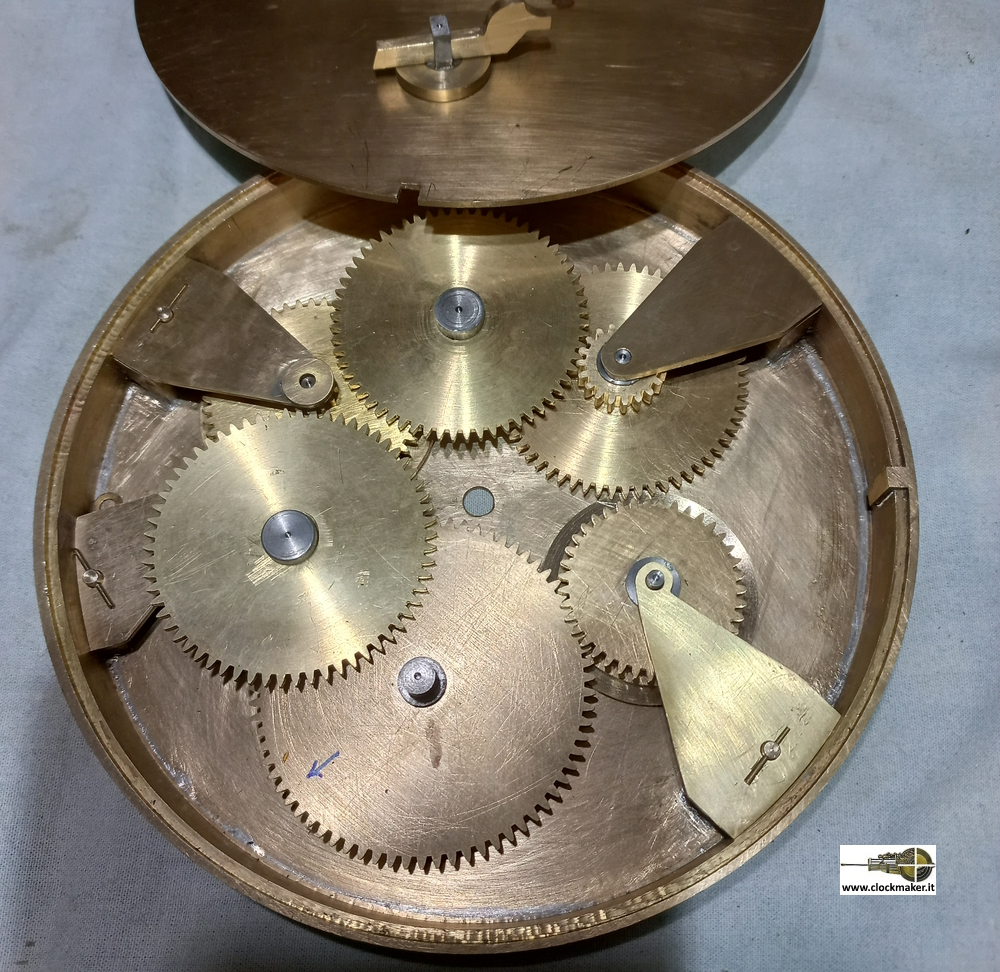
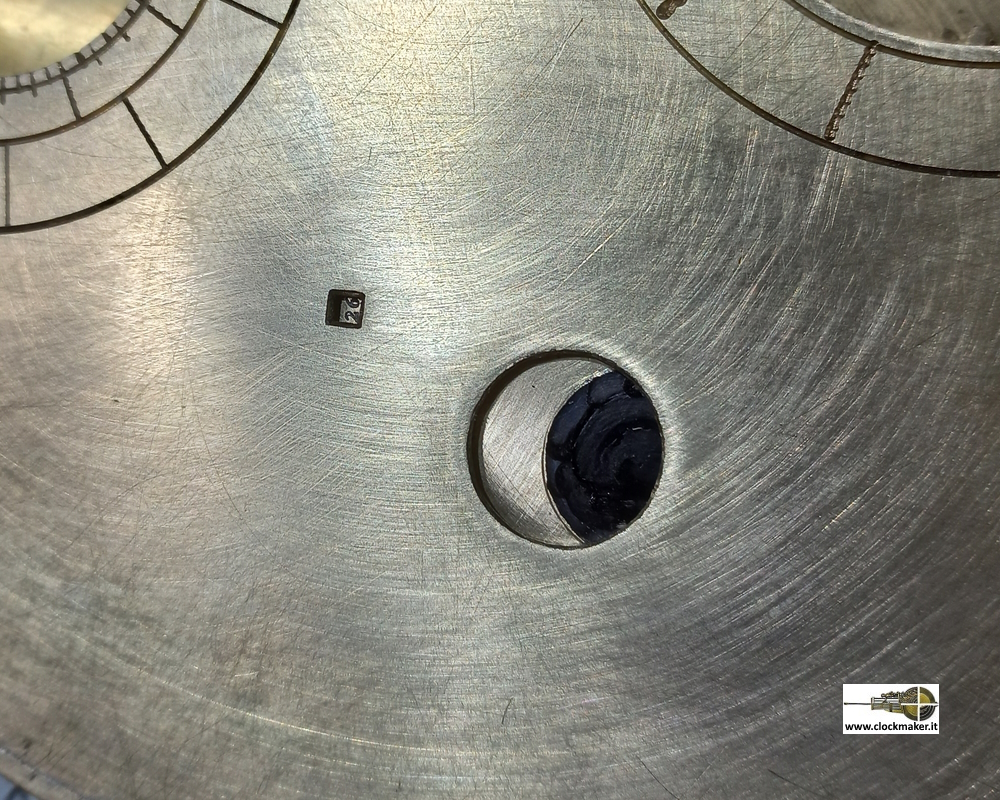
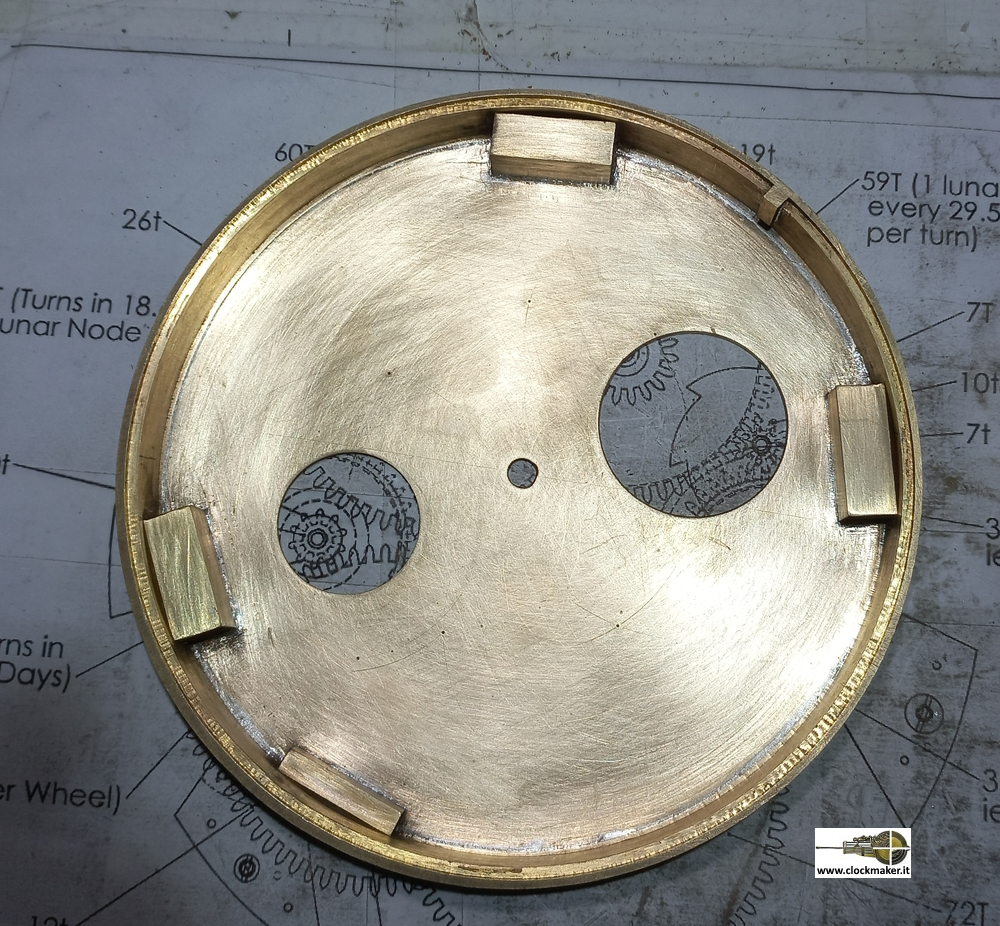
On the other face (fig. 2) there are two discs, moved by the complex system of gears contained in the "case" of the sundial (fig. 3), which represent the position of the Moon and the position of the Sun in the Zodiac. There is a small window (fig. 4) that indicates the day of the month (in alternating months of 29 and 30 days) and finally another small window that shows the lunar phase.
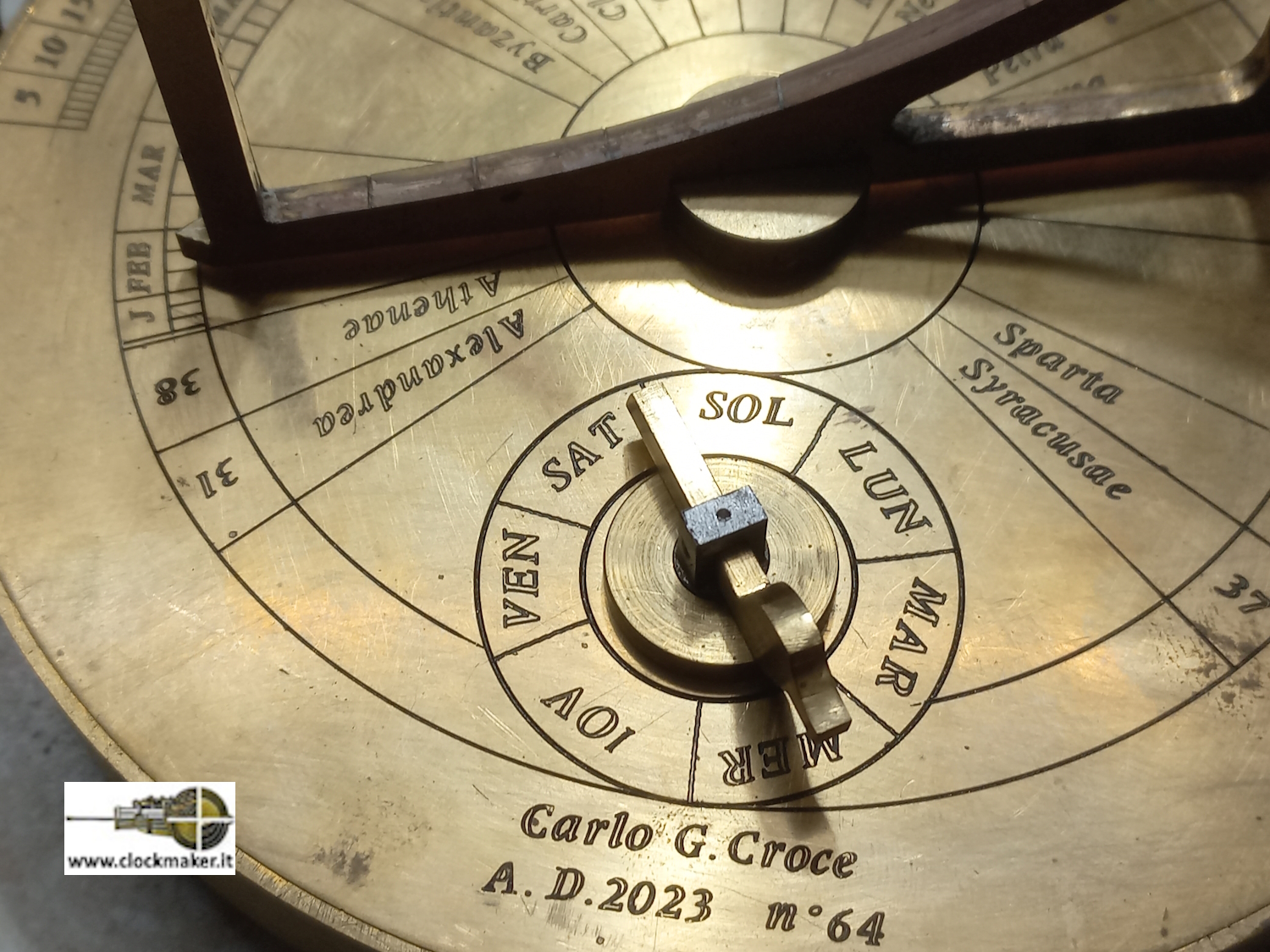
(click each image to enlarge it)
A scientific legacy over a thousand years old
These Byzantine sundials represent a fundamental link in the history of technology. They show that the knowledge of astronomy and precision mechanics had not been lost with the fall of the Western Roman Empire, but continued to flourish in the Byzantine Empire.
The presence of tables with the latitudes of important cities suggests that these instruments were used by travellers, merchants or imperial officials who moved through the vast territories of the empire and needed to determine the time in different places.
I would like to thank my friend Chris (clickspring) for the great help he gave me in building this Byzantine sundial.
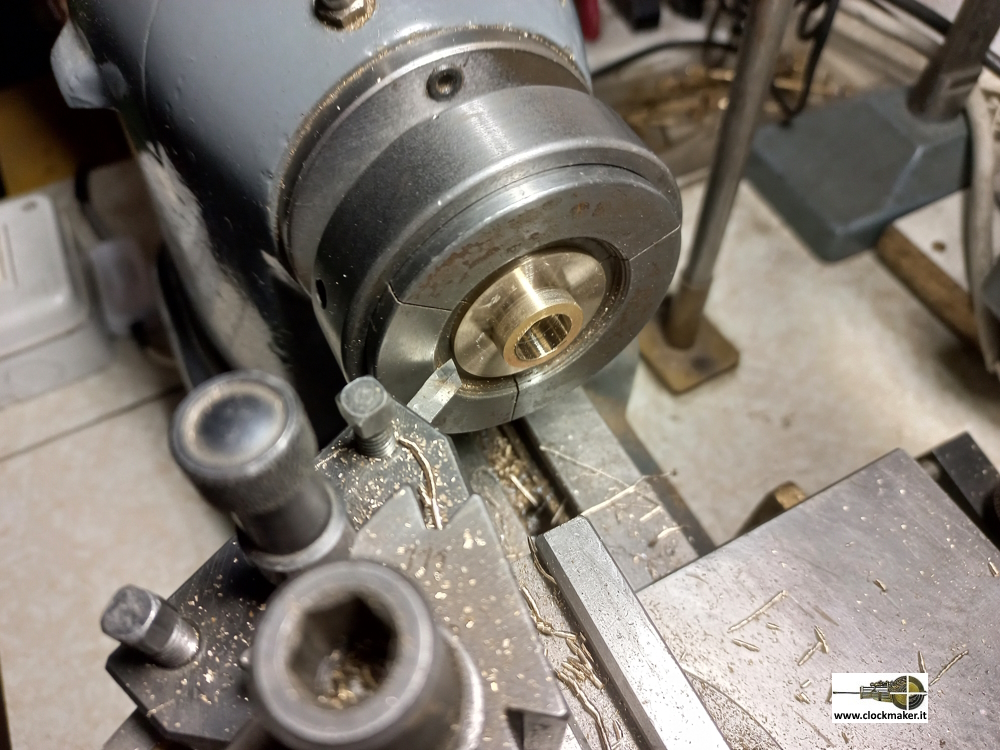
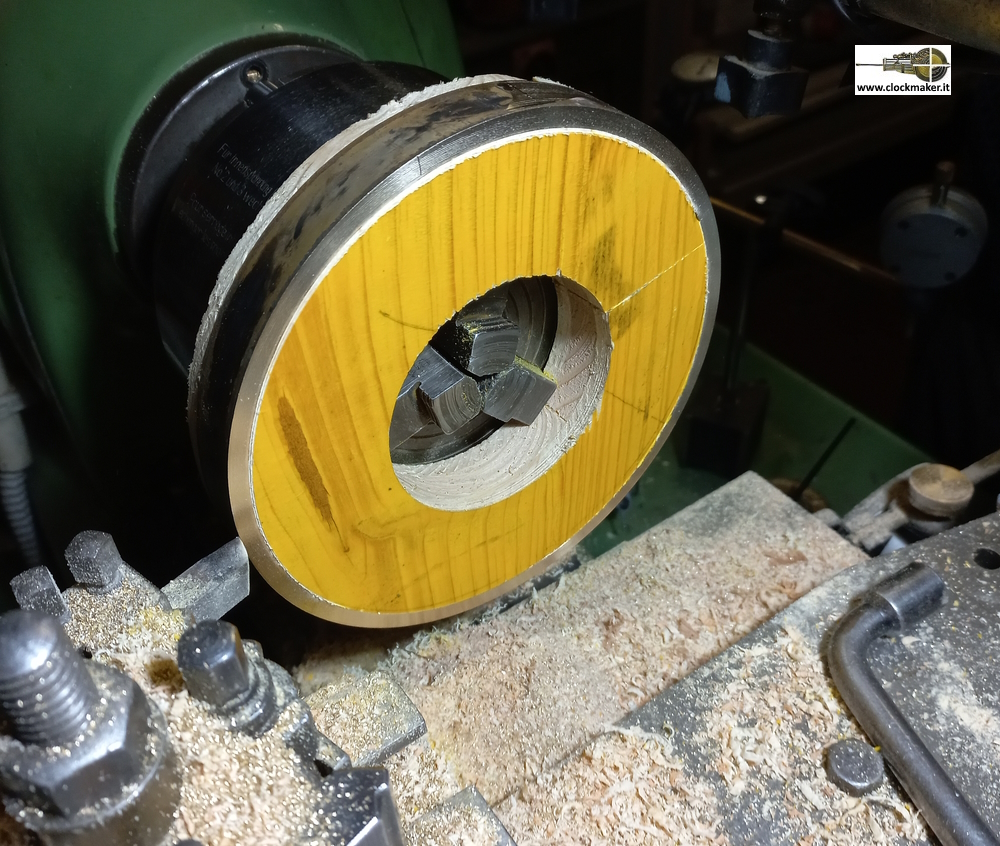
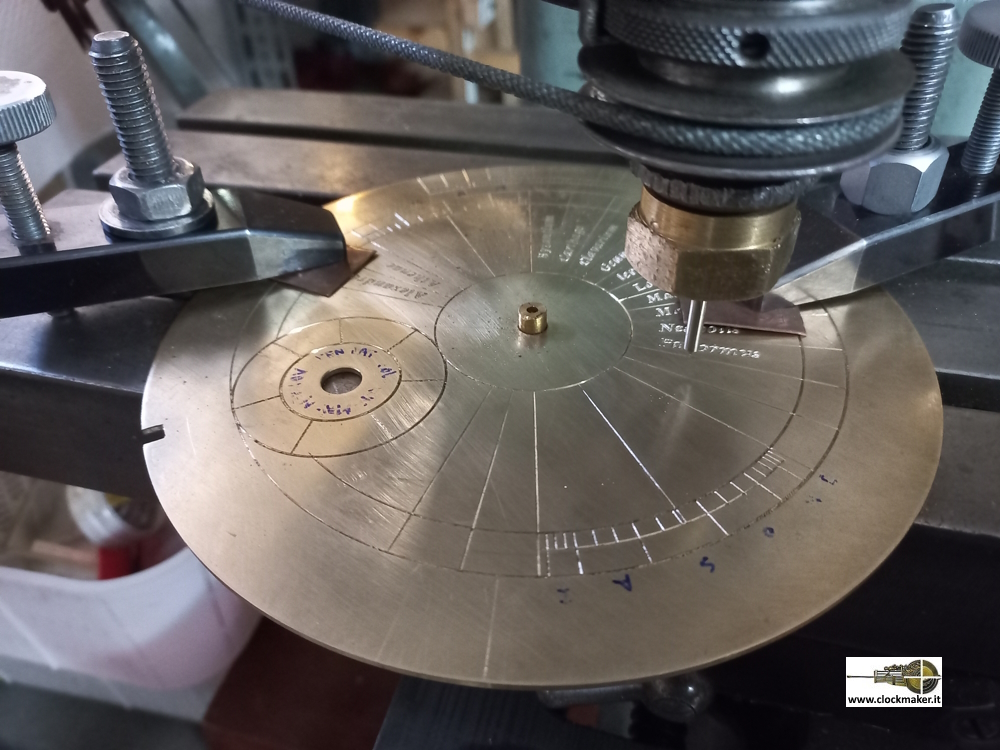
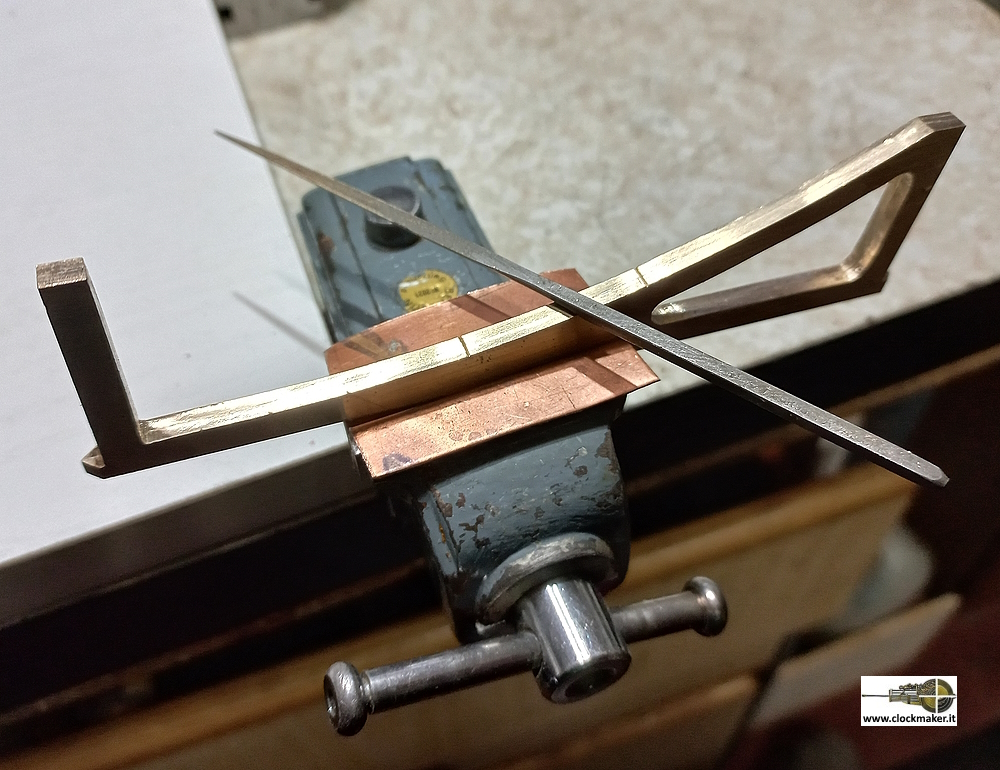
Photos taken during the construction of the Byzantine sundial:

Reproduction of part or all of the contents of any of the pages of this site is prohibited except to the extent permitted below.
These pages may be downloaded onto a hard disk or printed for your personal use without alterations. This copyright notice and the source must appear on each copy. These pages may not be included in any other work or publication, or be distributed or copied for any commercial purpose except with the explicit permission of the author.