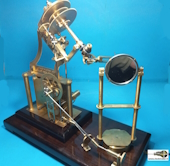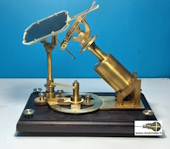



Replica of Silbermann Heliostat #3 (No. 68) |
|
For construction details of this heliostat, visit my forum page on pendoleria.com (in Italian)
Click each picture to enlarge |
|
|
|
Italiano | ||
|
|
||||
|
|
||||
|
||||
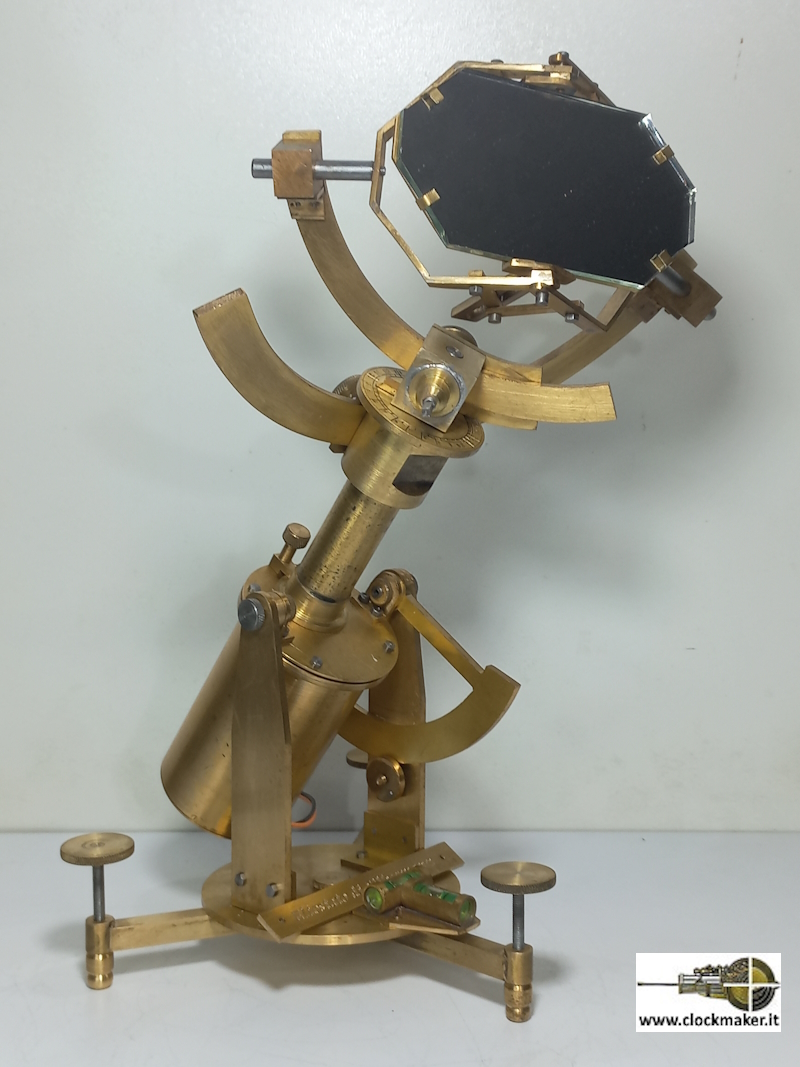
The heliostat is a scientific instrument of extraordinary conceptual elegance, designed to solve an apparently simple but technically complex problem: how to keep a ray of sunlight constantly reflected in the same direction while the Sun moves across the sky during the day.
Silbermann’s invention
The heliostat devised by L.T. Silbermann in 1843 is one of the most ingenious solutions to this problem. While the Sun makes its apparent motion across the sky, Silbermann’s heliostat automatically compensates for this movement by means of a clockwork mechanism that controls the rotation of the reflecting mirror.
This instrument was fundamental to many nineteenth-century scientific experiments: it provided a fixed, constant source of sunlight inside laboratories, essential for experiments in optics, spectroscopy and other research that required an intense and stable light source for long periods of time.
The working principle
The heliostat, devised by L. T. Silbermann in 1843, is an apparatus fitted with a clockwork mechanism that moves the mirror automatically and continuously, ensuring a constant direction of the reflected ray.
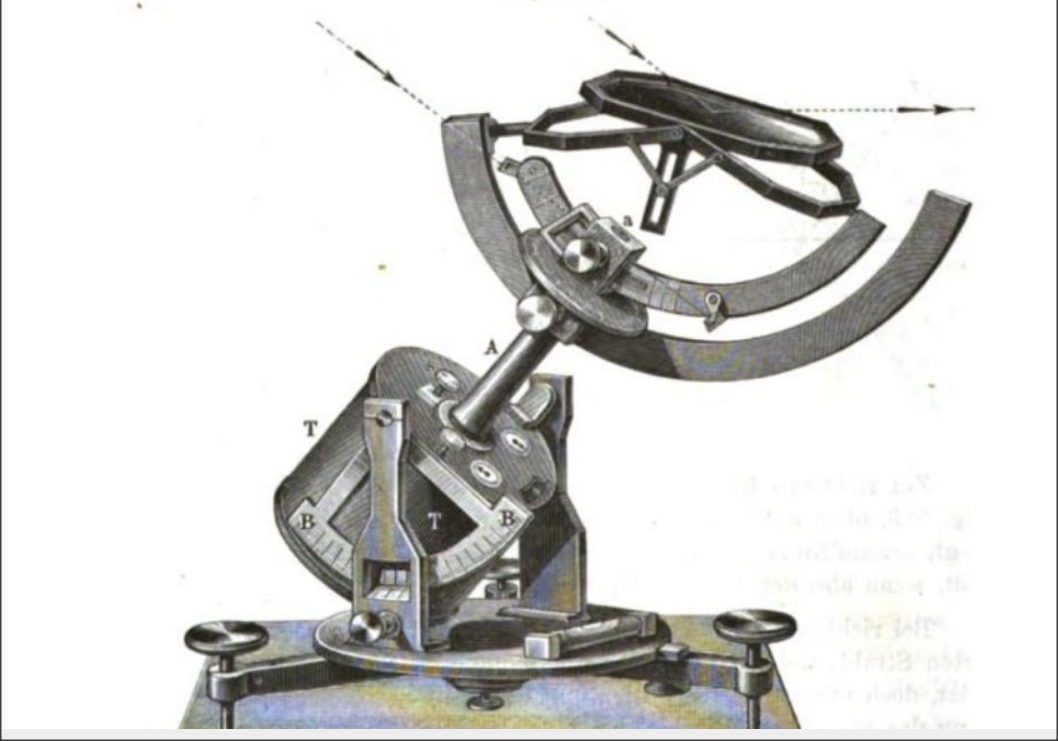
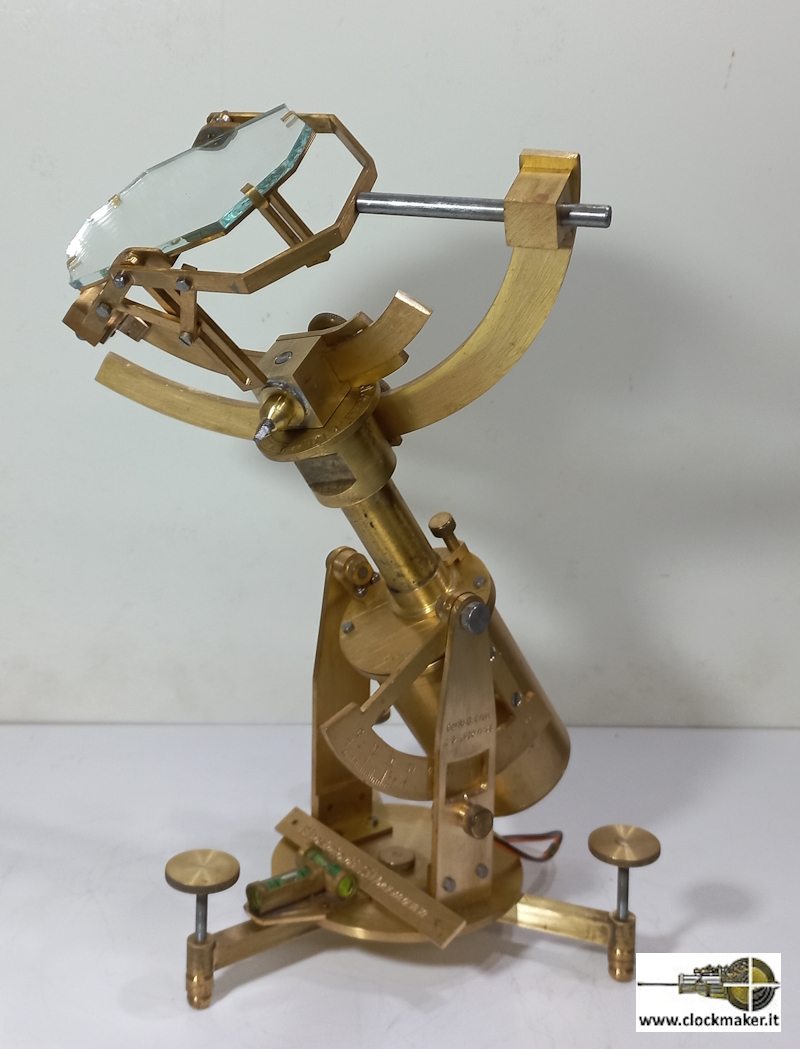
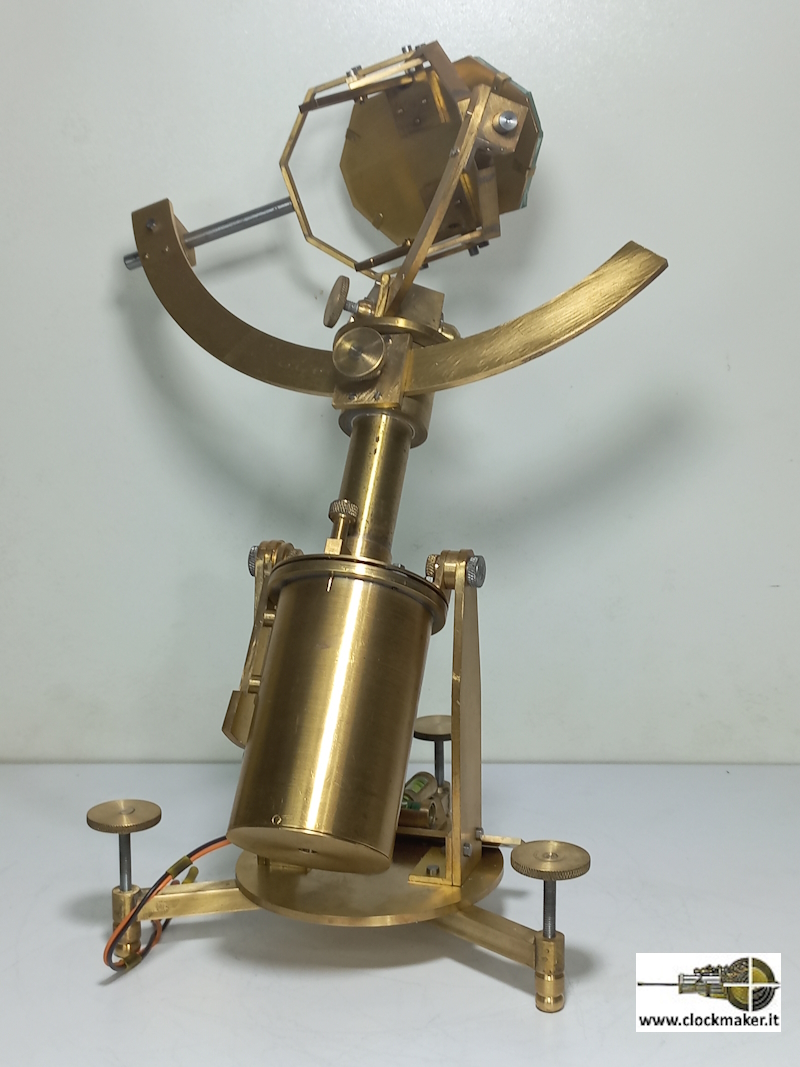
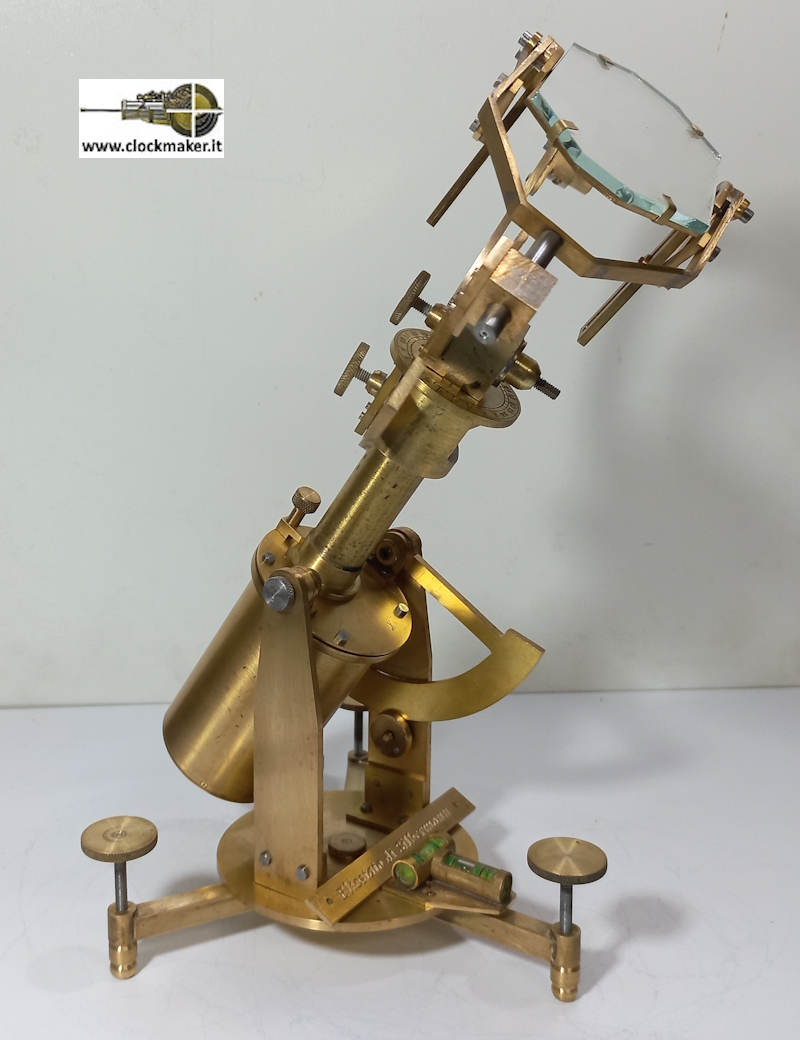
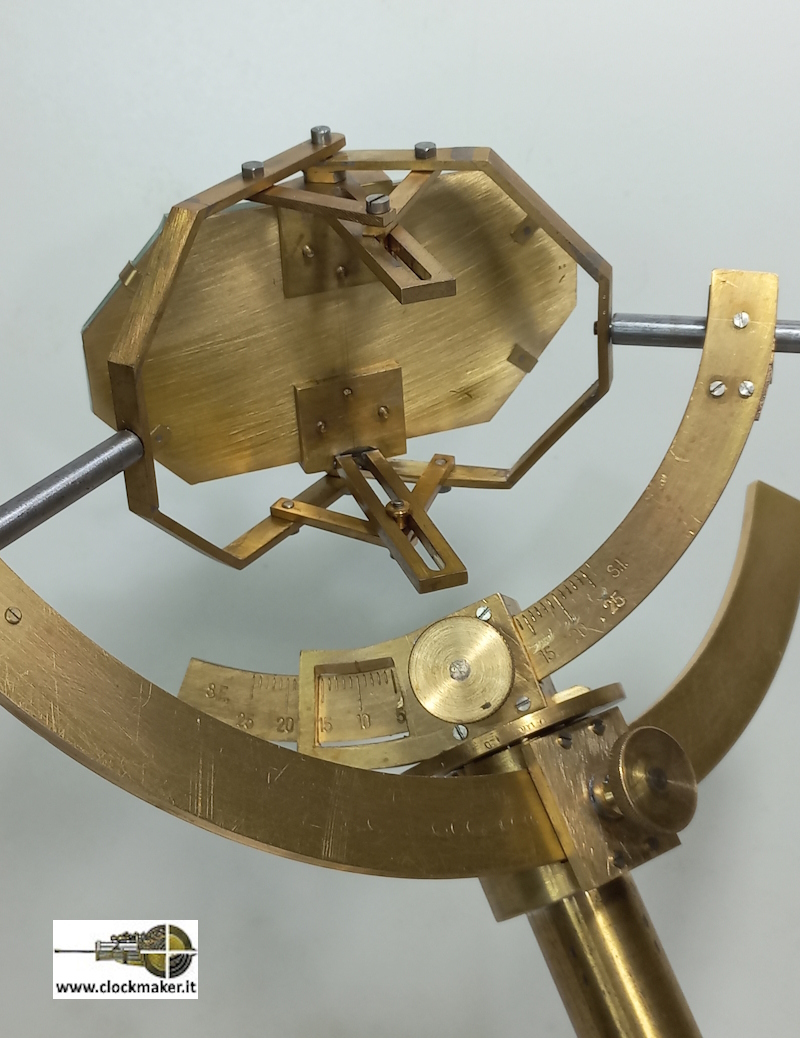
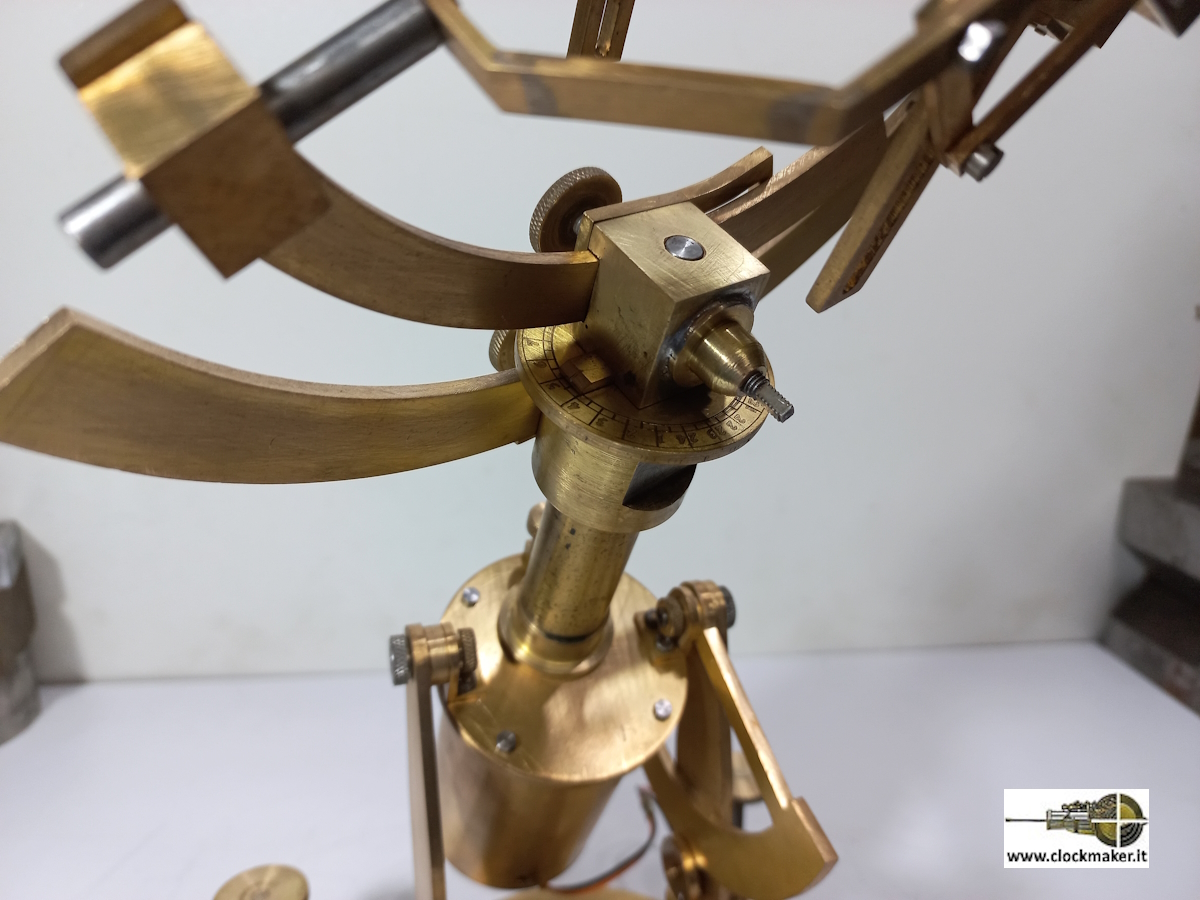
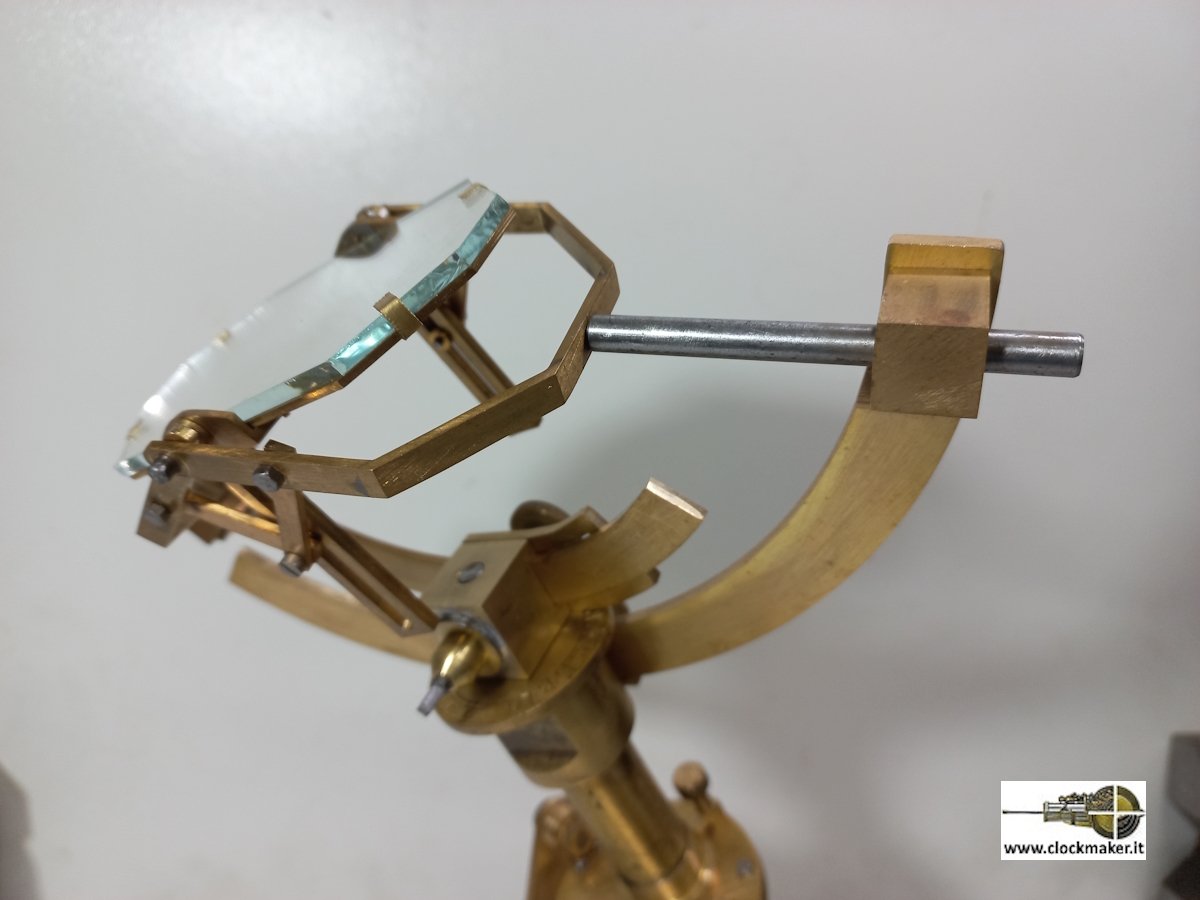
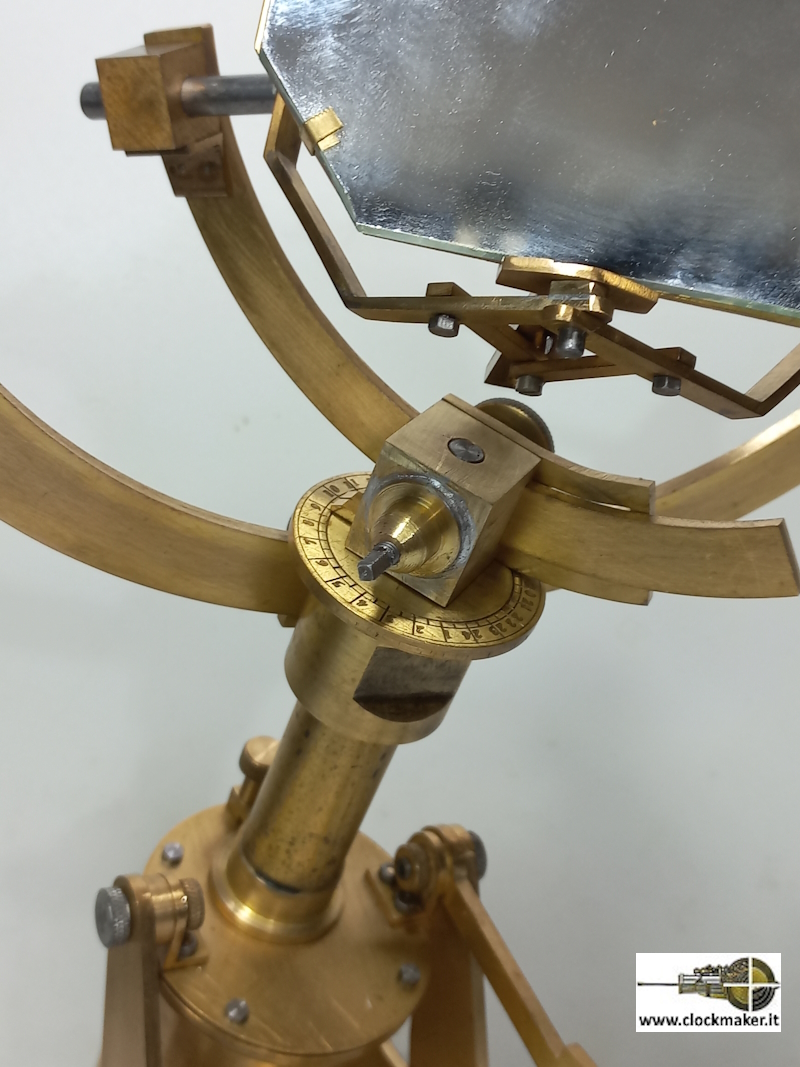
In Silbermann’s heliostat this is achieved, besides through the clockwork mechanism, thanks to the particular mounting of the mirror, which is connected to the clock axis by means of two articulated forks and a grooved rod perpendicular to the reflecting surface. These are hinged together in such a way that, as the mirror rotates, the rod always coincides with the bisector mentioned above. The two forks are in turn connected to two metal arcs.
The outer arc is positioned so that the direction formed by one of its ends with the centre of the mirror coincides with the predetermined direction of the reflected ray. The inner arc is instead connected to the clockwork mechanism and is the one that, acting on the forks, provides the continuous rotation of the mirror.
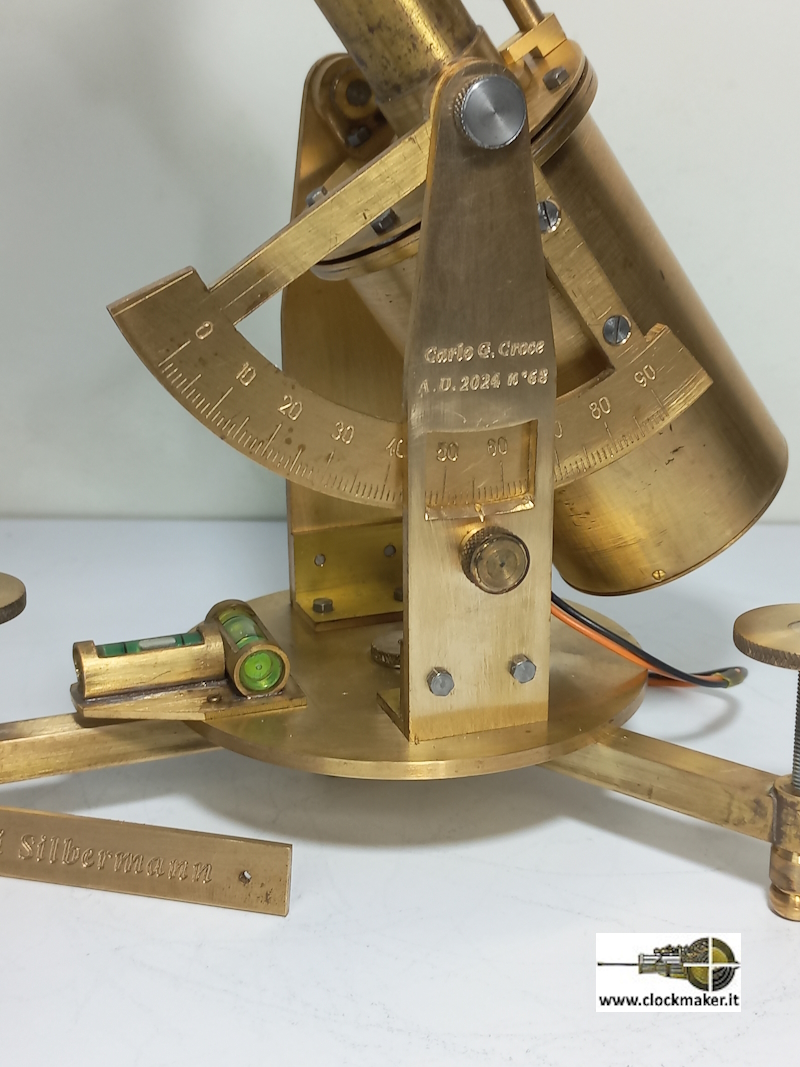
For correct operation, the heliostat must be tilted so that the clock axis lies in the plane of the meridian and is parallel to the Earth’s axis, that is, so that it forms with the horizontal an angle equal to the latitude of the place.
This is measured through a small window with a vernier, located on one of the columns supporting the clock, which allows the arcminutes to be read on a scale fixed to the body of the clock. Once the position of the instrument has been set, these adjustments must not be changed.
The only correction needed with the change of seasons is that of the angle formed by the line joining one end of the metal arc with the centre of the mirror and the clock axis, an angle that must always be equal to the complement of the declination.
The technical description given here is by Dr. Silvia Trapanese of the Physics Institute of Sapienza University of Rome, whom I thank for the clarity and precision of her explanation.
A choice for the visual demonstration
As clearly explained, the mirror must move in step with the apparent motion of the Sun: this means that it is virtually stationary or, more precisely, that it moves at 1/2 the speed of the hour hand of a clock.
In this replica I therefore chose to have the mirror moved by an electric motor turning at about 5 rpm, so that an observer can understand the path the mirror itself follows while the heliostat is operating, as can be seen in the second video below.
Very interesting is the computer reconstruction made by jumpjack (eliostato on the forum pendoleria.com).
In it you can clearly see how the events unfold and, with the explanations (turn on the subtitles), it is easy to imagine how this Silbermann heliostat really works.
The other heliostats I have built: