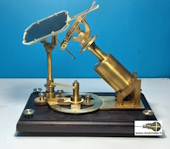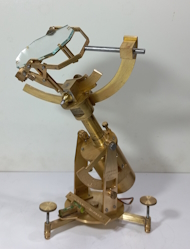



Replica of Foucault’s Siderostat (No. 66) |
|
For construction details of this heliostat, visit my forum page on pendoleria.com (in Italian)
Click each image to enlarge it |
|
|
|
Italiano | ||
|
|
||||
|
|
||||
|
||||
A siderostat is a device used to reflect sunlight in a specific, constant direction throughout the day.
The one I have built a replica of was designed by Mr. Foucault, who, by the way, did not leave much in writing about his creation. Thanks to the support of a new friend I managed to track down some drawings, and with them I began building my replica.
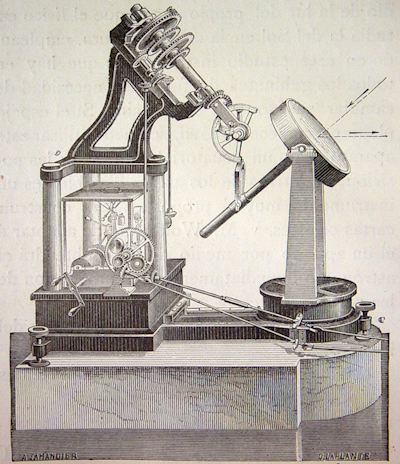
The siderostat consists mainly of a flat mirror mounted on a support system that can move to follow the path of the Sun. This movement is controlled by a motorized mechanism that synchronizes the position of the mirror with the movement of the Sun, so that the reflected sunlight stays constantly aimed at a specific target.
In some architectural applications, siderostats are used to direct sunlight into buildings, improving natural lighting and reducing electricity consumption.
Siderostats can also be used in solar telescopes and other scientific instruments to keep a stable beam of sunlight aimed at the observing apparatus, for example a microscope.
In short, a siderostat is an ingenious system that exploits the apparent motion of the Sun for a variety of applications, improving energy efficiency and allowing more precise scientific studies.
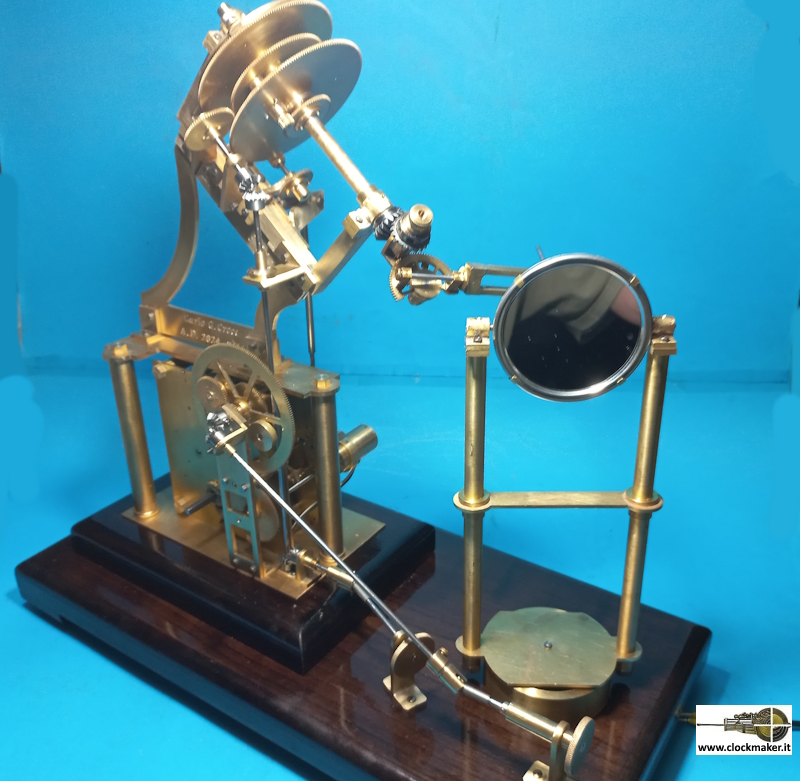
An overall view of my working replica:
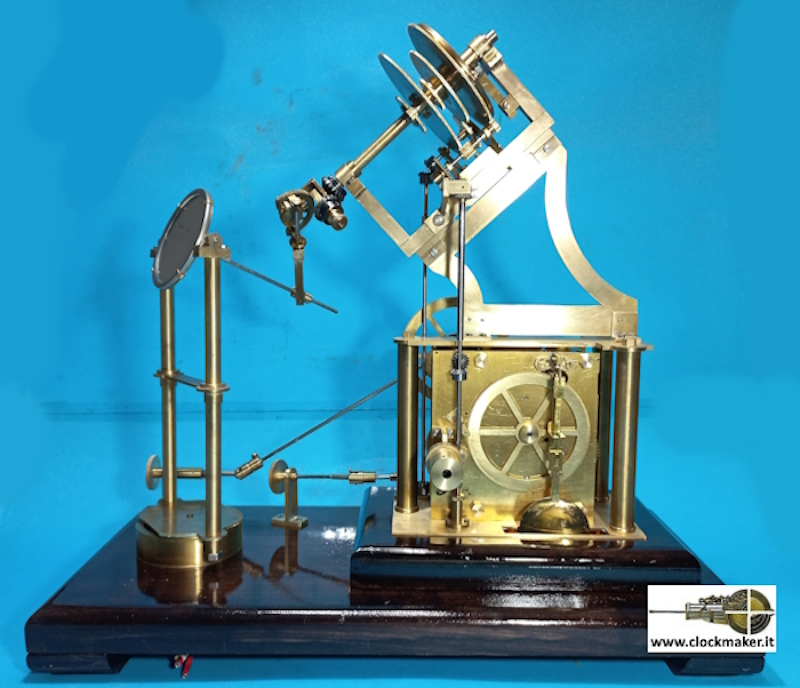
The mirror
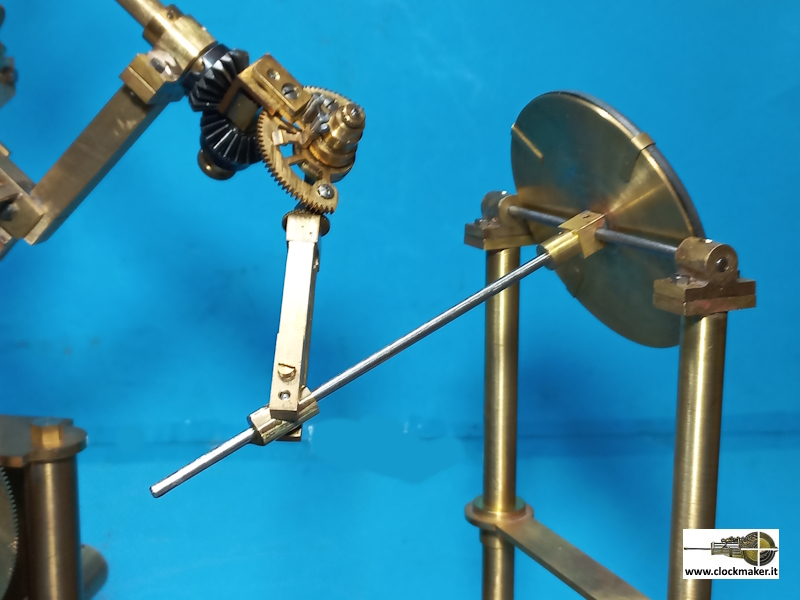
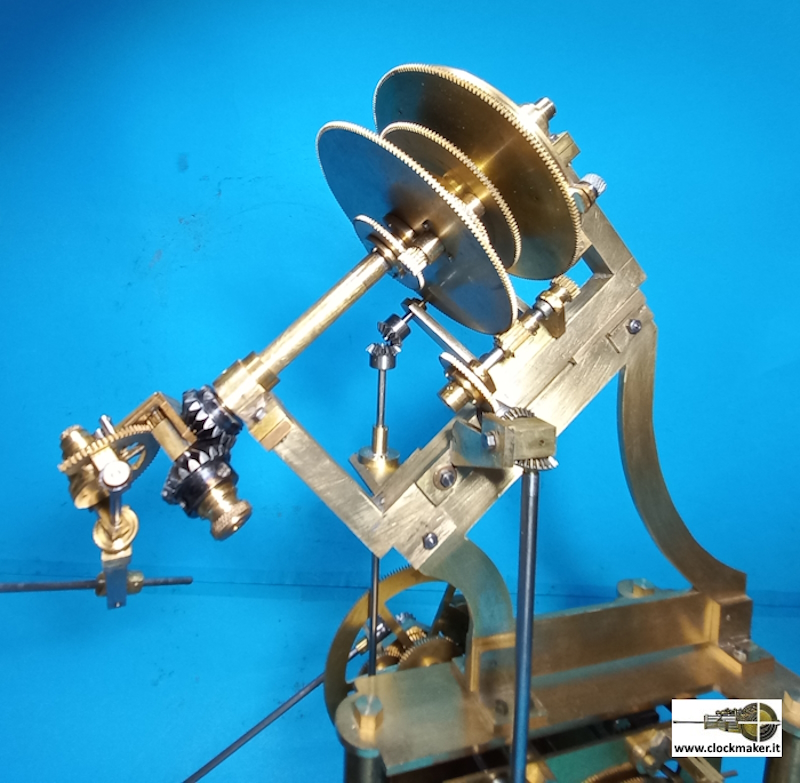
The complex gear train that drives the mirror and allows its position to be adjusted according to the Sun’s declination
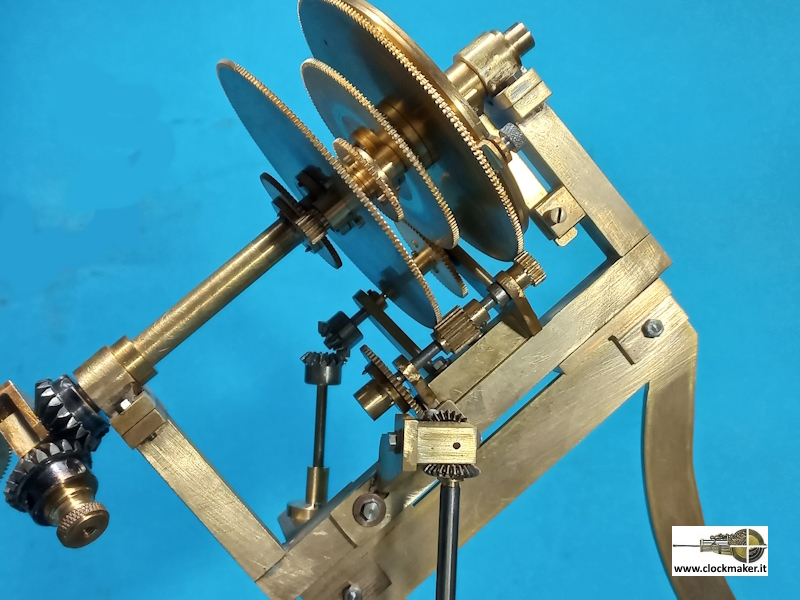
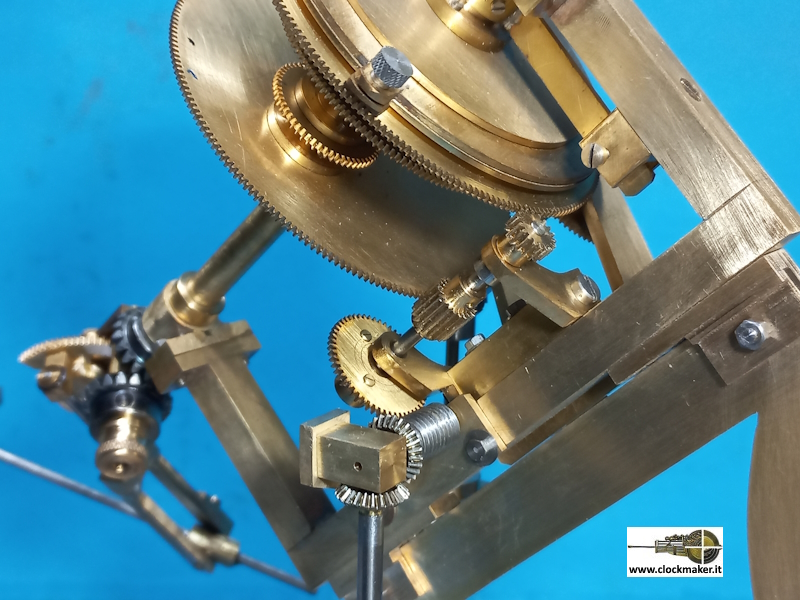
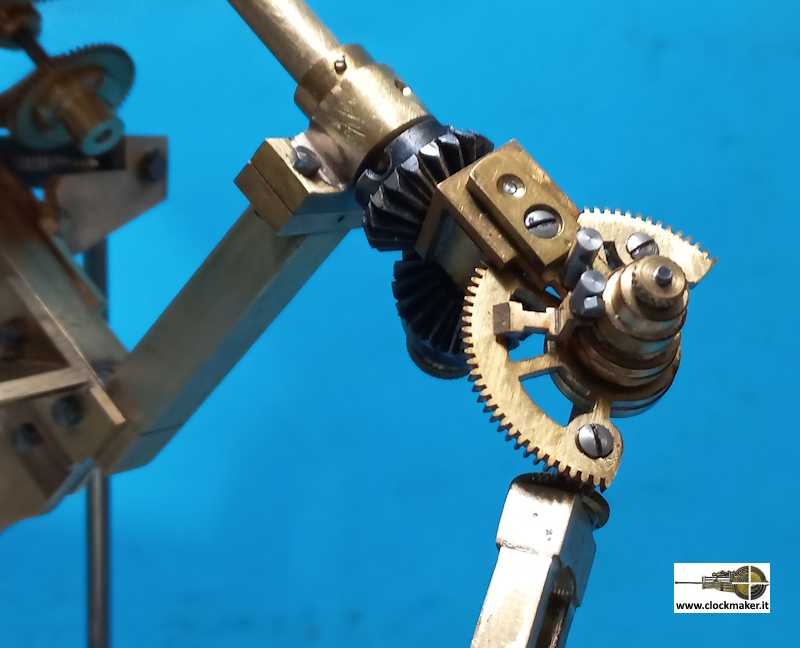
The mirror must obviously make one complete rotation in 24 hours. In the original, an isochronous mechanism was installed to do this job. However, it requires a large driving weight. I preferred to replace that mechanism with an ordinary pendulum clock.
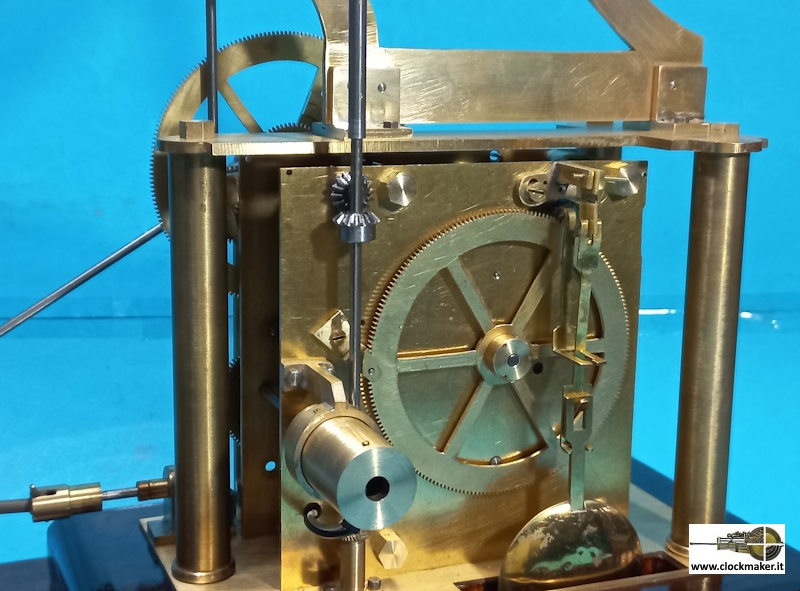
To make the working of my heliostat replica easier to understand, I have sped up the movement of the mirror with a 12 V DC electric motor, so it now makes one turn in 3 minutes.
Below, the electric motor housed in a brass cylinder, and the pendulum:
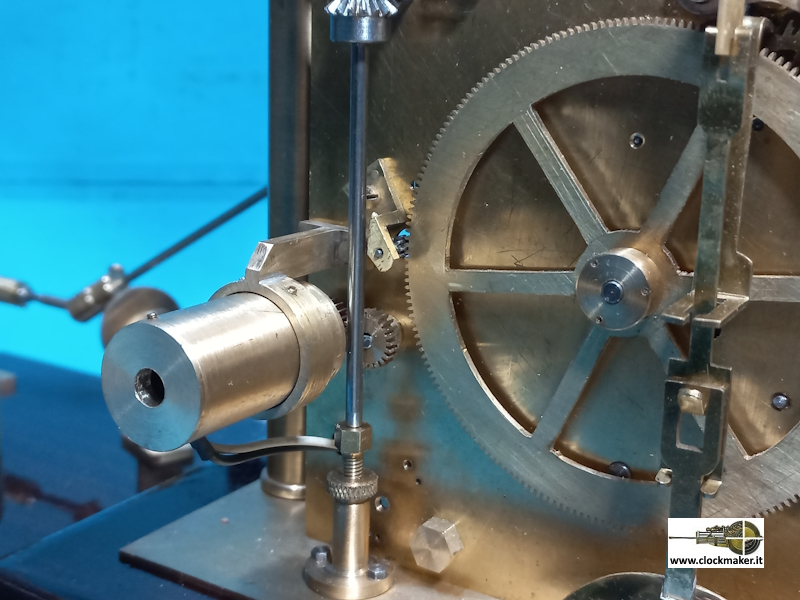
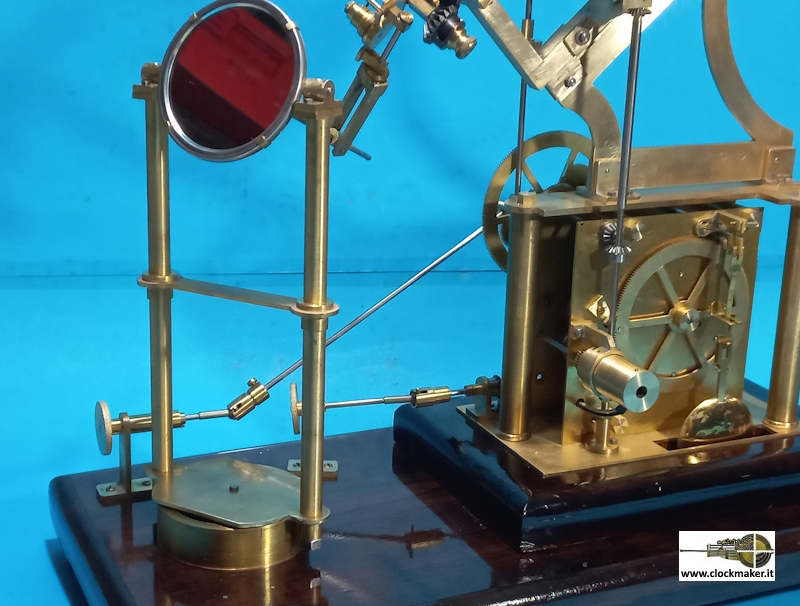
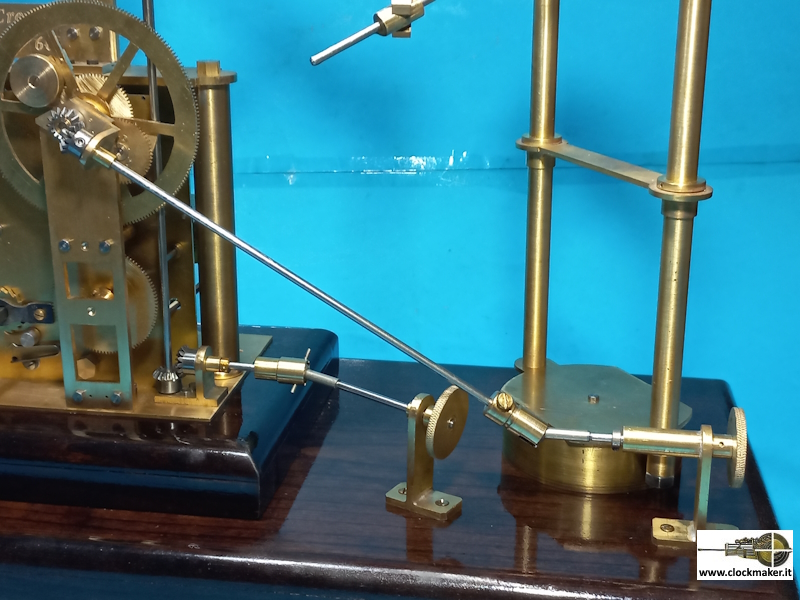
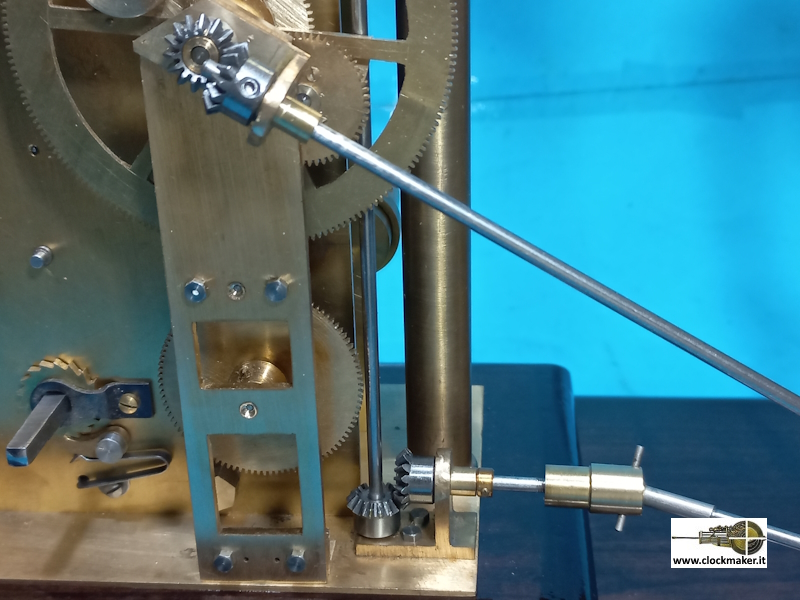
If desired, independently of the operation of the instrument, the position of the mirror can be changed by means of two linkages operated by two knobs:
1) according to the Sun’s declination for each day
2) if needed, to correct the position of the mirror and bring it back to the one corresponding to solar time.
The other heliostats I have built: